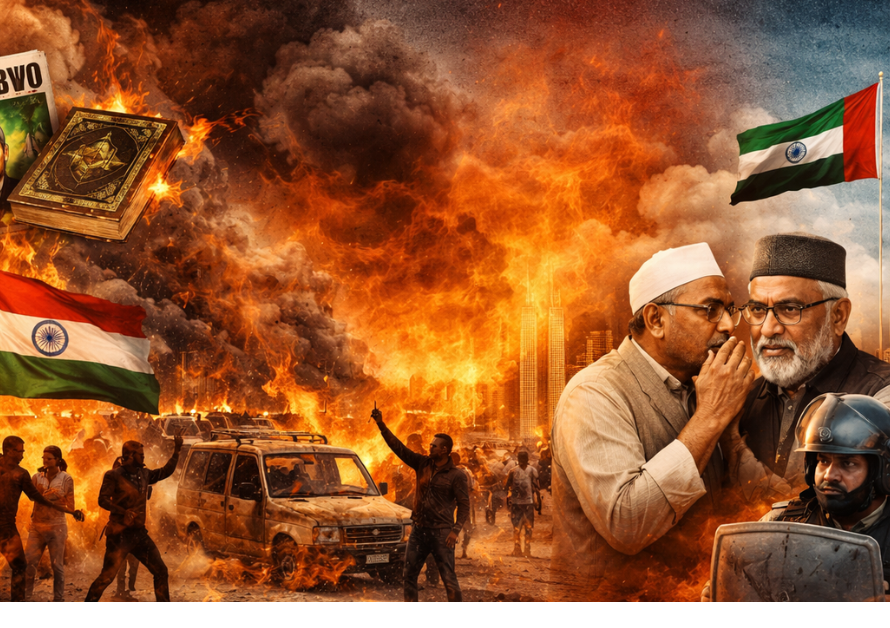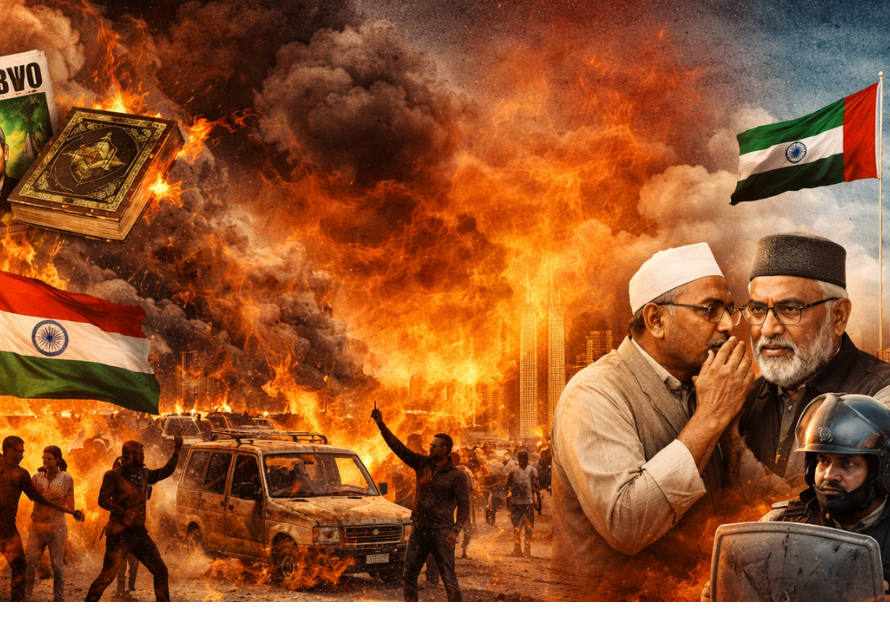
Bangladesh Unrest, Strategic Silence
1. The First Principle of Strategy: Pause Before You Act
When unrest erupted in Bangladesh, the immediate reaction across social media and television studios was predictable:
- “India is weak.”
- “Hindus are under attack.”
- “Attack Bangladesh.”
- “Occupy territory.”
Such slogans are designed to provoke emotional decision-making.
But nations that act on impulse rarely win long games.
- India did not rush to react because reaction itself was the objective of the provocation.
Before responding, any serious strategist asks one question:
- Who benefits if India intervenes militarily in Bangladesh?
2. The Spark Was Political, Not Accidental
The violence did not emerge in a vacuum. It followed a precise political trigger:
- December 12, Dhaka: Assassination of Sharif Osman Hadi
A young, independent leader with:
- No allegiance to Awami League
- No allegiance to BNP
- No allegiance to Jamaat-e-Islami
- Growing mass support and electoral intent
His removal eliminated a non-aligned alternative—the one thing entrenched interests fear most. Immediately after:
- Protests escalated
- Anti-India slogans surfaced
- Parliament was stormed
- Media houses were attacked
- Flyovers and infrastructure were destroyed
This raises a critical question:
- Which political force burns the very state it seeks to govern?
The answer is simple: 👉 Only those who want collapse, not governance.
3. Who Actually Benefits from Chaos?
The violence did not help:
- Awami League
- BNP (which reportedly maintained quiet channels with Delhi) which is unacceptable to certain ideological and external actors.
Who thrives in disorder?
Islamist consolidation forces
- Chaos blocks elections
- Fear replaces democracy
- Radical narratives gain ground
External stakeholders
- Instability increases leverage
- Dependency invites “assistance”
- Sovereignty erodes quietly
For these players, disorder is not a failure—it is a strategy.
4. The Manufactured Outrage Mechanism
During the unrest:
- Nearly 250 people died
- Only two were Hindus
Yet:
- One horrific video dominated Indian screens
- It spread instantly across platforms
- Emotional pressure mounted rapidly
Soon after:
- Opposition voices suddenly demanded action
- Parliamentary outrage intensified
This shift itself was revealing.
- When habitual silence turns into sudden urgency, it signals orchestration—not conscience.
The objective was clear: 👉 Force India into a reactive military posture.
5. The Strategic Trap: Forcing India into a War
A military response would have achieved the following:
- Prolonged instability
- Internationalization of the conflict
- Economic strain on India
- Diplomatic pressure
- Loss of strategic autonomy
- Bangladesh risked becoming another long-term conflict zone, similar to how other regions have been externally “managed” through perpetual crisis.
Modern wars are rarely about territory alone. They are about:
- Trade leverage
- Financial dependency
- Political influence
- Strategic containment
India chose not to walk into that trap.
6. Why Economic Pressure Is More Effective Than Military Force
- For fragile systems, economic pressure is far more destabilizing than bombs.
Military action:
- Unites factions against an external enemy
- Creates martyr narratives
- Invites international intervention
- Triggers sanctions and scrutiny
Economic statecraft:
- Weakens extremist funding quietly
- Exposes governance failures
- Increases internal accountability
- Reduces external sympathy for radicals
- Avoids propaganda victories
- Trade recalibration, compliance enforcement, financial scrutiny, and diplomatic signaling do not create headlines—but they reshape realities.
This is why economic pressure often achieves what military force cannot.
7. Strategic Silence Is Not Weakness
Repeated provocations aim to:
- Control India’s response
- Dictate timing
- Force visibility
Silence denies that control.
Strategic silence:
- Preserves initiative
- Prevents escalation traps
- Keeps adversaries guessing
- Protects freedom of action
- Maintains diplomatic flexibility
In strategic terms, this is initiative denial.
History consistently shows:
- Loud reactions reveal intent
- Silence conceals preparation
Or simply:
- Noise satisfies crowds. Silence unsettles opponents.
8. The Power of Surprise
Restraint does not mean inaction. It means:
- Acting only when necessary
- Acting on one’s own timeline
- Acting when adversaries are complacent
- Acting without public rehearsal
Silence encourages:
- Overconfidence among hostile elements
- Fragmentation within radical coalitions
- Reduced preparedness
If action becomes unavoidable, surprise multiplies effectiveness:
- Shorter duration
- Lower cost
- Reduced resistance
- Clear outcomes
The most decisive moves are often the least advertised.
9. Why This Combined Strategy Works
India’s approach integrates:
- Economic pressure
- Diplomatic signaling
- Strategic restraint
- Preparedness without panic
This:
- Weakens extremist ecosystems
- Avoids international moral traps
- Preserves national autonomy
- Reduces long-term costs
Victory becomes easier when:
- Opponents Resources dry up
- Internal divisions widen
- External backers hesitate
- Legitimacy collapses
This is not hesitation. It is strategic patience.
10. Strength Is Often Quiet
India’s silence is not weakness—it is confidence.
- Economic pressure erodes foundations
- Silence preserves initiative
- Surprise ensures decisiveness
The real contest is not fought on screens or slogans.
- It unfolds quietly—where outcomes are decided long before headlines appear.
In geopolitics:
The loudest outrage is often the sharpest trap
The strongest response is often the one that arrives unexpectedly and on one’s own terms
🇮🇳Jai Bharat, Vandematram 🇮🇳
For old Blogs please visit our website www.saveindia108.in
👉Join Our Channels👈