Summary
- A viral image circulating on social media has sparked a sharp debate about India’s political history, national institutions, and the direction of its development.
- The image uses satire to suggest that many key national institutions—such as the armed forces, scientific community, public sector organizations, and cultural movements—were constrained for decades by policy hesitation and political considerations.
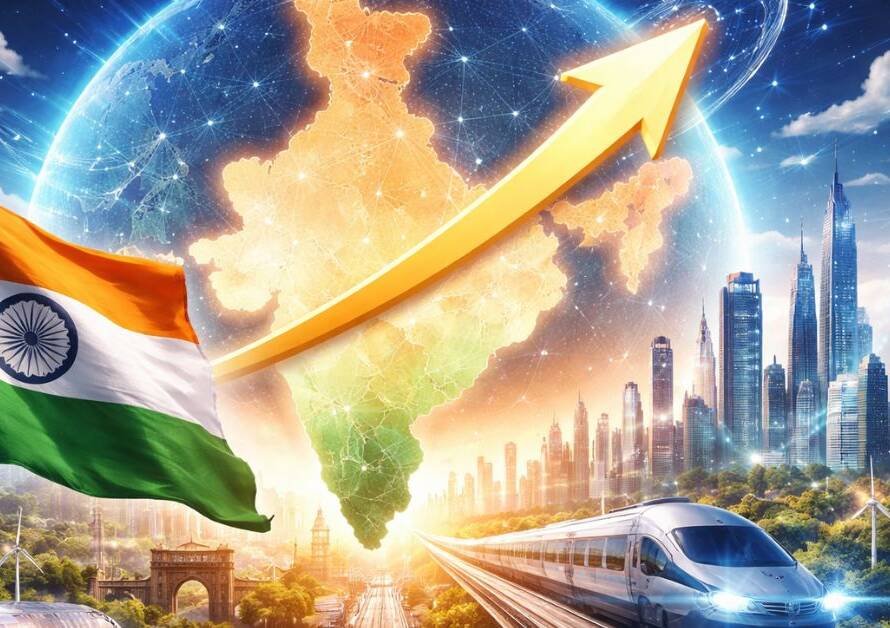
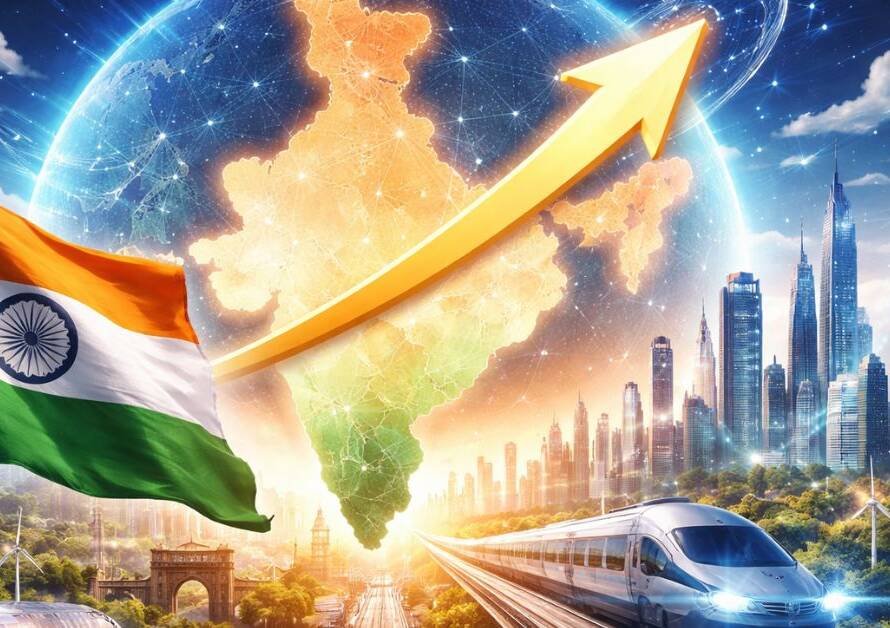
- However, in recent years many observers believe that India’s trajectory has begun to change. National security, science and technology, infrastructure, and global diplomacy are now being pursued with greater confidence and clarity. Alongside this transformation, a new political debate has also emerged: while some groups strongly oppose these changes, many citizens, institutions, and young Indians are actively contributing to India’s rapid rise.
- This discussion is not merely about criticizing the past. It is about understanding where India stands today and how it can continue evolving into a strong, self-reliant nation capable of exercising global leadership and guiding the world with its civilizational wisdom.
📌 The Viral Message and Its Satirical Signal
The social media post contains the following lines:
- Indian Army: Congress stopped us
- ISRO scientists: Congress stopped usBSNL: Congress stopped us
- Ram Temple lawyers: Congress stopped us
- Terrorists: This is completely false. Congress never stopped us.
The message is clearly a political satire. It attempts to highlight a perception held by many citizens that at various times in the past, decisive action in areas critical to national interests may have been slowed due to political calculations, policy hesitation, or appeasement-based politics.
- While this view is debated and not universally accepted, the viral image reflects a sentiment that has increasingly become part of India’s public discourse.
🇮🇳 National Security and the Strategic Role of the Armed Forces
- India’s security environment has always been shaped by complex geopolitical realities.
Key challenges include:
Cross-border terrorism
- A difficult neighborhood with nuclear-armed adversaries
- Internal security and separatist movements
- International diplomatic pressures
Major points of debate
- Some analysts believe India historically responded with excessive restraint to provocations.
- Others argue that restraint was a responsible diplomatic strategy necessary to avoid escalation.
Current perception
In recent years, many observers believe that:
- The armed forces have received clearer political backing
- Defence modernization has accelerated
- Border security infrastructure has expanded
As a result, India’s security posture appears more confident and assertive.
🚀 Science, Technology, and the Role of ISRO
- India’s space program is now among the most respected and cost-effective in the world.
Major achievements include:
- Highly successful low-cost space missions
- Lunar and Mars exploration missions
- A large network of communication and navigation satellites
Questions often raised
Experts have long debated whether:
- India should have invested even more aggressively in research and development earlier scientific institutions always received adequate policy support and funding
The emerging direction
In recent years:
- The space sector has been opened to private participation
- Defence innovation and technology startups are being encouraged
- Digital and technological advancement has become a national priority
This shift is helping India move faster toward technological self-reliance.
📡 BSNL and Public Sector Institutions
- At one time, BSNL symbolized India’s communications backbone.
Historical role of BSNL
- Expanding connectivity across rural India
- Supporting national communications infrastructure
- Providing secure networks for government and defence
Key challenges
- Intense competition from private telecom companies
- Rapid technological transformation
- Slow policy adaptation in some phases
These challenges placed several public sector institutions under pressure.
Current efforts
The government today emphasizes:
- Expansion of digital infrastructure
- Investment in next-generation telecom technologies
- Restructuring and modernization of public institutions
🛕 The Ram Temple and the Long Legal Journey
- The Ram Temple issue was not merely a religious question. It became a deeply complex matter involving history, identity, law, and national debate.
Characteristics of this long dispute
- Decades of legal proceedings
- Intense social and political discussions
- Examination of historical and archaeological evidence
Eventually, the Supreme Court delivered its historic verdict, paving the way for the construction of the temple in Ayodhya and bringing closure to a dispute that lasted generations.
⚠ The Final Satirical Line and Its Message
The last line in the viral post—
“Terrorists: This is completely false. Congress never stopped us.”
—is clearly meant as satire.
It reflects a criticism often voiced in political debates: that at times terrorism and extremism were not confronted with sufficient decisiveness due to political considerations.
- At the same time, it is important to recognize that national security decisions are always influenced by complex domestic and international factors.
🔄 A Changing India: A New Policy Direction
- Many supporters of the current political leadership believe that India’s policy direction has undergone a major shift in the last decade.
- Under the leadership of Prime Minister Narendra Modi, the government has pursued several initiatives aimed at strengthening national capabilities.
Key policy priorities include:
- A stronger national security posture
- Greater emphasis on defence and technological self-reliance
- Expansion of digital infrastructure and connectivity
- Efforts to reduce bureaucratic inertia and corruption
- A more visible and assertive presence in global diplomacy
🌍 Resistance and Political Contestation
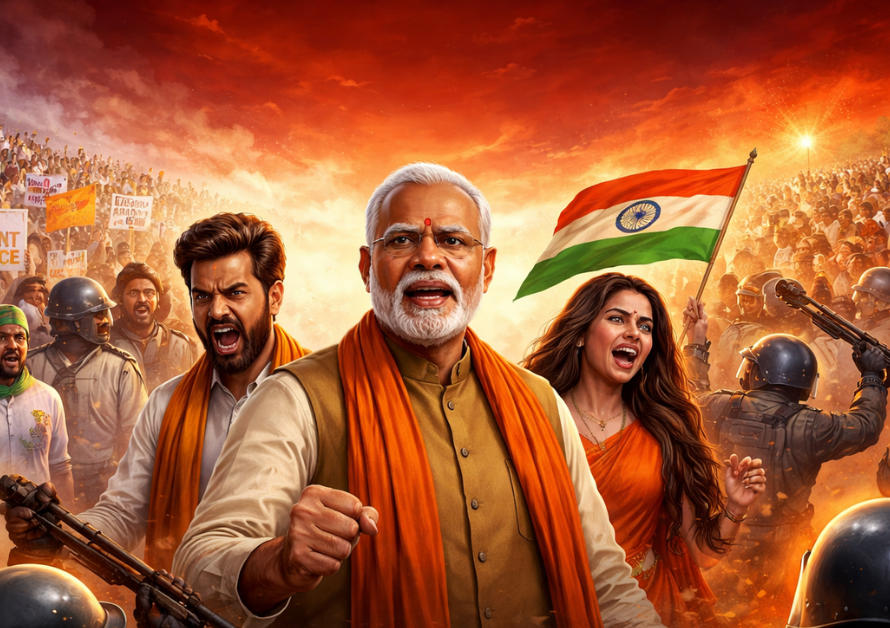
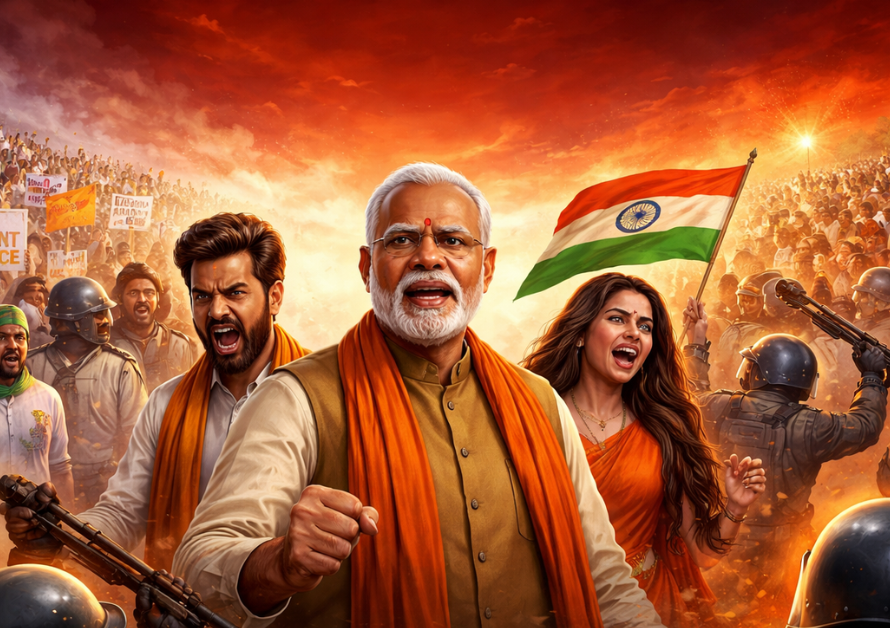
- Large transformations in any country inevitably generate resistance.
Some observers believe that:
- Certain extremist elements
- Political opposition groups
- Segments of an ideological ecosystem
have intensified criticism of government policies and raised concerns about democratic institutions.
- Supporters of the current leadership, however, argue that such resistance is partly a reaction to structural changes that challenge long-standing power networks and political arrangements.
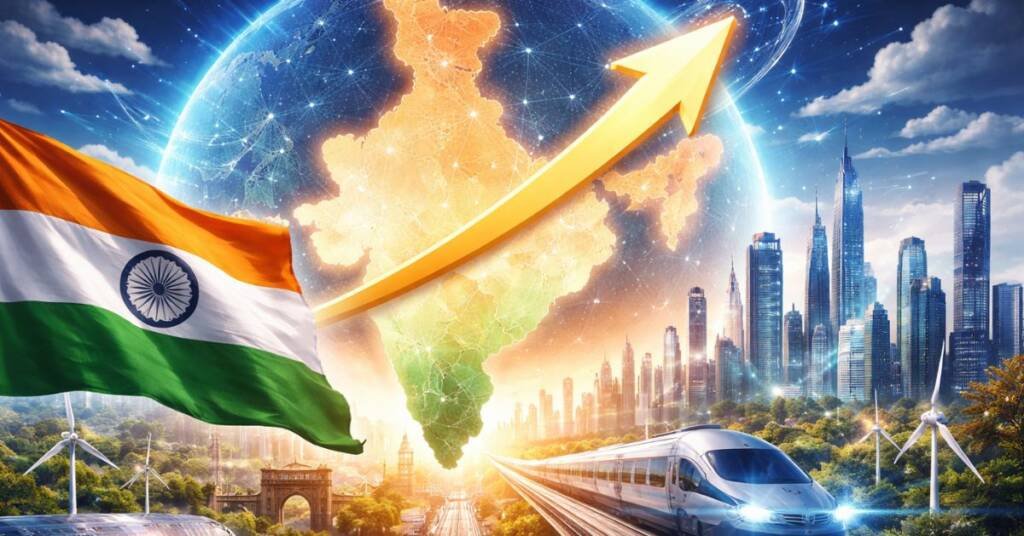
🇮🇳 A Nation Moving Forward
- India today stands at an important moment in its civilizational journey.
India’s emerging strengths
- One of the fastest-growing major economies in the world
- A major hub for digital innovation and technology
- A growing defence and space capability
- Increasing influence in global diplomacy and geopolitics
India’s ancient philosophy has long emphasized “Vasudhaiva Kutumbakam”—the idea that the world is one family.
- Many believe that drawing from this civilizational wisdom, India has the potential not only to become an economic or military power but also to guide the world morally and culturally as a “Vishwaguru.”
📢 The Key Question for the Future
- The most important question today is not merely about past policies.
It is about the future.
- Is India learning from its past experiences?
- Are its institutions becoming stronger and more independent?
- Are citizens, government, and national institutions working together for long-term nation-building?
If strong leadership, national unity, and citizen participation continue to align, India may well emerge as a major global power and a guiding civilizational force in the decades ahead.
🇮🇳Jai Bharat, Vandematram 🇮🇳
Read our previous blogs 👉 Click here
Join us on Arattai 👉 Click here
👉Join Our Channels 👈