Summary
- In the 21st century, data has become the most powerful strategic resource—shaping economies, influencing minds, and determining national security. The privacy of Indians is no longer a matter of app settings or convenience; it is a question of constitutional rights, economic independence, democratic integrity, and national sovereignty.
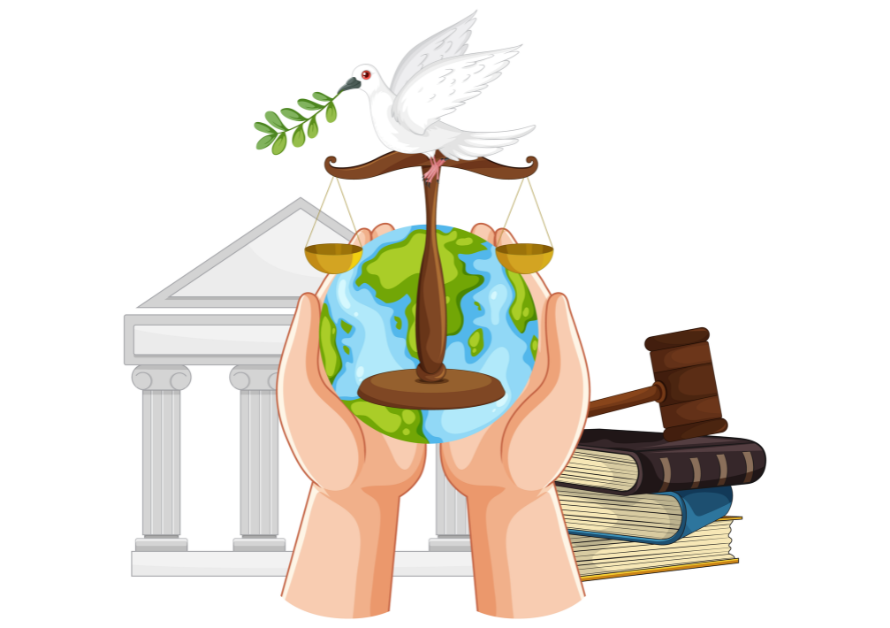
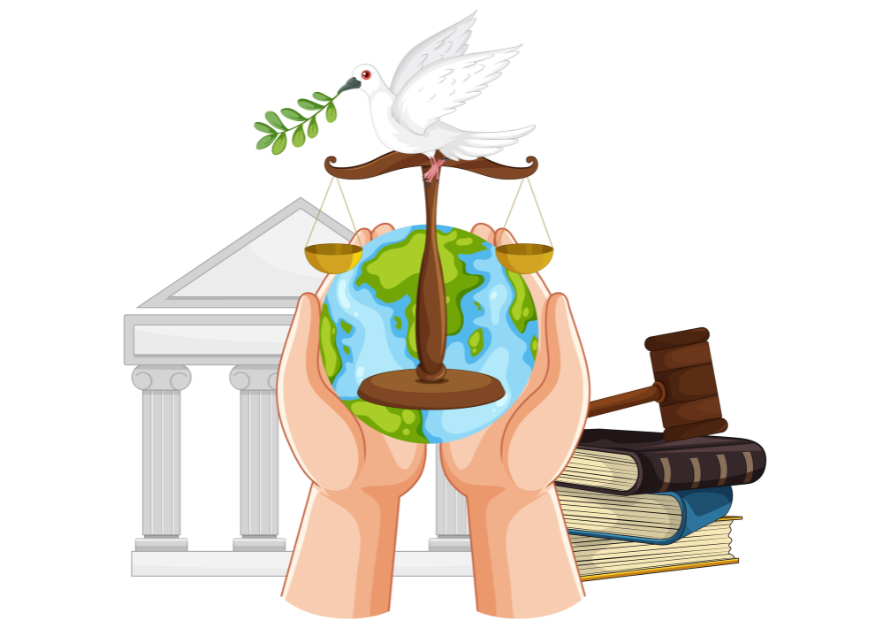
- The recent firm stance of the Supreme Court of India has clarified one fundamental principle: business in India will operate under the Indian Constitution, not under the terms dictated by foreign corporations.
- Against this backdrop, a critical question arises: why is the personal data of 1.4 billion Indians stored, processed, and monetized outside India? This is not merely a legal dispute—it is a civilizational choice about India’s digital future.
1️⃣ Data: The New Source of Power
In the 20th century, power was derived from:
- Land, industry, natural resources, oil
In the 21st century, power flows from:
- Data + Algorithms + Digital Networks
Whoever controls data can:
- Influence consumer behavior and markets
- Shape social narratives and cultural trends
- Impact political opinions and democratic processes
👉 Data domination is invisible, but its consequences last for generations.
2️⃣ Supreme Court’s Clear Message: The Constitution Comes First
The Supreme Court has categorically stated that:
- No company—foreign or domestic—can be above the Indian Constitution
“Consent” is valid only when it is:
- Informed
- Voluntary
- Given under a fair balance of power
The Court’s strong observation:
- “We will not allow even a single digit of data to be shared.”
The message is unambiguous:
- India is not a digital colony
- Companies that wish to operate here must respect Indian constitutional values
3️⃣ Questions Every Indian Must Ask
- Why are our personal photos, chats, and financial details stored abroad?
- Can the data of 1.4 billion Indians not be securely stored within India?
- Are “take-it-or-leave-it” terms a form of genuine consent?
- Has convenience quietly replaced vigilance over privacy?
👉 When choices are unequal, consent becomes compulsion.
4️⃣ Facts and Reality: Indian Users, Foreign Control
India has:
- Hundreds of millions of social media and messaging users
- Billions of daily digital interactions—messages, searches, videos
The reality:
- Most of this data is stored and analyzed on foreign servers
- Decisions about its use are driven by foreign corporate interests
The outcome:
- India is the world’s largest digital market
- But not the sovereign owner of its own data
👉 We generate the data, others control and monetize it.
5️⃣ Economic Cost: Wealth Created, Profits Exported
Foreign technology companies earn an estimated:
- ₹50,000+ crore annually from Indian user data
This wealth:
- Does not significantly strengthen Indian startups
- Does not primarily fund Indian research and innovation
- Does not proportionately create Indian jobs
Instead:
Algorithms are optimized for profit maximization,
not for social well-being or cultural balance
👉 Data extracted from India fuels prosperity elsewhere.
6️⃣ Impact on Democracy and Public Discourse
Global experiences show that data can be used:
- Not only for advertising
- But also for behavioral influence and political targeting
Targeted propaganda can:
- Amplify social divisions
- Distort public debate
- Influence electoral outcomes
The danger:
- When opinions are shaped before voting,
democratic choice loses its independence
👉 Free elections require free, unmanipulated minds.
7️⃣ National Security Implications
- Data analysis can reveal:Public sentiment and social fault lines
- Regional, economic, and psychological vulnerabilities
In times of crisis or conflict:
- Such information can become a strategic weapon
A nation that does not control its data:
- Cannot fully control its security environment
👉 Data stored abroad means security decisions are never fully sovereign.
8️⃣ Psychological Control: The Invisible Threat
Algorithms determine:
- What content you see
- How long you engage with it
- What ideas are amplified or suppressed
Impact on children and youth:
- Shapes identity and worldview
- Affects attention, confidence, and critical thinking
👉 You may feel free, while your preferences are being quietly engineered.
9️⃣ Rural India and Unequal Consent
Legal and technical terms like “opt-in” and “opt-out” are:
- Complex even for educated urban users
- Nearly inaccessible for large sections of rural India
The Supreme Court’s analogy:
- A contest between a lion and a lamb
Conclusion:
- This is not an equal contract
- It is consent obtained under imbalance
🔟 What India Must Do: A Strategic Roadmap
A. Legal Measures
- Enact a strong Data Sovereignty Law
- Mandate storage and processing of Indian data within India
- Impose heavy penalties for violations
B. Technological Measures
- Develop indigenous social media, messaging, and cloud platforms
- Encourage public–private partnerships in digital infrastructure
C. Economic Measures
- Tax incentives and support for Indian digital platforms
- Funding and incubation for data-driven startups
D. Social Measures
- Nationwide digital literacy programs
- Public awareness that data is a national asset
1️⃣1️⃣ Benefits of the Right Approach
- ₹50,000+ crore retained within India
- Creation of over 1 million high-quality tech jobs
- Emergence of Indian global technology leaders
- Stronger protection of citizen privacy
- More resilient democracy and national security
- Expanded opportunities for youth and innovation
Digital Swaraj in the Modern Age
This is not a battle between India and foreign companies.
It is a battle between:
- The Indian Constitution and unchecked corporate control
- Citizen rights and data-driven profiteering
The principle is clear:
- If you want to do business in India,
you must respect the Indian Constitution.
👉 Data sovereignty is digital sovereignty. Digital sovereignty is national self-respect in the 21st century.
🇮🇳 Jai Bharat, Vandematram 🇮🇳
Read our previous blogs 👉 Click here
Join us on Arattai 👉 Click here
👉Join Our Channels👈