Summary
- Since 2014, Bharat has witnessed a decisive transformation in its internal security and counter-terrorism posture.
- Moving away from reactive, incident-driven responses, the nationalist government adopted a zero-tolerance, prevention-first doctrine focused on intelligence integration, legal empowerment, border hardening, financial disruption, and sustained operational pressure.
- This strategy has not only reduced terror incidents and casualties but, more importantly, has neutralised several large-scale violence plots before execution.
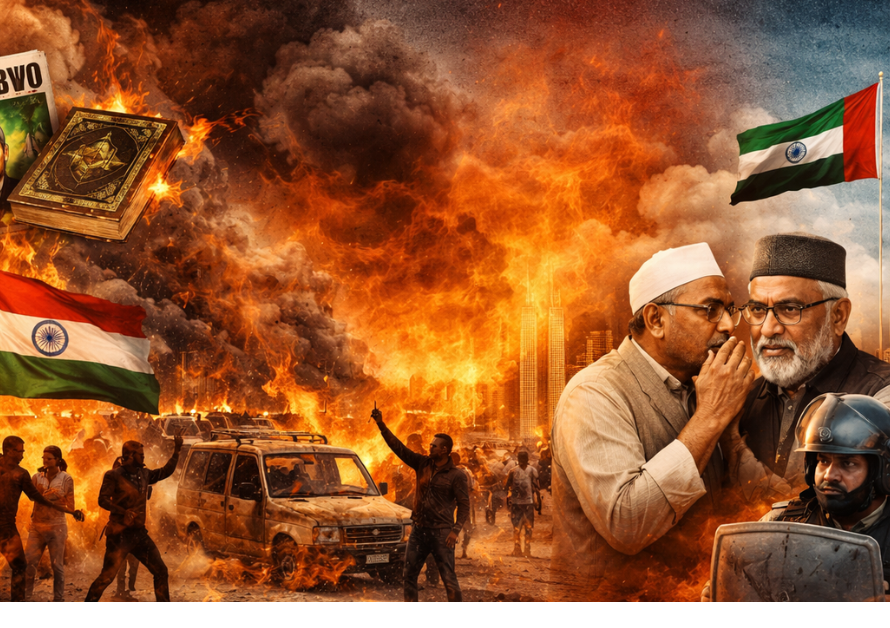
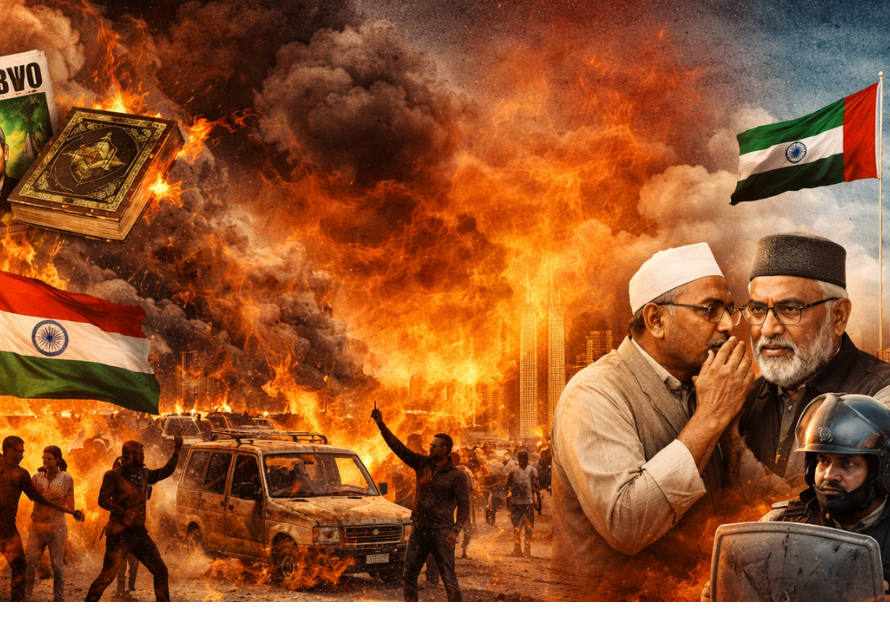
- The Delhi blast case and the Bareilly violence plan stand as concrete examples where timely intelligence fusion and coordinated action dismantled wider conspiracies, preventing mass casualties.
- This narrative traces landmark counter-terror initiatives that collectively strengthened Bharat’s safety, security, integrity, and sovereignty, culminating in the launch of the National IED Data Management System (NIDMS) in January 2026.
How Strong Political Will, Intelligence Integration, and Preventive Action Made Bharat Safer (2014–2026)
1. A Strategic Shift After 2014: From Reaction to Prevention
For decades, Bharat’s counter-terror approach was largely reactive:
- Investigations followed attacks
- Intelligence remained siloed
- Terror networks regenerated repeatedly
Post-2014, the government introduced a doctrine of prevention, centred on:
- Anticipating threats instead of merely responding
- Disrupting terror ecosystems early
- Treating terrorism as a systemic challenge, not isolated incidents
This strategic clarity became the foundation for all subsequent reforms.
2. Intelligence Integration: Revamp of the Multi-Agency Centre (MAC)
One of the most critical reforms was intelligence fusion.
- The revamped MAC (2025) connected district police units with 28 intelligence and enforcement agencies
- AI tools, GIS mapping, and predictive analytics enabled real-time threat assessment
- Mandatory intelligence sharing replaced ad-hoc coordination
This ensured that fragmented clues—financial irregularities, digital chatter, or suspicious movement—were correlated early, enabling pre-emptive action.
3. Case Study: Delhi Blast Plot – Preventing a Cascade of Attacks
- The Delhi blast case demonstrated the success of the prevention-first doctrine.
What worked:
- Early multi-agency intelligence inputs flagged suspicious activity
- Rapid forensic and digital correlation linked the device to wider planning
- Swift arrests and searches disrupted logistics, safe houses, and communication channels
- Indicators suggested multiple locations were under consideration
Outcome:
The incident was treated not as an isolated blast but as a potential node in a larger terror matrix. Early intervention collapsed the entire plot, preventing a possible series of coordinated attacks.
4. Case Study: Bareilly Violence Plan – Containment Before Ignition
- In Bareilly, intelligence agencies detected plans for large-scale communal violence.
Preventive measures included:
- Advance inputs on mobilisation, funding, and messaging
- Pre-emptive questioning and lawful detentions
- Visible policing and administrative coordination
- Disruption of organisers and communication networks
Result:
By breaking timing, crowd formation, and misinformation, the violence was neutralised before it could erupt, proving the value of anticipatory policing.
5. Legal Empowerment: NIA and UAPA Reforms
Legal reforms gave agencies the tools needed for early disruption:
- NIA Amendment Act (2019) expanded jurisdiction beyond borders
- Inclusion of cyber-terrorism, arms trafficking, and organised crime
UAPA amendments allowed:
- Designation of individuals as terrorists
- Early attachment of properties and assets
This shifted counter-terrorism from delayed prosecution to preventive neutralisation.
6. Strangling Terror Finances: Following the Money
Terrorism survives on funding. The 25-point anti-terror financing strategy targeted:
- Hawala and informal banking networks
- Shell companies and NGO fronts
- Crypto-based funding channels
- Narco-terror pipelines
Through coordination between FIU, ED, and NIA, assets worth ₹16,500+ crore were seized, collapsing the financial backbone of multiple terror modules.
7. Border Hardening: Anti-Drone Systems and CIBMS
External facilitation was countered through technology:
- Anti-drone systems neutralised UAV-based arms and drug smuggling
- Over 100 drones intercepted along Punjab and J&K borders
- CIBMS introduced smart fencing, thermal imagers, and anti-tunnel radars
By 2023, infiltration attempts dropped to historic lows, strengthening territorial integrity.
8. Operations on the Ground: All Out, Sindoor, and Mahadev
Sustained pressure denied terror groups recovery time:
- Operation All Out (since 2017) neutralised over 1,000 terrorists
- Recruitment and stone-pelting declined by over 90%
- Operations Sindoor and Mahadev dismantled leadership and infrastructure
This destroyed both armed and overground support networks.
9. Jammu & Kashmir: Collapse of the Terror Ecosystem
The clearest impact was visible in J&K:
- Terror incidents fell from 228 (2018) to 43 (2023)
- Security force fatalities dropped from 91 to 25
- Civilian deaths reduced from 55 to 13
The decline reflected ecosystem destruction, not temporary suppression.
10. NIDMS: Institutionalising Predictive Prevention
The National IED Data Management System (2026) represents the future:
- Centralised database of IED incidents
- Cross-state linkage of explosive signatures
- Mapping of supply chains and terror methods
- Early warning alerts to field units
NIDMS converts data into defence, ensuring threats are neutralised before execution.
Safety Through Strategy and Will
- The Delhi blast and Bareilly cases demonstrate a fundamental truth:
The real success of counter-terrorism lies in attacks that never happen.
Since 2014, strong political will, coherent strategy, and institutional reform have:
- Enhanced public safety
- Protected national integrity and sovereignty
- Built confidence in security institutions
Bharat’s message is now clear:
- Terrorism will not be managed—it will be anticipated, disrupted, and neutralised before it harms citizens.
🇮🇳 Jai Bharat, Vandematram 🇮🇳
For old Blogs please visit our website www.saveindia108.in
👉Join us on Arattai 👈
Arattai: https://tinyurl.com/mrhvj9vs
👉Join Our Channels 👈