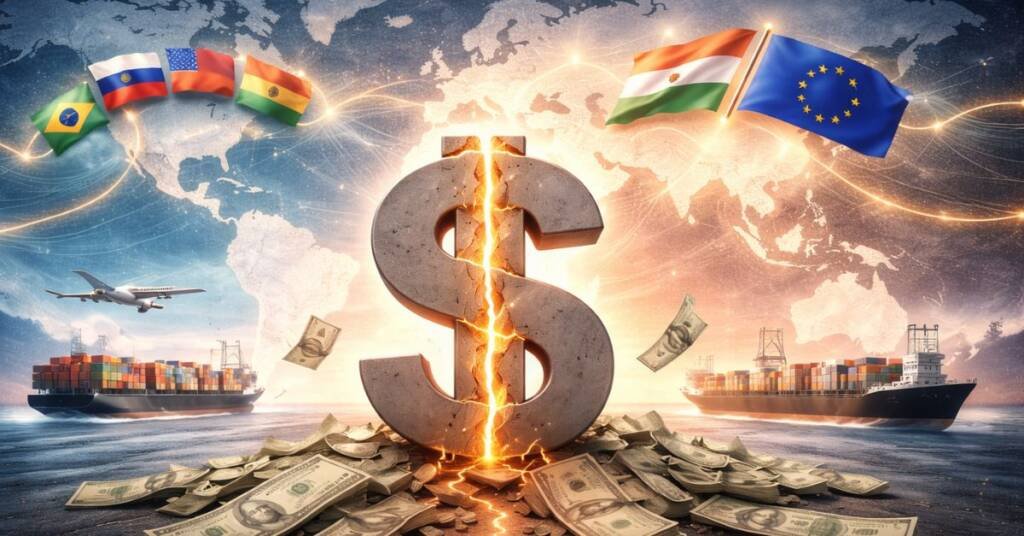
Summary
- The world is no longer witnessing only geopolitical change, but a profound geo-economic restructuring.
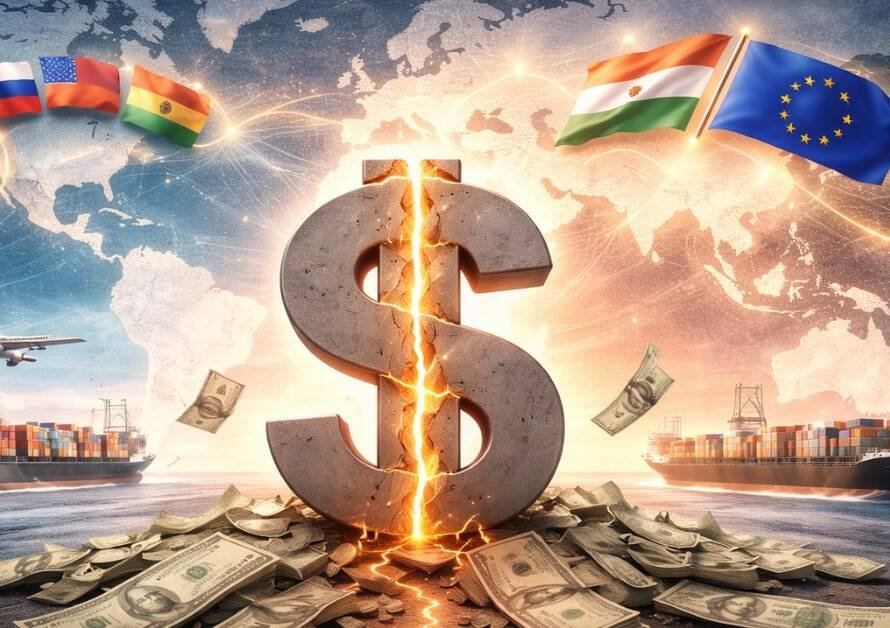
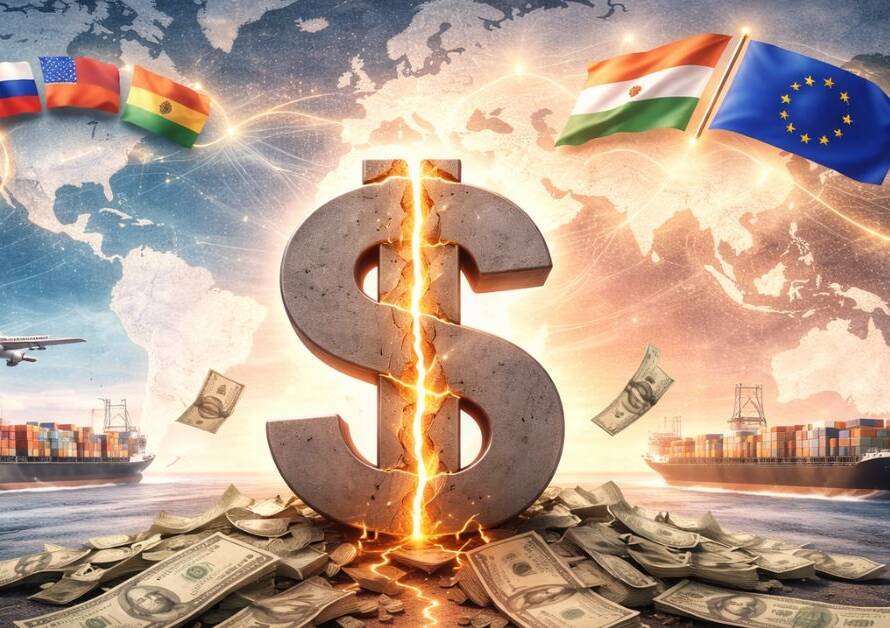
- After BRICS nations, institutional investors linked to Europe reducing exposure to U.S. Treasury bonds, America’s aggressive tariff policies, and simultaneously the emergence of the India–European Union Free Trade Agreement (India-EU FTA) all point in the same direction.
- This is not an attempt to bring down the United States, but a global effort to reduce dependence on an America-centric financial and trade system.
- The dollar is not collapsing—but its monopoly and “risk-free asset” halo are clearly weakening.
The Historical Dominance of the Dollar in the Global Financial System
Section 1: U.S. Treasuries—Once the World’s Safest Asset
After World War II, U.S. Treasuries were considered “risk-free assets” because:
- The United States was seen as a stable democracy
- Rule of law and institutions were trusted
- The dollar became the backbone of global trade and energy transactions
- U.S. policies were largely predictable
As a result:
- Central banks
- Pension funds
- Sovereign wealth funds
held U.S. Treasuries as the foundation of their reserves for decades.
Section 2: Why Trust Is Eroding—When Politics Overrides Finance
In recent years, investor perceptions have shifted due to:
- Increasing unilateralism in foreign policy
- Open political and economic pressure even on allies
- Sanctions being used as strategic weapons
- Sudden policy shifts undermining long-term predictability
Many European institutional investors have concluded:
- “When politics becomes unstable and aggressive, even the safest asset becomes risky.”
Section 3: Treasury Sales Despite Warnings—The Real Message
- When allies are openly warned that selling U.S. Treasuries will invite retaliation,
Yet institutional investors proceed anyway, it indicates:
- Long-term risk outweighs short-term fear
- Financial institutions do not operate on political rhetoric
- The erosion of trust has become structural, not temporary
This is not just selling—it is a no-confidence signal.
Section 4: Why Europe’s Move Is Historically Significant
- Treasury reductions by BRICS nations were expected due to long-standing strategic tensions.
But Europe is different:
- America’s closest ally
- The backbone of NATO
- A pillar of the dollar-centric global system
When Europe itself begins to reduce exposure, it marks:
- The end of decades of political trust
- A seismic shift in the global financial order
Section 5: Tariff Wars—America’s Self-Inflicted Damage
In recent months, the U.S. imposed unilateral tariffs on:
- Europe
- China
- Asia
- Developing economies
The results have been counterproductive:
- U.S. exports declined
- Domestic inflation increased
- Global supply chains were disrupted
- American firms lost competitiveness
Tariffs were meant to pressure others, but the real outcome was:
- A sharp decline in U.S. policy credibility
Section 6: De-Dollarization—Self-Protection, Not Hostility
- It is crucial to understand that de-dollarization is not an anti-U.S. conspiracy, but a risk-management strategy.
Today:
- Central banks are increasing gold reserves
- Multi-currency reserve systems are expanding
- Local-currency trade is rising
Because:
- “A system where one country sets the rules and imposes punishment cannot remain permanently safe.”
Section 7: India-EU FTA—Why It Adds Fuel to the Fire
- The India–EU Free Trade Agreement is not just a trade deal—it is a geo-economic signal.
It implies:
- Rapid expansion of India-Europe trade
- Reduced reliance on U.S. markets
- Re-routing of global supply chains away from America
If fully implemented:
- New trade flows may bypass the U.S.
- American firms could lose competitive ground
- Dollar-centric trade volumes may shrink
This represents a structural shift in global trade balance.
Section 8: Treasury Sell-offs + FTA = A Double Shock
Putting the pieces together, On one side:
- Treasury sell-offs
- Rising bond yields
- More expensive U.S. debt
On the other:
- New trade blocs outside U.S. control
- Alternative supply chains
- A multipolar economic order
Together, these create:
- Financial pressure
- Trade isolation
- Strategic marginalization
for the United States.
Section 9: Impact on the Average American
- This is not just a Wall Street issue.
Consequences include:
- Higher mortgage and auto-loan rates
- Slower business investment
- Job market pressure
- Potential cuts in welfare and infrastructure spending
In short:
- The cost of global distrust is ultimately paid by ordinary citizens.
Section 10: Is the Dollar Finished?
No. The dollar remains:
- The world’s largest reserve currency
- The most liquid financial market
But:
- Its monopoly is weakening
- Alternatives are being actively built
This is not collapse—it is a slow, structural erosion of dominance.
The World Is Not Trying to Destroy America—It Is Trying to Reduce Dependence on It
- This is not an immediate economic war, but it is a decisive turning point in global power balance.
If “America First” continues to mean:
- Pressure over partnership
- Trade as a weapon
- Disregard for trust
then it risks evolving into:
- America Expensive First
- America Isolated First
The world is not falling apart— the world is quietly choosing alternatives.
- And in global politics and finance, quiet decisions often create the biggest transformations.
🇮🇳Jai Bharat, Vandematram 🇮🇳
Read our previous blogs 👉 Click here
Join us on Arattai 👉 Click here
👉Join Our Channels 👈