Summary
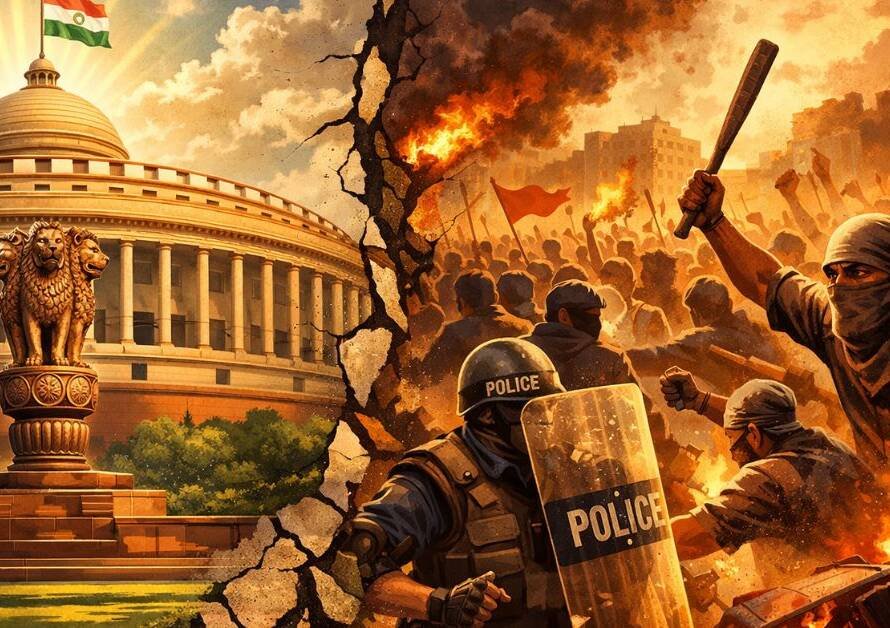
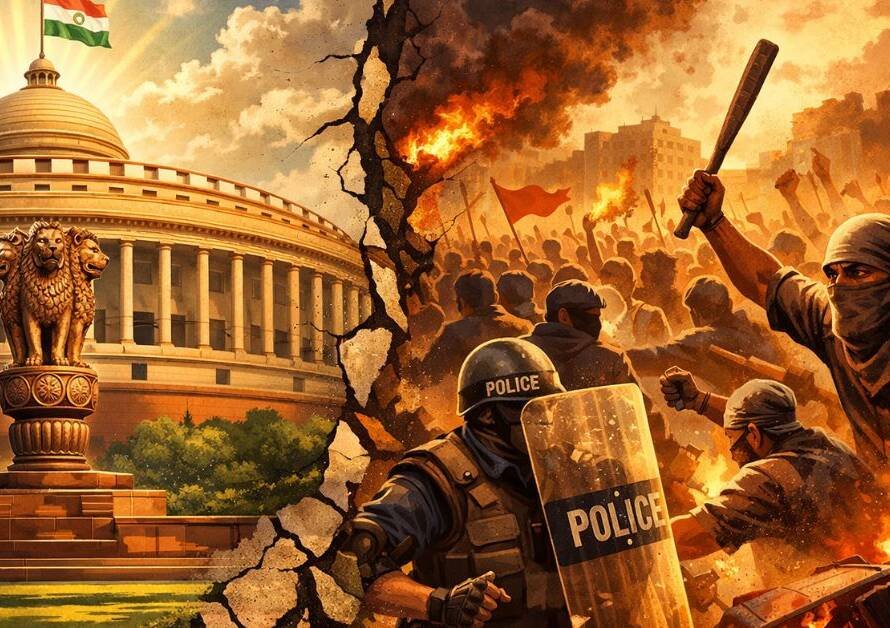
- India is a constitutional democracy — not a mob-driven system. Dissent is legitimate, criticism is necessary, and political confrontation is natural.
- However, when protest crosses into institutional disruption, unverified allegations weaken national credibility, and parliamentary decorum is compromised, democracy itself is tested.
- Mobocracy must never be allowed to rise above democratic principles and constitutional supremacy.
- Adequate legal and parliamentary action must be taken — firmly and fairly — to safeguard the dignity of Parliament, uphold the Constitution, and prioritize national interest above political expediency.
1️⃣ Democracy Grants Rights — Mobocracy Imposes Pressure
In a democracy:
✔️ The right to dissent exists
✔️ The right to question the government exists
✔️ The right to oppose policies exists
But democracy does not function through:
❌ Chaos and intimidation
❌ Emotional pressure tactics
❌ Institutional disrespect
❌ Organized disruption of constitutional forums
- If Parliament becomes a stage for uncontrolled agitation, coordinated disorder, or symbolic occupation of institutional authority, then we must ask:
Are we strengthening democracy — or normalizing mob-style pressure within constitutional spaces?
👉 Mobocracy must never be allowed to raise its head above democratic principles and the Constitution.
2️⃣ Parliament Is Not a Street Platform — It Is the Symbol of Sovereignty
- The Lok Sabha is not merely a debating chamber.
It is:
- The institutional expression of the people’s sovereignty
- The constitutional heart of legislative authority
- The formal decision-making center of national policy
If within that sacred forum:
- Unverified and extreme allegations are normalized
- Institutional heads are publicly delegitimized
- Security protocols are compromised
- Parliamentary language crosses acceptable limits
then the issue ceases to be partisan. It becomes civilizational and constitutional.
- A democracy survives not merely on elections — but on institutional respect.
3️⃣ Substantive Motion: A Constitutional Instrument, Not a Political Weapon
A Substantive Motion is:
- A self-contained parliamentary proposal
- Debatable within the House
- Decidable by vote
- A mechanism for addressing serious conduct
>It is distinct from a privilege motion. It carries broader implications for accountability.
If invoked, its purpose must be:
✔️ To restore parliamentary discipline
✔️ To reinforce accountability
✔️ To examine serious conduct transparently
✔️ To protect institutional credibility
- It must not become an instrument of political vengeance.
- Firmness must operate within constitutional boundaries.
4️⃣ National Interest Must Override Political Drama
- Political competition is inevitable.
- Polarization is common.
- Election cycles never end.
But the following must remain above political theatre:
🇮🇳 National security
📜 Constitutional dignity
🏛 Parliamentary credibility
🌍 India’s international standing
If political rhetoric:
- Projects India as institutionally unstable
- Undermines confidence in core constitutional bodies
- Internationalizes domestic disputes in ways that harm national credibility
then the long-term cost to the nation exceeds any short-term political gain.
- National interest must receive the highest priority — always.
5️⃣ Required Legal and Parliamentary Actions
If allegations include:
- Breach of parliamentary decorum
- Security protocol lapses
- Use of unparliamentary language
- Serious unverified accusations affecting national credibility
Then the appropriate course is clear:
🔹 Parliamentary inquiry under established rules
🔹 Review of video and documentary evidence
🔹 Examination by relevant committees
🔹 Rule-based disciplinary measures where warranted
🔹 Strengthening of security procedures
Such actions must be:
- Lawful
- Transparent
- Proportionate
- Constitutionally sound
Discipline enforced through procedure strengthens democracy. Discipline enforced through impulse weakens it.
6️⃣ Democracy Survives on Self-Restraint
- Democracy is not sustained by rights alone. It is sustained by restraint.
If:
- Every disagreement becomes disruption
- Every accusation becomes spectacle
- Every platform becomes confrontation
>then the line between democracy and mobocracy begins to fade.
India — a vast, diverse civilizational state — depends on:
- Institutional stability
- Legal clarity
- Constitutional supremacy
- Responsible political conduct
Without these, even electoral mandates cannot guarantee long-term stability.
7️⃣ The Message That Must Go Out
From this moment, three principles must be unmistakably clear:
📌 Parliament’s dignity is non-negotiable
📌 The Constitution stands above party and personality
📌 National interest overrides political expediency
If this message is reinforced through lawful and proportionate action, democracy is strengthened.
- If it is diluted, instability becomes normalized.
India is a constitutional republic — not a street assembly governed by volume.
- It will not be run by emotional pressure.
- It will not be governed by institutional intimidation.
- It will not be steered by disruption within constitutional chambers.
It will function through:
- Law
- Procedure
- Accountability
- Constitutional supremacy
Where necessary, adequate legal and parliamentary action must be taken against relevant individuals — firmly, fairly, and within the law — to ensure:
- The dignity of Parliament
- The supremacy of the Constitution
- The protection of national interest
Democracy must be defended — not only from authoritarian excess, but also from mob-driven erosion.
🇮🇳 Jai Bharat, Vandematram 🇮🇳
Read our previous blogs 👉 Click here
Join us on Arattai 👉 Click here
👉Join Our Channels 👈