Summary
- India’s Constitution guarantees freedom of speech while simultaneously mandating reasonable restrictions to protect sovereignty, public order, and national integrity.
- However, for decades, India has witnessed a selective and ideologically driven application of free speech laws, policies, and institutional responses.
- Until 2014, governance was marked by pseudo-secularism, vote-bank politics, selective appeasement, and uneven enforcement of laws, often at the cost of national security and social cohesion.
- Post-2014, a nationalistic and development-oriented government attempted corrective reforms, but progress was frequently slowed by ideological resistance, ecosystem-driven narratives, and judicial overreach.
- Recent shifts in judicial approach—particularly under new leadership—signal a welcome rebalancing.
- What India urgently needs today is a fair, fast, and nationally responsible judiciary, uniform application of laws, and clear regulations on free speech, hate speech, and anti-national activities.
From Unequal Enforcement of laws to the Need for a Fair, Fast, and Nationally Responsible Judiciary
1. Freedom of Speech: A Right with Responsibilities
- Freedom of expression is a foundational democratic right, but it was never intended to be absolute.
- The Constitution explicitly allows reasonable restrictions
These restrictions exist to protect:
- National sovereignty
- Public order
- Social harmony
- Constitutional integrity
The current challenge is not censorship—it is selective interpretation and enforcement.
2. The Double Standard in Speech Enforcement
- A consistent pattern has emerged in public life
Speech in support of national interest, patriotism, or civilizational identity is often:
- Closely scrutinized
- Criminalized
- Branded as hate speech
Speech that:
- Undermines national institutions
- Questions sovereignty
- Collectively vilifies Hindu society
- Echoes hostile or extremist narratives
Is frequently defended as dissent or free expression.
This asymmetry has:
- Silenced moderate patriotic voices
- Encouraged radical rhetoric
- Eroded trust in institutions
3. Pseudo-Secularism and Vote-Bank Governance (Pre-2014)
- For decades after Independence—particularly until 2014—India operated under a distorted form of secularism.
Key Characteristics
- Selective application of laws and welfare schemes
- Appeasement-driven policymaking aimed at electoral consolidation
- Tolerance of extremist rhetoric and activities under minority protection narratives
- Marginalization of majority Hindu civilizational concerns, often dismissed as communal
This approach:
- Politicized religious identity
- Weakened equality before law
- Created long-term social resentment
Rather than strengthening secularism, it institutionalized inequality.
4. Opposition to Nationalism as a Political Posture
Another recurring issue was the normalization of opposition to nationalism itself.
- National security initiatives were delayed or diluted
- Strong action against terrorism and extremism was politically constrained
- Narratives questioning India’s unity and sovereignty were normalized in elite discourse
In practice:
- Supporting national interest was portrayed as dangerous
- Questioning the nation was portrayed as intellectual dissent
This had serious consequences for:
- Internal security
- Public safety
- Institutional morale
- Sovereignty and integrity of the State
5. Post-2014: Reform Efforts and Ecosystem Resistance
The change in government in 2014 marked a clear shift:
- Emphasis on national security and internal stability
- Uniform development policies over identity-based appeasement
- Governance reforms aimed at efficiency and accountability
>However, reforms faced persistent resistance:
A political–ideological ecosystem consistently projected the government as:
- Authoritarian
- Anti-democratic
- Institutionally destructive
Even constitutionally valid policies were:
- Challenged endlessly
- Stalled through litigation
- Delegitimized through narratives
6. Judicial Ideology and Policy Paralysis
- Judicial independence is essential, but ideology-driven judicial activism can become counterproductive.
When ideology overrides constitutional balance:
- Policy implementation slows
- Executive intent is presumed malicious
- National security concerns are discounted
- Litigation becomes a political weapon
This environment enabled:
- Anti-national narratives to gain legal cover
- Governance paralysis
- Institutional confrontation instead of cooperation
7. A Welcome Shift: Rebalancing the Judiciary
- Recent developments indicate a course correction.
Under newer judicial leadership, including Chief Justice Justice Surya Kant, there are visible signs of:
- Greater respect for separation of powers
- Faster case disposal affecting governance
- Reduced ideological posturing
- Clearer recognition of national interest and administrative urgency
Judgments, comments, and observations increasingly reflect:
- Institutional confidence
- Constitutional maturity
- Reduced fear of political or activist backlash
This is not judicial compromise—it is judicial balance.
8. What India Urgently Needs Today
- India does not need weakened institutions.
- It needs balanced, fair, and nationally responsible institutions.
Urgent Requirements
- Uniform application of laws across all citizens
- Clear, objective definitions of hate speech
- Equal accountability for politicians, activists, media, and influencers
- Fast-track judicial processes for governance and security matters
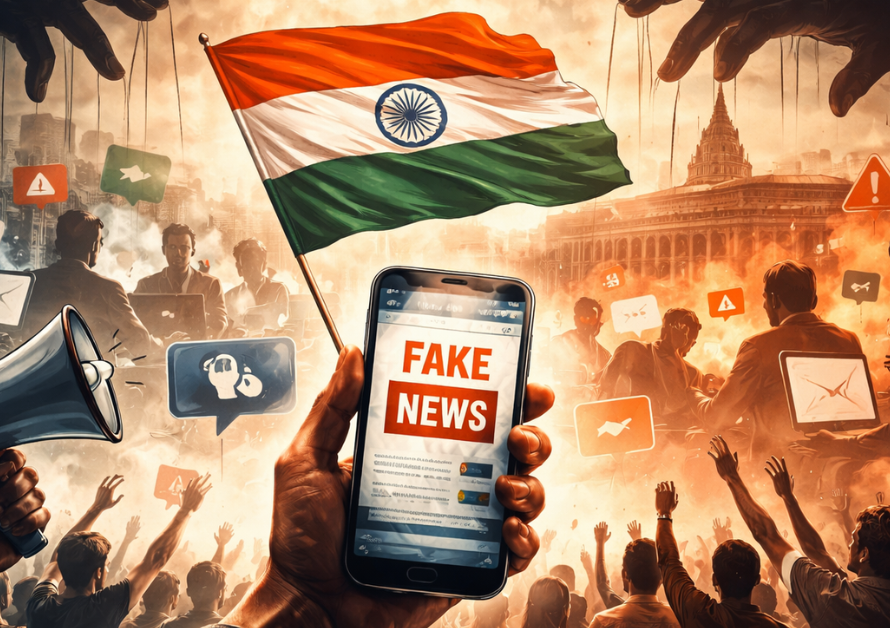
- Zero tolerance for deliberate misinformation and incitement
Free speech must be protected—but responsibility must be enforced.
9. Restoring Institutional Harmony
A healthy democracy requires:
- Confident executive governance
- Independent yet balanced judiciary
- Equal law for all
- Responsible dissent
- Zero tolerance for destabilization
Institutional harmony does not mean institutional subservience.
It means constitutional alignment in national interest.
Justice to Speech, Justice to the Nation
- Selective secularism, selective law enforcement, and ideological obstruction have weakened India for decades. Correcting this imbalance is not authoritarianism—it is constitutional justice.
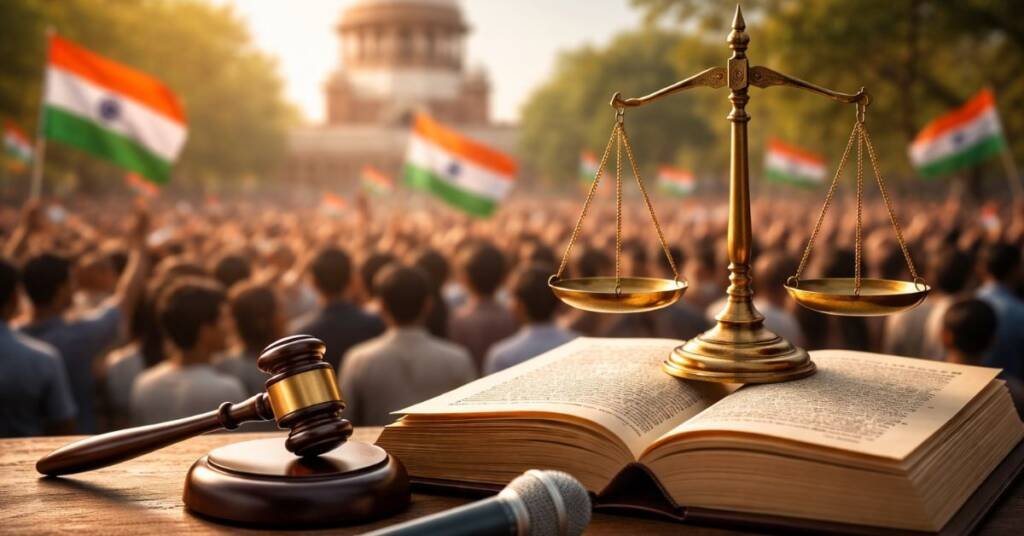
A fair, fast, and nationally responsible judiciary, working in harmony with an elected government, is essential to:
- Protect free expression
- Prevent hate and incitement
- Safeguard national security
- Restore public trust
India’s democracy will be strengthened not by fear or favoritism, but by uniform law, responsible speech, and institutional balance.
🇮🇳 Jai Bharat, Vandematram 🇮🇳
Read our previous blogs 👉 Click here
Join us on Arattai 👉 Click here
👉Join Our Channels 👈