From Bias to Propaganda
- A free press is essential in a democracy, but its credibility rests on accuracy, balance, and accountability.
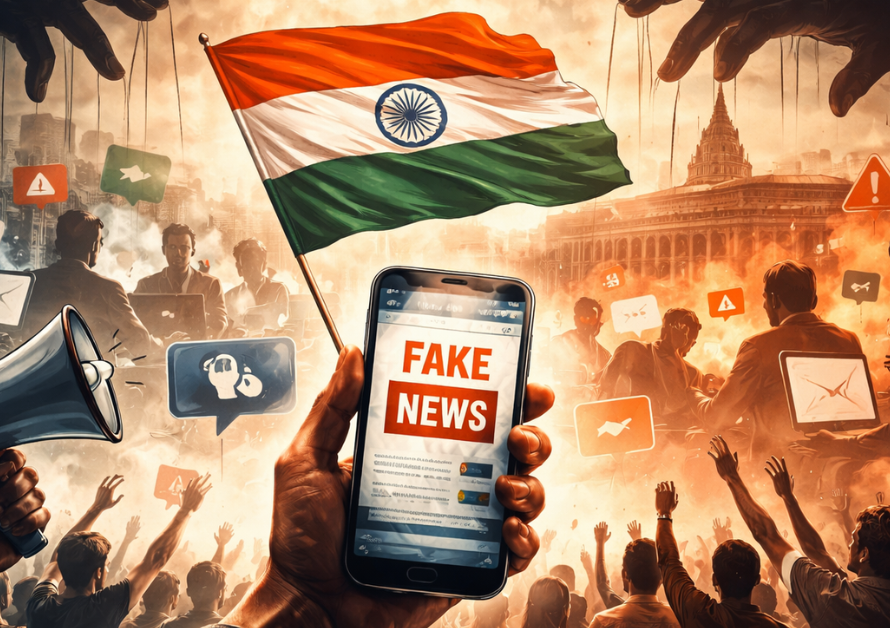
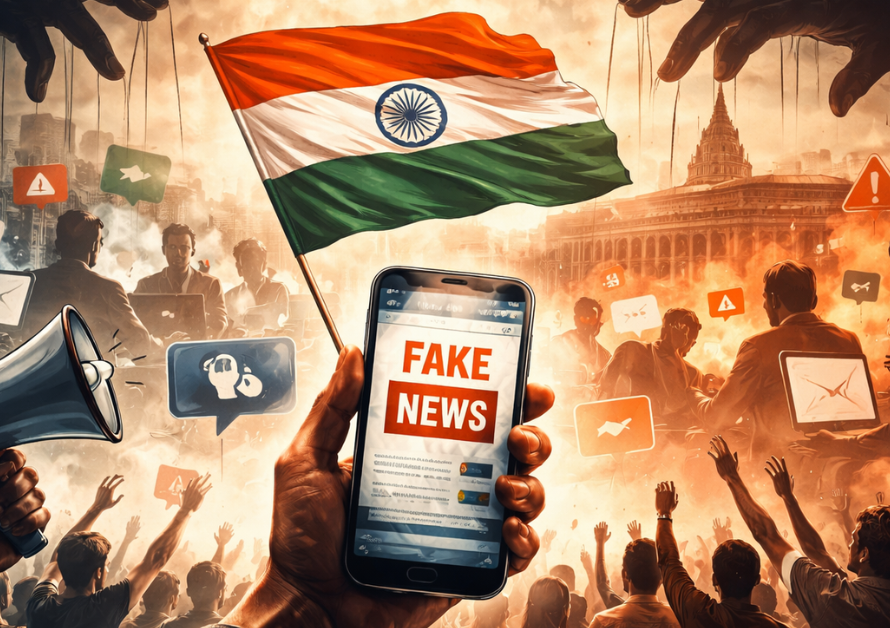
- When reporting repeatedly blurs facts with interpretation, or amplifies unverified claims through sensational framing, it stops scrutinising power and begins manufacturing perception.
- Over the past decade, sections of India’s elite English-language media—often described as “Lutyens’ media”—have faced such criticism, with platforms like The Wire frequently cited.
Not Isolated Errors, but a Pattern
Across elections, national security, public health, and culture, similar trends recur:
- Sensational headlines suggesting systemic failure, while articles add caveats later
- Selective reading and framing of sources
- Premature amplification of allegations before verification
- Analysis presented as fact
- Corrections or clarifications given minimal visibility
The result is that first impressions harden, while later corrections fade.
The Narrative Battle After 2014
Since 2014:
- Structural reforms have been disproportionately labelled “authoritarian”
- Isolated failures amplified while broader achievements were minimised
- Constitutional institutions subjected to default suspicion
- Civilisational and cultural expression framed as “extremism”
This has weakened informed debate and fostered mistrust.
Critics’ View of the Underlying Motive
Critics argue the objective is a return to the pre-2014 ecosystem marked by:
- Elite control over policy narratives
- Weak accountability
- Leakage of public resources
- Limited strategic autonomy
Post-2014 reforms disrupted these structures, triggering resistance.
Elections, Institutions, and the Cost of Hasty Allegations
- Unsubstantiated claims of electoral manipulation:
- Erode trust in democratic processes
- Undermine institutional credibility
- Breed voter cynicism
Democracy requires criticism—but also restraint.
High-Risk Domains: Health and Security
In public health and national security, misreporting has real consequences:
- Vaccine hesitancy and public fear
- Distorted threat perception
Here, journalistic rigor is non-negotiable.
Benchmarks of Responsible Journalism
- Fidelity to sources
- Fact-aligned headlines
- Clear separation of reporting and opinion
- Corrections with equal prominence
- Uniform standards across ideologies
- Transparency in funding and conflicts of interest
Conclusion
This is not a call for censorship—it is a call for higher journalistic standards.
- Criticism strengthens democracy
- Propaganda weakens it.
Narrative engineering may not halt India’s progress, but once credibility is lost, regaining it is difficult.
Old Blogs: https://saveindia108.in/our-blog/