Summary
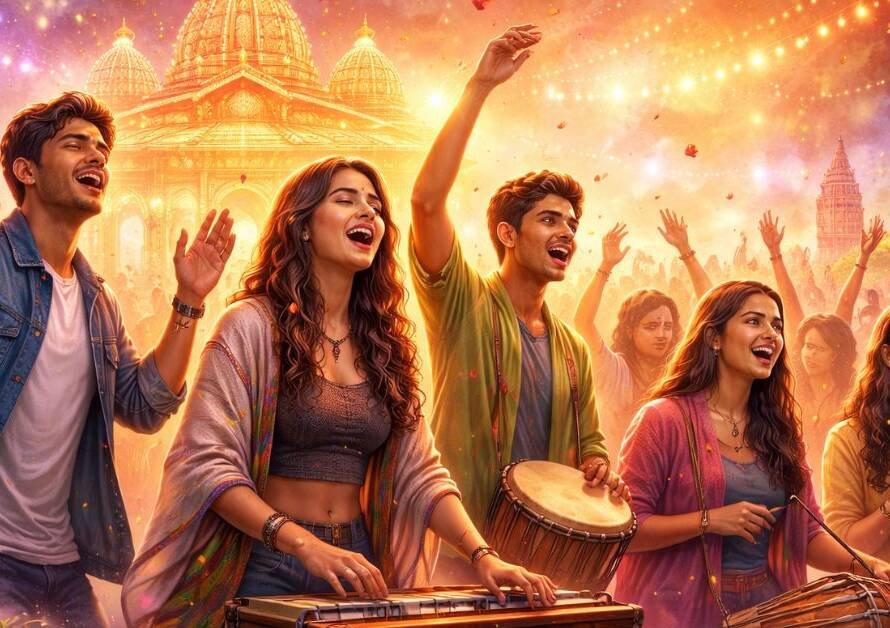
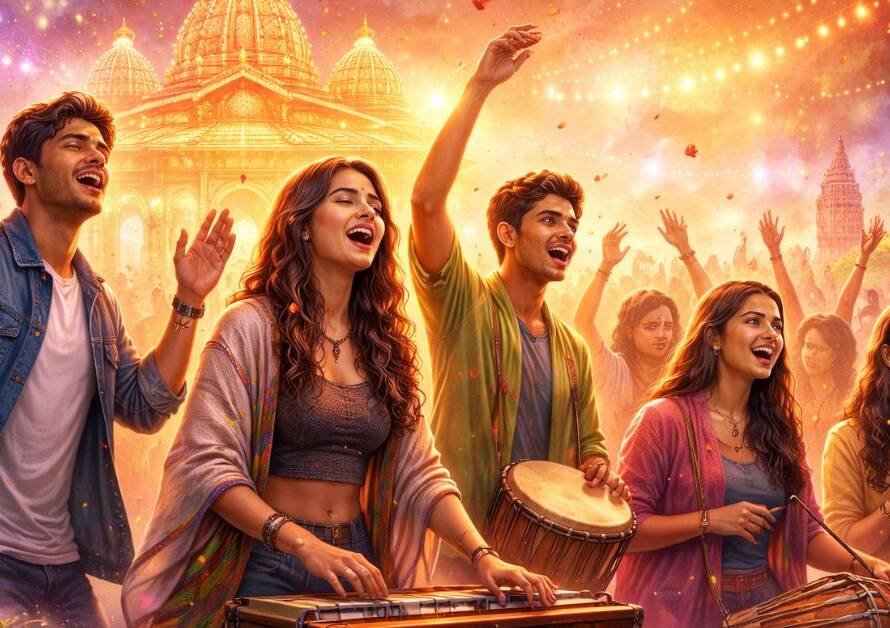
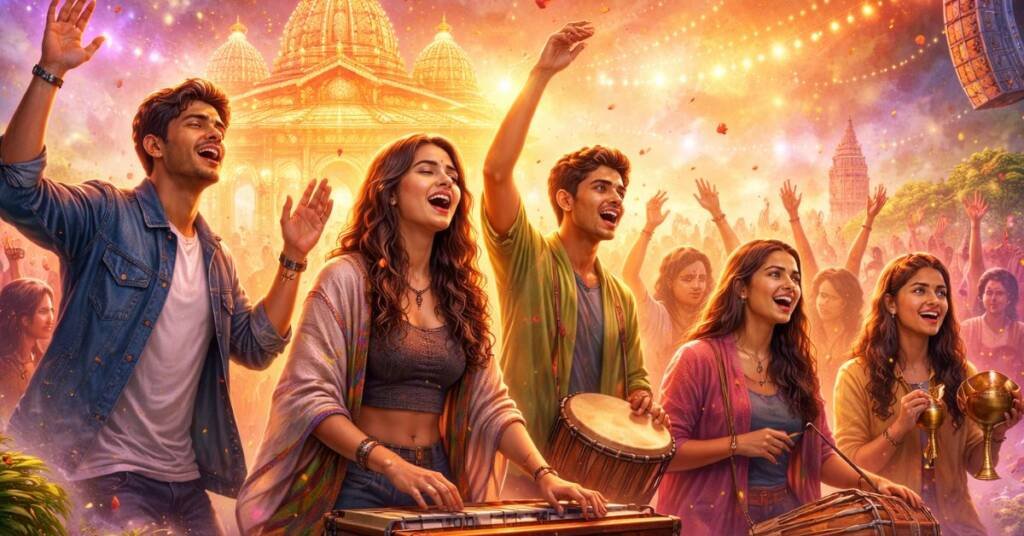
- India is witnessing a profound cultural transformation as Generation Z reclaims spiritual spaces through the phenomenon of Bhajan Clubbing. What appears to be a fusion of devotional music and concert-style gatherings is in fact a deeper reflection of Sanatana Dharma’s revival in contemporary Bharat.
- Over the past decade, increased national focus on yoga, meditation, Ayurveda, temple restoration, and civilizational heritage has influenced the mindset of young Indians. Instead of viewing tradition as ritualistic or outdated, Gen Z is rediscovering its relevance to mental peace, health, identity, and community.
- This revival is not imposed—it is being adapted innovatively by youth themselves. However, for this resurgence to remain sustainable, emphasis must shift from surface-level celebrations to true Sanatana values that bring lasting peace and happiness in daily life.
The Cultural Reset of Modern Bharat
1. The Emergence of Bhajan Clubbing: A Visible Cultural Shift
• Bhajan Clubbing blends traditional kirtan and bhajans with modern concert aesthetics.
• Young participants gather in alcohol-free, devotion-centered environments.
• Events include amplified sound systems, stage lighting, guitars, drums, and electronic elements.
• The spiritual core remains intact despite contemporary presentation.
• Prime Minister Narendra Modi acknowledged the trend in Mann Ki Baat, describing it as a concert-like celebration rooted in devotion.
What may seem like a youth trend is actually a signal of deeper civilizational re-engagement.
2. The Broader Context: Sanatana Revival in the Modi Era
The rise of Bhajan Clubbing must be understood within a larger framework.
Over the past decade, there has been:
• Global promotion of International Yoga Day.
• Renewed emphasis on meditation as a lifestyle practice.
• Institutional strengthening of Ayurveda systems.
• Restoration and development of temple corridors (e.g., Kashi Vishwanath, Ayodhya).
• Open articulation of civilizational pride in public discourse.
• Promotion of Sanatana values not only domestically but internationally.
This environment has normalized cultural confidence.
- When leadership openly affirms Sanatana heritage, it reshapes generational psychology.
Tradition stops appearing outdated. It begins appearing empowered.
3. Gen Z’s Changing Mindset
Earlier exposure of youth to tradition was often limited to:
• Ritual participation without explanation.
• Festival celebrations without philosophical depth.
• Cultural symbolism without practical life application.
Such exposure failed to deeply influence many young minds because it lacked focus on:
• Inner peace.
• Ethical discipline.
• Emotional stability.
• Practical well-being.
>Today, the shift is different.
Gen Z is increasingly drawn to:
• Yoga for physical strength and flexibility.
• Meditation for anxiety and focus management.
• Ayurveda for lifestyle diseases and immunity.
• Devotional gatherings for emotional belonging.
• Spiritual tourism for experiential connection.
This is not ritual repetition—it is value exploration.
4. Health, Wellness, and Practical Relevance
Gen Z faces modern pressures:
• Academic competition.
• Career instability.
• Digital overload.
• Social comparison stress.
• Mental health challenges.
Sanatana knowledge systems offer practical solutions:
• Yoga improves posture, breathing, and stress resilience.
• Meditation reduces anxiety and enhances clarity.
• Ayurveda promotes balanced nutrition and preventive care.
• Bhakti practices create emotional harmony and collective belonging.
This integration of spirituality with health is reshaping perception.
- Sanatana Dharma is no longer seen merely as religious identity.
It is increasingly viewed as a life-management framework.
5. Spiritual Tourism and Experiential Awakening
Another visible shift is increased youth participation in spiritual tourism.
Young Indians are:
• Visiting Varanasi for Ganga Aarti experiences.
• Traveling to Rishikesh for yoga retreats.
• Exploring Ayodhya, Ujjain, Kedarnath, and Dwarka.
• Attending satsangs and meditation camps.
Improved infrastructure and cultural presentation have made these experiences more accessible and dignified.
- When youth experience spirituality firsthand rather than through textbooks, transformation deepens.
6. Innovation, Not Imposition
One of the most significant aspects of this revival is that Gen Z is adapting Sanatana practices in innovative ways:
• Remixing bhajans with contemporary music formats.
• Hosting devotional events in concert-style venues.
• Using social media to popularize kirtan clips.
• Designing spiritual merchandise appealing to youth aesthetics.
• Building inclusive communities centered around positivity.
This is voluntary adaptation—not forced conformity.
- Tradition survives through relevance, not rigidity.
7. From Celebration to Core Values
- While Bhajan Clubbing and festival-scale devotion generate enthusiasm, the long-term sustainability of revival depends on deeper engagement.
Youth must be exposed to:
• The concept of Dharma as righteous living.
• Karma as accountability and responsibility.
• Detachment as emotional balance.
• Seva as social duty.
• Self-realization as life’s higher purpose.
Without philosophical grounding, revival risks becoming spectacle.
- With value-centric understanding, it becomes transformation.
8. Cultural Confidence and Global Projection
The international recognition of yoga and Ayurveda has created:
• Global legitimacy for Indian knowledge systems.
• Increased pride among young Indians.
• A shift from defensive identity to confident articulation.
Gen Z now sees Sanatana heritage discussed at global platforms.
This validation influences adoption patterns.
- Youth are not rejecting modernity; they are redefining it.
They are demonstrating that:
• Modern production can host devotion.
• Technology can amplify tradition.
• Global platforms can carry ancient wisdom.
9. The Way Forward: Depth Over Display
For the revival to remain meaningful:
• Emphasis must remain on inner transformation, not outward spectacle.
• Ritual should be connected to reasoning.
• Celebration should be connected to character.
• Spirituality should translate into daily conduct.
Sanatana Dharma’s strength lies not in scale of events, but in:
• Peaceful living.
• Ethical clarity.
• Compassionate action.
• Balanced ambition.
If Gen Z internalizes these principles, the revival will sustain across generations.
10. A Generational Cultural Reset
- Bhajan Clubbing is a visible symbol of something much larger.
It reflects:
• A shift from intoxication to introspection.
• From borrowed templates to rooted innovation.
• From cultural hesitation to cultural confidence.
• From ritual participation to value exploration.
During this era of renewed focus on Sanatana Dharma, yoga, meditation, and Ayurveda, Gen Z is discovering that tradition offers solutions to modern stress.
>They are not abandoning global exposure.
>They are integrating it with civilizational depth.
- The responsibility now lies in ensuring that youth engage not only with celebration, but with core Sanatana values that nurture peace, happiness, and discipline in everyday life.
If guided wisely, this revival can shape:
• Healthier individuals.
• More stable communities.
• A culturally confident nation.
• And a globally respected civilizational identity.
Bhajan Clubbing is not merely music. It is momentum.
- And that momentum signals a new chapter in Bharat’s cultural evolution.
🇮🇳Jai Bharat, Vandematram 🇮🇳
Read our previous blogs 👉 Click here
Join us on Arattai 👉 Click here
👉Join Our Channels 👈