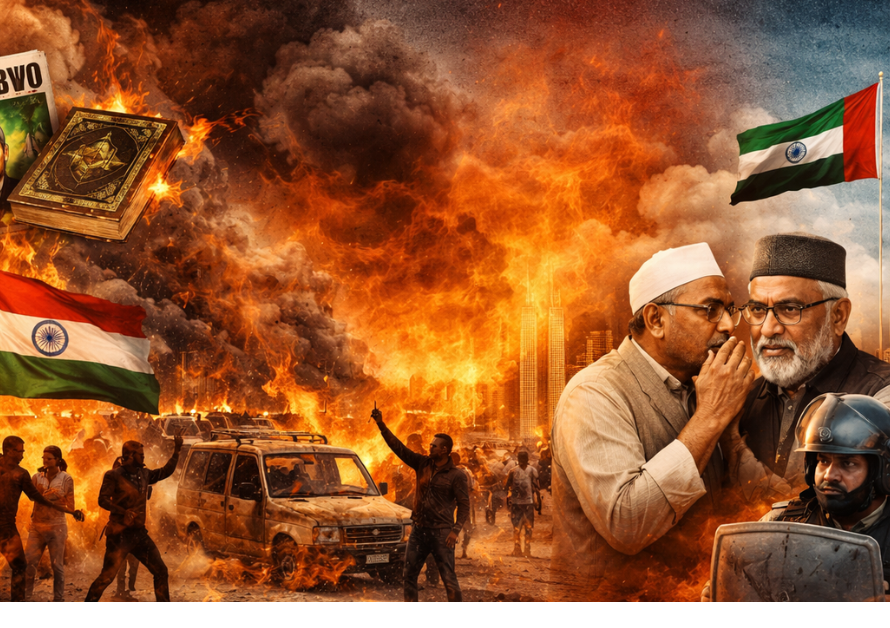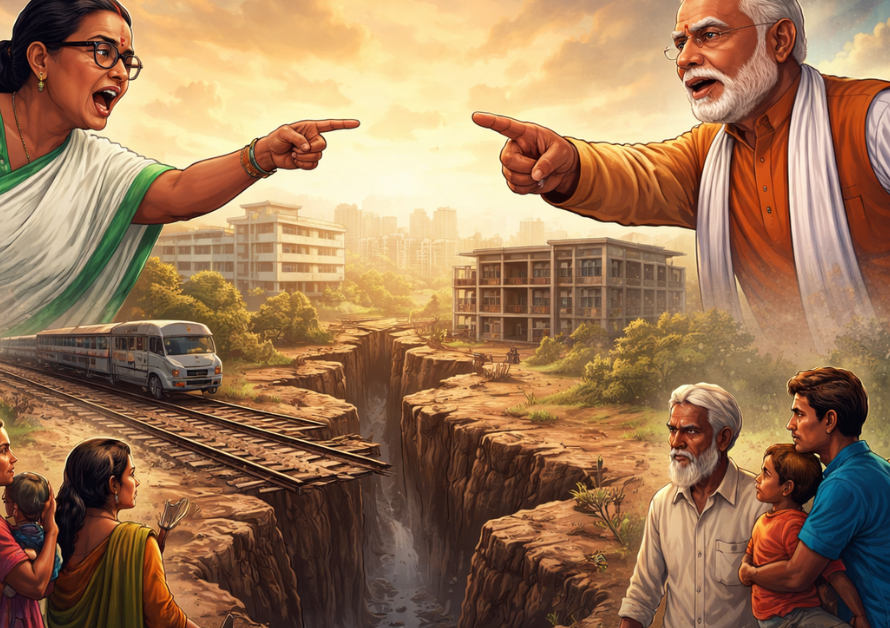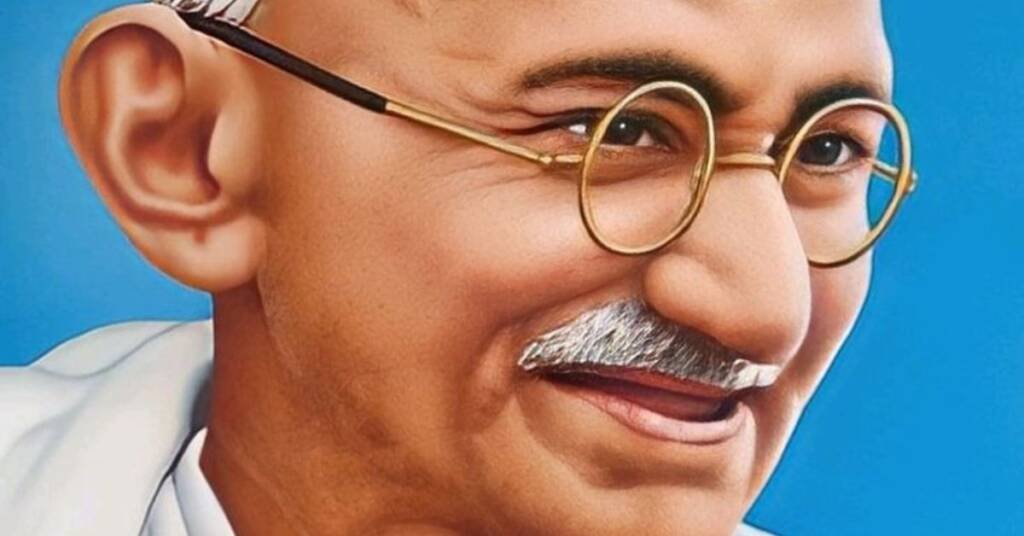
- “Gandhi Vadh Kyon” — a banned book under Congress rule — questioned the one-sided version of Indian history.
- It didn’t glorify violence, but demanded truth about how Bharat was partitioned and millions of Hindus were massacred.
- The book reveals how appeasement politics, selective compassion, and suppression of Hindu voices led to one of the greatest human tragedies of the 20th century.
🔹 1. The Partition Horror
- In 1947, freedom came drenched in blood.
- Trains from newly created Pakistan arrived in Delhi filled with corpses — men, women, and children butchered.
- Police used shovels to lift bodies; the air of Delhi reeked of burning flesh.
- These trains were mockingly called “Azadi ka tohfa” — the gift of freedom.
Atrocities on Hindus:
- Hindu temples destroyed, women raped, and families slaughtered.
- Over 2 crore Hindus were forcibly converted, and 10 lakh women abducted or enslaved.
- Hindu refugees arrived in India with nothing but wounds and trauma.
Gandhi’s Response:
- Instead of supporting victims, Gandhi insisted India must pay ₹55 crore to Pakistan, saying it was their “rightful share.”
- When Nehru hesitated, Gandhi went on a fast unto death — not to save Hindu refugees, but to release money to Pakistan.
🔹 2. Refugees and Gandhi’s Selective Sympathy
- Over 4 million Hindu refugees sought shelter in Delhi, many staying in abandoned mosques.
- Gandhi ordered police to evict them, declaring no Hindu should stay in a mosque.
- Women and children were thrown out in freezing nights — with no food or roof.
- Yet, Gandhi continued to appeal for protection of Muslims, not the rehabilitation of Hindu refugees.
🔹 3. Gandhi’s Political and Moral Contradictions
Key Incidents Exposing His Bias:
- Did not condemn British brutality in Jallianwala Bagh.
- Refused to intervene in Bhagat Singh’s hanging.
- Supported the Khilafat Movement — which later caused the Moplah genocide in Kerala.
- Called the murderer of Swami Shraddhanand his “brother.”
- Criticized Shivaji, Maharana Pratap, and Guru Gobind Singh as “misguided patriots.”
- Urged the Hindu ruler of Kashmir to give up his throne, but supported the Nizam of Hyderabad.
- Addressed Jinnah as “Quaid-e-Azam” and justified partition.
- Imposed Nehru over Sardar Patel as Prime Minister despite Congress votes.
Conclusion:
- Gandhi’s “non-violence” turned into political weakness.
- His obsession with appeasement made Hindus second-class citizens in their own land.
- We are still paying the price for the same.
🔹 4. Nathuram Godse – The Patriot Misunderstood
Who Was He?
- A nationalist, journalist, and former Gandhi follower who witnessed the destruction of Hindus during partition.
- He felt Gandhi’s actions endangered Bharat Mata and humiliated Hindu civilization.
His Reasons (as stated in court):
- Gandhi’s betrayal of Hindu interests.
- His silence on Moplah atrocities.
- His insistence on sending ₹55 crore to Pakistan.
- His interference in national policies for Muslim appeasement.
- His continuous humiliation of Hindu heroes and traditions.
- His support for a wide corridor exclusively for muslims from east Pakistan to West Pakistan passing throught delhi which would have been a big problem.
Courtroom Impact:
- Justice J.D. Khosla later wrote that Godse’s speech was so powerful that “had the verdict been left to the audience, they would have declared him innocent.”
Godse’s Last Words:
- “If devotion to my country is a sin, I have committed that sin.
And if it is a virtue, I proudly claim my right to it.” - He did not plead for mercy — he faced death calmly, believing his act was to awaken Bharat’s sleeping conscience.
🔹 5. Aftermath – The Forgotten Massacre
- After Gandhi’s assassination, Brahmins were hunted and killed across Maharashtra.
- Over 6,000 Brahmins were burnt alive, and 10,000 houses destroyed.
- This was not spontaneous mob anger — it was organized violence, systematically targeting a community.
- The so-called “followers of non-violence” became the executors of one of India’s most brutal post-independence pogroms.
🔹 6. The Larger Civilizational Question
Key Reflections:
- Was Gandhi’s “moral politics” truly moral if it led to partition and genocide?
- Did India need a saint — or a statesman who could protect its civilization?
- Gandhi’s ideology of guilt and appeasement weakened Hindu pride and self-defense.
Reality:
- India today still suffers from the same psychological chains — glorifying weakness and apologizing for strength.
- Godse’s act was not about hate; it was about reclaiming dignity for Bharat Mata.
🔹 7. Lessons for Today’s Bharat
What We Must Learn:
- Truth must never be buried under political propaganda.
- Study real history, not the distorted narratives written under Nehruvian control.
- Revere patriots like Savarkar, Bose, Patel, and Godse — not as villains, but as visionaries who sacrificed for Bharat about whom we have not been taught.
- Reclaim our identity as proud Sanatanis, not colonial subjects of guilt.
- Defend our Dharma, culture, and nation with courage and unity.
🔹 8. The Need for Strong National Action
India today faces similar ideological and security threats that once divided the nation.
- Terrorism, separatism, and foreign-funded propaganda continue to exploit appeasement politics.
- Only united, decisive, and military action can uproot these terror networks — both locally and globally.
- Countries like China and Japan have demonstrated that strict laws, national discipline, and unity can permanently eliminate internal and external threats.
Bharat must act with equal seriousness — not just through diplomacy but through strategic, military, and ideological strength.
🔹The Awakening of Bharat
- Gandhi’s death closed a chapter, but opened a debate that India still avoids — the conflict between appeasement and assertion, between submission and self-respect.
- Godse’s bullet was not aimed at an individual, but at an ideology that weakened Bharat.
- The real tribute to him is not violence, but awareness — to awaken the sleeping spirit of our civilization.
📜 Final Message
- “History may glorify the Mahatma, but Bharat must remember the price it paid.”
- “A nation that forgets its truth, forgets its soul.”
Rise, Learn, Unite — and Protect Sanatana Dharma.
🇮🇳Jai Bharat, Vandematram 🇮🇳
For old Blogs please visit our website www.saveindia108.in
👉Join Our Channels👈