Summary
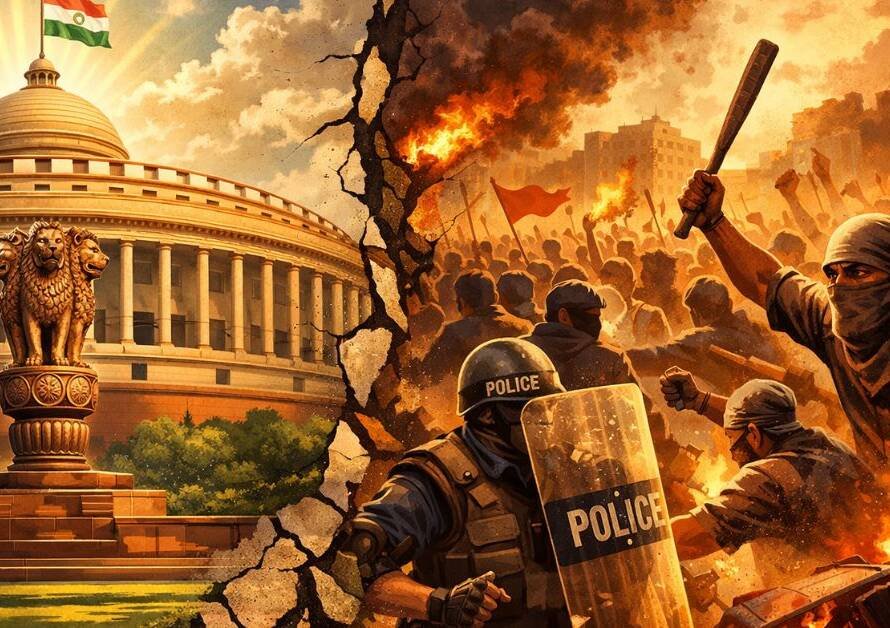
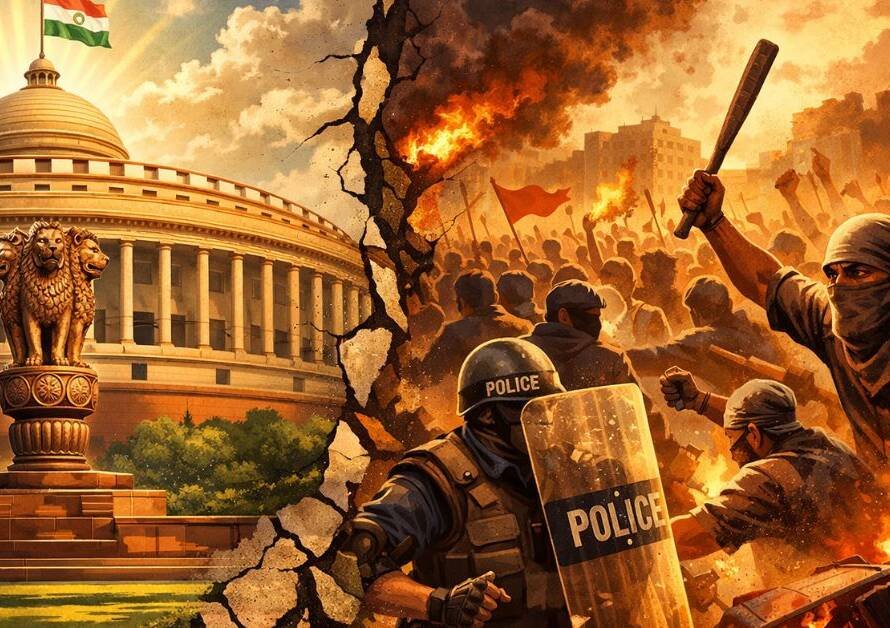
- Recent developments within the Congress party point to more than routine political disagreements—they indicate a deepening organizational crisis.
- Senior leader Mani Shankar Aiyar publicly targeting his own colleagues—Shashi Tharoor, Pawan Khera, and Jairam Ramesh—has brought internal dissent into the open.
- Questions are being raised about the leadership style, alleged over-centralization of decision-making, erosion of internal democracy, and the steady decline of electoral credibility.
- With several senior leaders having already exited the party and others expressing dissatisfaction, Congress appears to be facing a structural turning point.
1️⃣ Public Statements: Dissent Surfaces Openly
Aiyar’s remark that Congress may not win in Kerala because its leaders “hate each other more than they hate the Communists” is not just political commentary—it resembles a public acknowledgment of internal fragmentation.
🔎 Implications:
- Deep factionalism within state units
- Lack of confidence in central leadership
- Failure of internal dialogue mechanisms
His praise for Kerala Chief Minister Pinarayi Vijayan further intensified the controversy, creating the perception that the opposition itself is divided internally.
2️⃣ Ideological Differences: Divergence on National and Foreign Policy
Aiyar’s comments about Shashi Tharoor suggest differences within Congress regarding foreign policy positioning and national security messaging.
🧭 Key concerns:
- Does Congress have a coherent foreign policy stance?
- Is there unity on national security issues?
- Are individual ambitions overshadowing collective strategy?
Public disagreements among senior leaders often signal deeper ideological uncertainty.
3️⃣ Leadership Crisis: Centralization and Allegations of Authoritarian Style
Over time, several senior figures have voiced dissatisfaction with the party’s functioning.
📌 Major concerns being raised:
- Excessive centralization of decision-making
- Weakening of internal democratic processes
- Limited tolerance for dissent
- Directive rather than consultative leadership
Such perceptions, whether accurate or not, contribute to widening resentment among experienced leaders.
4️⃣ Senior Leaders Leaving: Why the “Sinking Ship” Narrative Emerged
In recent years:
- Prominent leaders have resigned
- Some have grown inactive
- Others have publicly criticized internal functioning
When seasoned and influential leaders depart, it signals more than personal differences—it indicates systemic strain.
- The phrase “sinking ship” has moved from political rhetoric to a broader perception in certain circles.
5️⃣ Communication Breakdown and Organizational Discipline
Aiyar’s remarks about Pawan Khera and Jairam Ramesh raised questions about the party’s communication machinery and spokesperson system.
📢 Emerging issues:
- Is the communication strategy effective?
- Are senior leaders being excluded from strategic decisions?
- Is organizational discipline weakening?
Public contradictions harm credibility and erode public confidence.
6️⃣ Declining Credibility: Electoral Performance and Public Trust
Repeated electoral setbacks, diminishing voter confidence, and leadership questions have affected the party’s public standing.
📉 Possible consequences:
- Lower worker morale
- Reduced voter trust
- Weakened bargaining power in opposition alliances
Political credibility, once damaged, is difficult to rebuild.
7️⃣ Broader Impact on National Politics
Congress has historically been a principal opposition force in India. If it continues to experience:
- Ideological ambiguity
- Leadership instability
- Visible internal rebellion
then the broader democratic balance may also be influenced.
- A strong democracy benefits from a stable and coherent opposition.
8️⃣ An Opportunity for Introspection
Despite the challenges, Congress still has options:
✔️ Restore internal democracy
✔️ Re-engage and respect senior leadership
✔️ Increase transparency in decision-making
✔️ Establish ideological clarity
✔️ Reinforce organizational discipline
Timely reforms could stabilize the party. Failure to act may deepen the crisis.
Mani Shankar Aiyar’s remarks are not isolated jabs—they reflect visible structural stress within Congress.
When:
- Senior leaders publicly challenge leadership,
- Experienced members leave,
- Organizational cohesion weakens,
- the issue is no longer superficial—it becomes systemic.
Congress now stands at a crossroads:
- It can either introspect and reorganize,
- or continue facing intensifying internal rebellion and declining credibility.
🇮🇳Jai Bharat, Vandematram 🇮🇳
Read our previous blogs 👉 Click here
Join us on Arattai 👉 Click here
👉Join Our Channels 👈