Summary
- Disagreement with the UGC-related rules is natural. Questioning education policy is a strength of democracy.
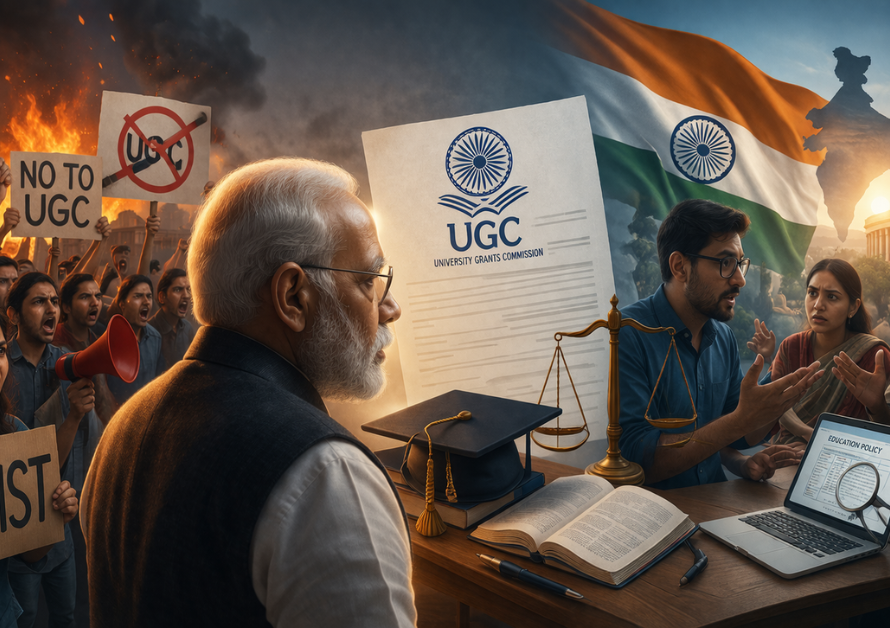
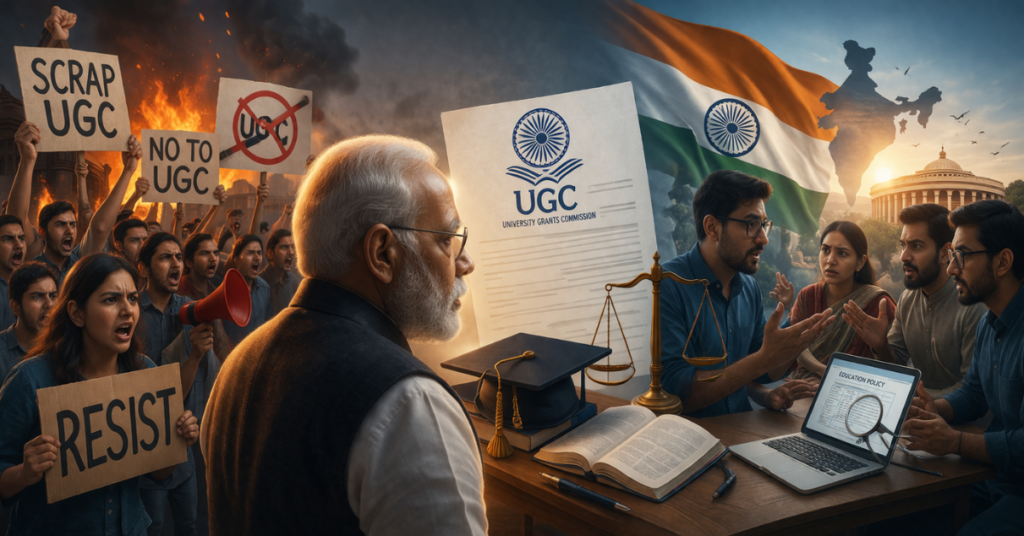
- However, a disturbing trend has emerged in the current protests—policy opposition is being converted into an identity-driven narrative of “Brahmins/elite versus the government” to mislead people
- .Reducing 11 years of national service, decisive leadership, and inclusive reforms to a single issue is neither wise nor farsighted.
- This narrative argues that while opposition to UGC provisions is legitimate, it must not descend into hatred, chaos, or social division, because the consequences go far beyond one bill and adversely affect the nation as a whole.
Dissent is a right—but wisdom, facts, and national interest matter even more
1. The Thin Line Between Dissent and Emotional Extremism
- Dissent is essential in a democracy. But when dissent shifts from policy critique to personal hostility, emotional rage, and identity-based provocation, it stops being a tool for reform and becomes a source of instability.
In the UGC debate today, this risk is clearly visible:
- Facts are being replaced by slogans
- Policy flaws are being replaced by leadership-bashing
- Reform demands are being replaced by social division
2. Can One Issue Erase Eleven Years of Governance?
- This question deserves an honest answer.
Over the past 11 years, India has seen:
- Clear and decisive national security policy
- Rising global stature and diplomatic confidence
- Digital transformation and financial inclusion
- Unprecedented infrastructure growth
- Reclaiming the lost glory of Sanatana dharma
- Protection of Hindu rights
- Cultural self-confidence and social balance
Is it reasonable to dismiss all of this because of one disputed policy issue?
- No government is flawless—but judging without a holistic assessment often leads to serious mistakes.
3. Modi’s Governance: Not for One Group, but Society as a Whole
- The claim that the current government favors or targets any single social group does not stand up to facts.
Some concrete examples
- Ram Temple: A civilisational and faith-based issue—not limited to one group
- Startup India: 1,600+ startups and 125 unicorns
Are founders, investors, and professionals from only one community?
- Vande Bharat trains, highways, airports, rail expansion: For everyone
- UPI and DBT: Transparency and inclusion
- Trade agreements with the EU and others, national security reforms: In the national interest
The policy direction has been inclusive, not sectional.
4. Misleading the Public in the Name of “Brahmins” and the “Elite”
A troubling pattern has emerged:
- Technical policy objections are reframed as “Brahmins vs the government”
- Legitimate concerns are converted into identity-based anger
Some opposition and vested-interest groups understand that:
- Technical debates on UGC have limited emotional traction
- Identity-based narratives spread anger much faster
As a result:
- Real issues (federal balance, academic autonomy, safeguards against misuse) are sidelined
- Distrust and social fragmentation has been their major focus
This approach offers neither solutions nor justice.
5. Genuine Concerns with the UGC—and the Correct Way Forward
There are real problems with certain UGC provisions, and acknowledging them is necessary:
- No strict action against false complaints
- Extending caste-based benefits under OBC to Muslims, despite the absence of a caste system in Islam
👉 These are policy flaws, not reasons for hatred.
👉 The solution lies in amendments, clarity, and safeguards—not in destabilisation.
6. The Process Ahead: Facts Often Ignored
- On 15 December, The Viksit Bharat Shiksha Adhishthan Bill, 2025 was introduced in Parliament
- It is currently with a Parliamentary Committee
Once passed:
- UGC, AICTE, and NCTE will be dissolved
- A new national education authority will be created
- Legal and medical education will remain outside its scope
- Existing UGC rules will automatically lapse
Therefore, claims that “UGC rules have been permanently imposed” are misleading.
7. The Consequences of Hatred and Division
History shows that when:
- Societies react in emotional extremes
- Internal unity weakens
The beneficiaries are:
- Opportunistic forces
- Extremist elements
- Anti-social and anti-national groups
Turning policy disagreement into identity warfare creates new crises instead of solutions.
8. The Path of a Responsible Citizen
What should be done
- Fact-based discussion
- Clear demand for amendments
- Peaceful, constitutional pressure
- Sharing verified information
What must be avoided
- Identity-based provocation
- Abusive and dehumanising language
- Losing sight of overall national interest due to one issue
9. Reform Versus Fragmentation
- Opposing problematic UGC provisions is legitimate. Seeking reforms is necessary.
But misleading people through identity-based narratives harms education, society, and democracy.
- Laws can be amended.
- Policies can be corrected.
- But a divided society is the hardest to heal.
Therefore:
- Stay focused on the issue
- Reject hatred
- Engage with wisdom and restraint
That is true awareness. That is national interest.
🇮🇳 Jai Bharat, Vandematram 🇮🇳
Read our previous blogs 👉 Click here
Join us on Arattai 👉 Click here
👉Join Our Channels👈