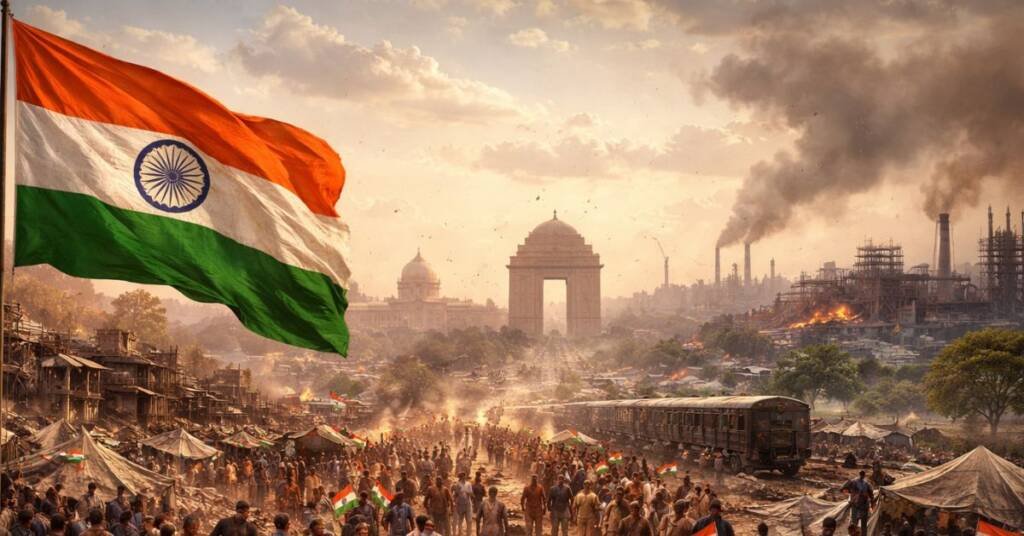
Environmental Politics, Insurgency, Ideological Capture, and the Cost to the Indian State
1. Independence and the Promise of Stable Nation-Building
At Independence, India inherited:
- extreme poverty and underdevelopment
- weak infrastructure
- fragile administrative reach in remote regions
- extraordinary cultural, linguistic, and religious diversity
The national priority should have been:
- rapid integration of frontier and tribal regions
- infrastructure-led economic growth
- strong internal security with democratic safeguards
- social harmony through equal citizenship
Yet alongside genuine nation-building efforts, a parallel pattern of chronic disturbance emerged, which over time became politically and ideologically convenient for some.
2. The Political Utility of Disturbance
- Over decades, critics argue that instability was often managed rather than resolved.
Disturbance served multiple purposes:
- diverted public attention from corruption, scams, and governance failures
- allowed political actors to blame “complex ground realities” for inaction
- enabled selective appeasement and vote-bank politics
- weakened demands for accountability
Instead of eliminating root causes, governments frequently allowed:
- low-intensity conflict
- ideological agitation
- social fragmentation
to persist as background noise in national life.
3. Three Fault Lines That Persisted for Decades
A. Islamist Radicalisation and Jihadist Violence
- Often treated episodically rather than structurally
- Responses shaped by political calculations
- Cycles of violence followed by temporary calm
- Weak dismantling of ideological and financial networks
Impact: Persistent internal security threat and social polarisation.
B. Missionary-Linked Conversion Ecosystems
- Rapid expansion in tribal and remote areas
- Weak oversight and limited transparency
- Creation of parallel social authority structures
- Long-term identity fragmentation
Impact: Cultural disruption, political mobilisation, and regional volatility.
C. Maoist Insurgency
- Allowed to entrench across mineral- and forest-rich belts
- Alternating neglect and force, but weak governance penetration
- Development projects repeatedly stalled
Impact: Loss of state authority and permanent development paralysis.
4. NGOs, Intermediaries, and Structural Weaknesses
- India’s NGO sector has contributed meaningfully to welfare and rights.
- However, poor regulation and opaque funding structures allowed misuse.
Structural weaknesses included:
- foreign-funded advocacy without sufficient scrutiny
- intermediaries profiting from prolonged disputes
- layered consultancies draining public money
- overlap between activism, politics, and rent-seeking
This created an environment where:
- delays became lucrative
- litigation replaced resolution
- accountability was blurred
5. Environmental Politics: The Perfect Cover
- Environmental protection and tribal rights are morally powerful causes.
- Precisely for this reason, they became ideal vehicles for disruption.
Why environmental movements were vulnerable to capture:
- moral legitimacy limits firm state response
- international pressure is easily mobilised
- courts can freeze projects for years
- security action becomes politically costly
Thus emerged what analysts describe as a “Green Mafia” ecosystem:
- not a single organisation
- but a convergence of interests that benefit from delay and ambiguity
6. Post-2014 Shift: From Control to Obstruction
After the change of government in 2014, critics argue that:
- the older political–ideological ecosystem did not dissolve
- it repositioned itself to oppose the state from outside
Alleged post-2014 pattern:
- alignment with Islamist, conversion, and Maoist narratives
- increased use of NGOs and advocacy platforms
- internationalisation of domestic policy issues
protests and litigation aimed at delaying:
- infrastructure
- mining
- energy projects
- defence and logistics corridors
The objective, critics argue, shifted from governance to paralysis.
7. Case Studies as Structural Continuity
Bailadila
- Genuine tribal and religious concerns existed
- Maoist enforcement escalated shutdowns
- Political and NGO amplification froze a strategic project
Niyamgiri
- A legitimate Gram Sabha verdict
- Later converted into a universal template
- Replicated even where local consensus was weaker
Hasdeo Aranya
- Authentic ecological sensitivity
- Escalated into territorial contestation
- Villagers trapped between state pressure and insurgent intimidation
These are not isolated incidents, but expressions of a long-standing incentive structure.
8. Who Pays the Price
The Nation Loses
- delayed infrastructure and energy security
- slowed industrial growth and employment
- weakened investor confidence
- compromised internal security
- erosion of state authority
A Narrow Ecosystem Gains
- political relevance through agitation
- ideological expansion
- financial leverage from prolonged disputes
- insurgent survival through governance paralysis
9. What This Narrative Does NOT Argue
- It does not disrespect environmental concerns
- It does not delegitimise tribal rights
- It does not criminalise dissent
- It does not accuse all NGOs or activists
It argues that systematic exploitation of dissent since Independence has repeatedly harmed India’s national interest.
10. The Core Lesson From 75+ Years
India’s greatest post-Independence failure has not been lack of talent or resources, but:
- tolerance of permanent instability
- politicisation of disturbances
- confusion between dissent and disruption
When instability becomes an instrument of politics, nation-building slows and sovereignty weakens.
11. Breaking the Cycle: The Way Forward
India must:
- ensure genuine, coercion-free local consent
- eliminate insurgent and ideological capture
- enforce transparent funding and accountability
- separate environmental science from political theatre
- protect democracy without enabling paralysis
- treat internal security as non-negotiable
12. Environment, Development, and Sovereignty Must Align
- Since Independence, perpetual disturbance has benefited a few while costing the nation dearly.
India does not face a choice between:
- environment and development
- rights and security
The real choice is between:
- responsible governance and engineered paralysis
Ending this cycle is not authoritarianism। It is long-overdue nation-building.
🇮🇳Jai Bharat, Vandematram 🇮🇳
For old Blogs please visit our website www.saveindia108.in
👉Join Our Channels👈