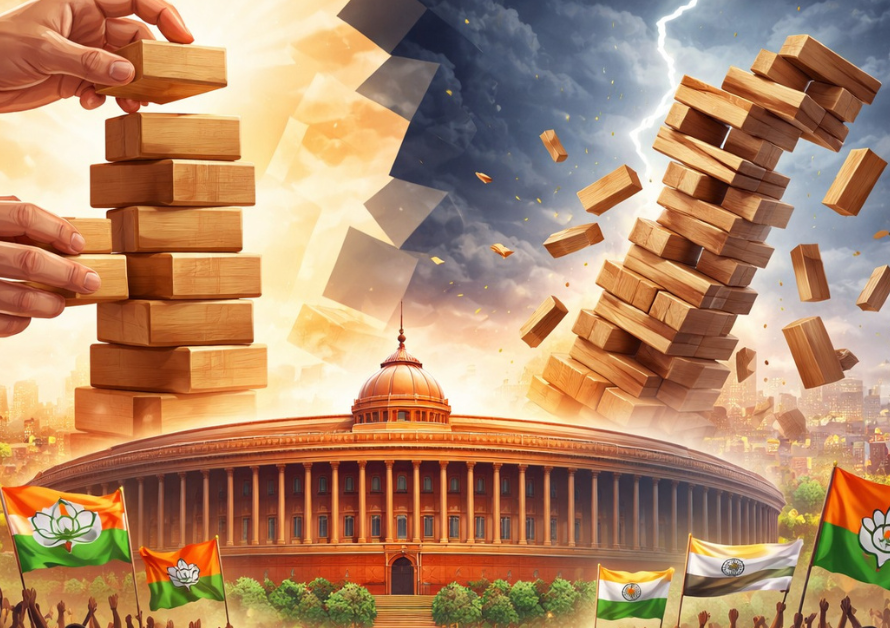
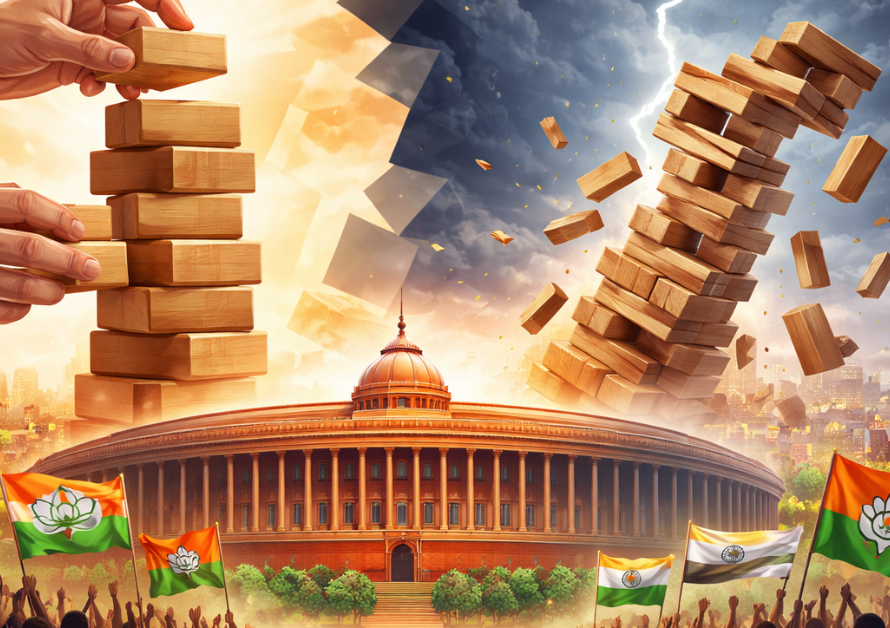
For decades, India was seen as a “balancing power” that avoided confrontation and quietly adjusted to the demands of larger nations and blocs. That picture has dramatically changed. Under the leadership of Prime Minister Narendra Modi, India has shifted into a confident, assertive, and unapologetic nation whose Foreign Policy places national interest above all else.
This transformation is visible in two major theatres:
- India’s firm response to Saudi Arabia during a sensitive moment.
- Its ongoing economic pushback against the U.S., NATO, and European powers through tariffs, trade restrictions, and reciprocal policies.
1. The Saudi Arabia Episode: A Shock to the Gulf
Reports of India halting and returning 300 trucks of petroleum from Saudi Arabia sent a wave of shock through Riyadh.
- This came after Saudi signals of deepening defense alignment with Pakistan — including rhetoric that an attack on Pakistan would be considered an attack on Saudi Arabia.
- Saudi miscalculation: Riyadh assumed India, being a major energy importer, would stay quiet. They misjudged New Delhi’s resolve under Modi.
India’s Response
- India swiftly returned the trucks, signaling that oil dependence cannot be used as blackmail.
- Delhi warned that if such hostile posturing continued, India could cut or restrict exports of essential commodities such as food grains — on which Saudi Arabia depends.
- The effect was immediate: reports suggested turbulence in Saudi markets, and within 24 hours, Riyadh moved into damage-control mode.
The Message Sent
- Even powers like the U.S. and Europe hesitate to take harsh steps against Saudi Arabia because of its oil leverage and religious influence.
- India showed that it is willing to act decisively when its sovereignty and security are at stake.
Saudi Crown Prince reportedly reached out directly to PM Modi, offering assurances that Riyadh valued ties with India and would not let relations be undermined.
2. Economic Pushback on the West: A Trade War of Interests
At the same time, India has been waging what can only be described as an economic war of attrition with Western economies.
Tariffs and Duties
- India has imposed or raised tariffs in multiple sectors, including electronics, chemicals, and agricultural imports.
- This was not random protectionism but a direct response to what India views as unfair Western trade practices, double standards, or politically motivated restrictions on Indian companies.
Export Controls
India has restricted or prioritized exports of critical commodities such as:
- Agricultural products (rice, wheat, sugar) during global shortages.
- Pharmaceutical intermediates and generic drugs that the U.S. and Europe heavily rely on.
- Rare minerals and critical raw materials for industries like semiconductors and defense.
Strategic Leverage
Unlike the India of the 1990s, which feared sanctions and market loss, today’s India has leverage:
- A $4+ trillion economy and the world’s fastest-growing major economy.
- A central role in global supply chains, especially in pharmaceuticals, IT, and agriculture.
- Alternative partnerships with Russia, Africa, and Southeast Asia to cushion pressure from the West.
3. Why This Assertiveness Matters
Strategic Autonomy
- India is demonstrating that it will not be a satellite of any bloc — whether it is Washington, Brussels, Moscow, or Beijing.
- Decisions are driven by what benefits India, not by what pleases others.
Effective, Proportionate Tools
- Instead of military escalation, India uses economic statecraft — a modern, sophisticated, and proportionate way to send powerful signals.
- Tariffs, trade restrictions, and export leverage are reversible tools but leave immediate impact.
Domestic Political Logic
- By standing firm internationally, the Modi government strengthens its domestic legitimacy.
- Voters see India as respected globally, and leaders as decisive protectors of national pride.
4. Impact on the U.S., NATO, and Europe
No More Passive Partner
- The West was used to an India that quietly complied. That era is over.
- India will push back — openly and economically — when Western nations impose restrictions or lecture India on domestic matters.
Tariff Wars as Diplomacy
- Trade disputes with the U.S. and EU are no longer settled quietly in backrooms.
- India has shown it can retaliate with duties and export restrictions — ensuring mutual pain, not one-sided pressure.
Multipolar Negotiations
- Western economies must now deal with India as an equal player.
- The age of dictating terms to India is gone; bargaining is the new norm.
5. Risks and Responsibilities
While this assertiveness builds power, it also comes with caution points:
- Risk of overuse: If India uses economic coercion too frequently, it risks supply-chain disruptions and alienating partners.
- Balance needed: Pressure should remain proportional and reversible to avoid permanent damage.
- Multilateral engagement: India must continue to use forums like WTO, BRICS, and G20 to frame actions as legitimate, rules-based measures.
6. The Global Takeaway
- India is no longer a soft state. Whether it is Saudi Arabia or the U.S., India is ready to defend its interests openly.
- Economic statecraft is central to New India. Trade, exports, and tariffs are no longer just commercial issues but weapons of sovereignty.
- The world must recalibrate. The U.S., NATO, Europe, and even Gulf nations now know they cannot take India’s compliance for granted.
The episodes with Saudi Arabia and ongoing trade wars with the West underline a clear truth:
➡️ Modi’s India is assertive, self-confident, and willing to use every lever of national power.
➡️ Economic tools are not secondary; they are frontline weapons in the defense of sovereignty.
➡️ The days of a submissive India that quietly absorbed pressure are gone.
This new reality is reshaping geopolitics, shifting global equations, and forcing even the world’s strongest powers to recognize India as an independent force in the new world order.
🇮🇳Jai Bharat, Vandematram 🇮🇳
For old Blogs please visit our website www.saveindia108.in
👉Join Our Channels👈