🔎 Summary
- India’s thousand-year historical journey reflects cycles of invasion, fragmentation, resistance, and revival. While civilizational continuity survived, prolonged political vulnerability exposed weaknesses—disunity, institutional fragility, social stratification, and strategic complacency.
- Many supporters argue that the current government under Narendra Modi is attempting a long-term civilizational reset.
According to this perspective, the goal is not merely electoral success, but national transformation through:
- Social and spiritual awakening
- Unity within the Sanatana community
- Strong and transparent institutions
- Military modernization
- Economic independence
- Technological leadership
- Cultural literacy
- Social cohesion beyond caste divisions
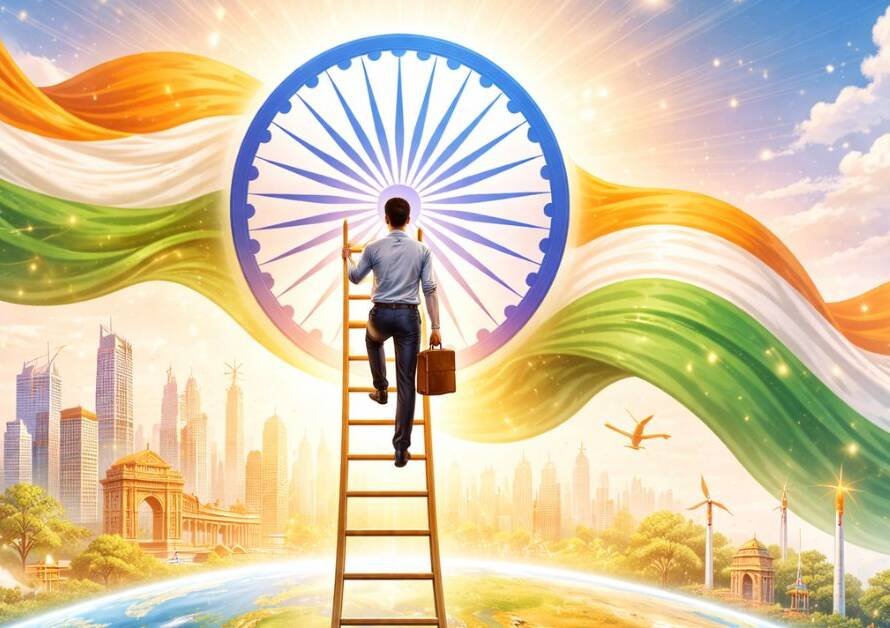
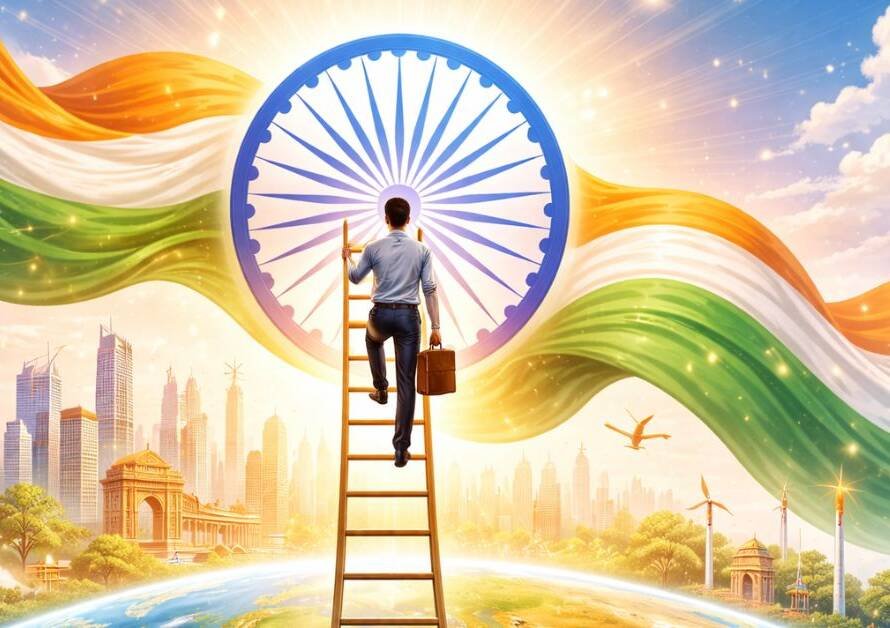
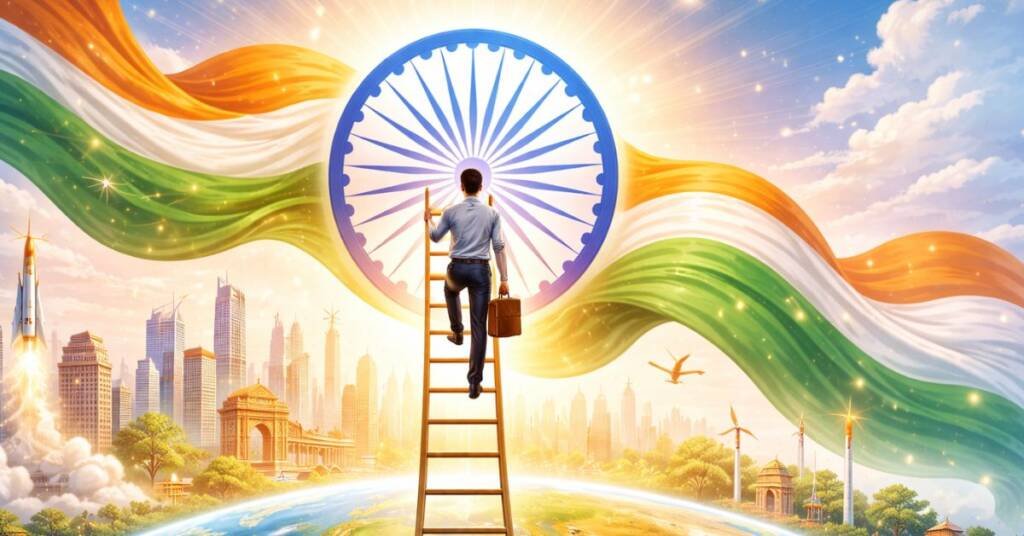
The broader ambition: to make India a secure, prosperous global superpower and a moral-civilizational “Vishwaguru.”
Unity, Strength, Reform, and the Making of a Strong India
1️⃣ Learning from History: The Core Civilizational Lessons
India’s past reveals certain structural weaknesses that contributed to prolonged vulnerability:
- Political fragmentation despite cultural unity
- Rivalries among regional powers
- Inconsistent military modernization
- Social divisions that weakened cohesion
- Lack of sustained strategic doctrine
History teaches:
- Cultural depth alone is not enough.
- Civilizational survival requires unity, strength, and institutional clarity.
The modern response, according to supporters of the present leadership, is to correct these weaknesses systematically.
2️⃣ Social, Cultural, and Spiritual Reawakening
- One visible dimension of recent years has been the public reaffirmation of civilizational identity.
Key Features Often Highlighted:
- Restoration and redevelopment of major pilgrimage sites
- Public recognition of ancient traditions and festivals
- Promotion of Yoga and Ayurveda globally
- Celebration of India’s historical narratives
The argument is that:
- Cultural amnesia weakens societies.
- Civilizational pride builds psychological resilience.
- Spiritual literacy strengthens moral grounding.
The aim is not theocracy but rooted modernity—development without civilizational erasure.
3️⃣ Uniting the Sanatana Community Beyond Caste and Region
- Historical fragmentation weakened collective resistance.
Modern policy messaging emphasizes:
- Welfare schemes cutting across caste lines
- Direct benefit transfers without intermediaries
- Housing, sanitation, and rural electrification for marginalized communities
Supporters interpret this as:
- Reducing internal fracture
- Building social cohesion
- Integrating historically excluded communities
A society divided internally cannot project strength externally.
- Social unity is a national security asset.
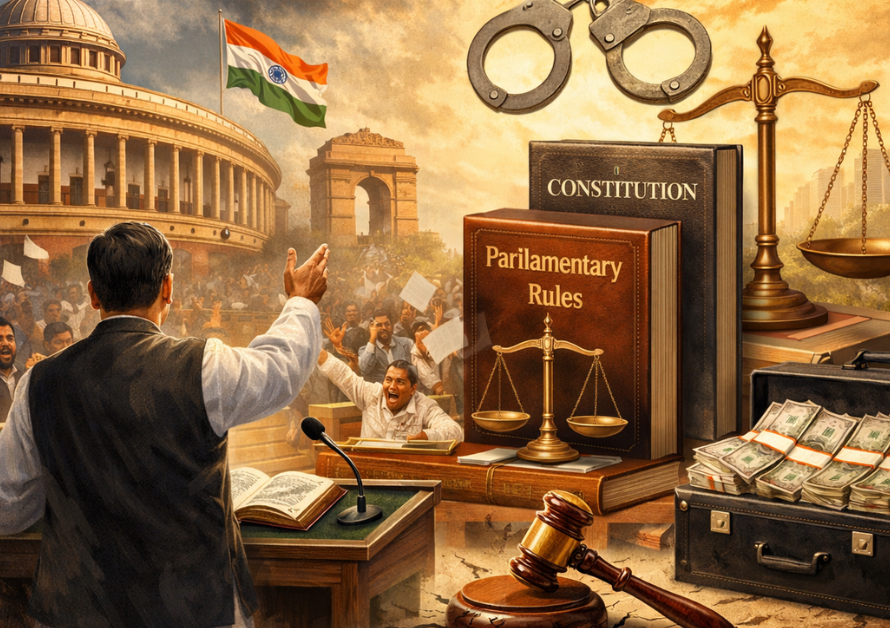
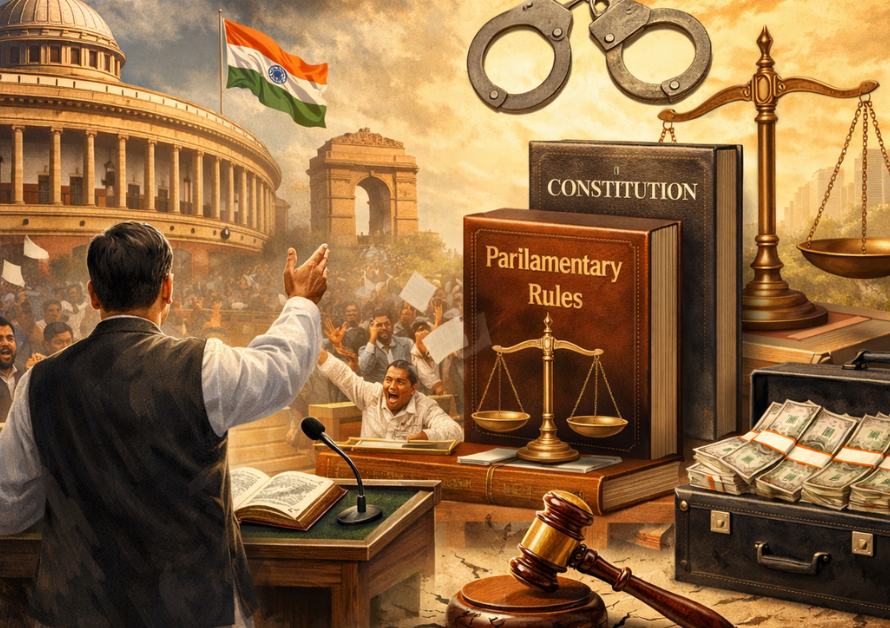
4️⃣ Strong Institutions as Civilizational Armor
- Institutional weakness historically enabled external dominance.
Recent reforms frequently cited include:
- Digital governance platforms
- Direct benefit transfer systems
- Transparency in subsidies
- Bankruptcy code reforms
- Centralized welfare monitoring
The stated objective:
- Reduce corruption
- Improve accountability
- Strengthen state capacity
Strong institutions ensure that:
- Governance is predictable
- External manipulation is harder
- National priorities are executed efficiently
5️⃣ Military Modernization: Strategic Preparedness
- History demonstrates that prosperity without defense invites aggression.
Recent initiatives emphasized by supporters include:
- Indigenous defense manufacturing
- Modernization of armed forces
- Border infrastructure development
- Strategic posture adjustments
The logic is straightforward:
- Economic growth requires security.
- Diplomacy requires deterrence.
- Sovereignty requires preparedness.
Military modernization is framed not as aggression, but as insurance against vulnerability.
6️⃣ Economic Independence and Self-Reliance
- Colonial subjugation was facilitated by economic dependency.
Modern initiatives often cited include:
- “Atmanirbhar Bharat” policies
- Manufacturing incentives
- Infrastructure corridors
- Startup ecosystem expansion
- Financial inclusion programs
Economic independence reduces:
- External pressure
- Strategic vulnerability
- Supply-chain risk
A superpower cannot rely excessively on external systems for critical sectors.
7️⃣ Technological Leadership: Power in the 21st Century
- In today’s world, technological capacity defines geopolitical strength.
Areas of focus include:
- Digital public infrastructure (UPI, Aadhaar ecosystem)
- Space missions and satellite programs
- Semiconductor ambitions
- AI and emerging tech policies
- Startup and innovation ecosystem
Technological leadership enables:
- Strategic autonomy
- Economic leverage
- Global influence
To be a Vishwaguru today means not only spiritual leadership but digital and scientific leadership.
8️⃣ Cultural Literacy and Historical Clarity
- Civilizational confidence depends on historical understanding.
Efforts highlighted include:
- Curriculum debates
- Heritage preservation
- Museum and archive modernization
- Public discourse around historical figures
The argument is:
- Youth disconnected from history become culturally uncertain.
- Cultural literacy strengthens identity.
- Identity clarity prevents fragmentation.
Civilization survives when memory survives.
9️⃣ Social Cohesion Beyond Identity Politics
One of the harsh lessons of history is that:
- Internal division invites external control.
Reducing:
- Caste polarization
- Regional hostility
- Sectarian politics
is essential for national rise.
- Economic inclusion, welfare outreach, and symbolic unity are presented as tools for long-term cohesion.
🔟 The Vision of a Superpower and Vishwaguru
The concept of Vishwaguru is often misunderstood.
- It does not imply domination.
It implies:
- Moral influence
- Cultural leadership
- Economic strength
- Technological advancement
- Strategic independence
To achieve this, India must combine:
- Strong institutions
- Military modernization
- Economic self-reliance
- Technological innovation
- Cultural rootedness
- Social unity
These are interconnected pillars.
🏛️ Strength Without Intolerance
India’s past reveals vulnerability born of fragmentation.
- Its survival demonstrates resilience rooted in culture.
The modern challenge is to ensure:
- Unity without uniformity
- Strength without aggression
- Cultural pride without hatred
- Development without social fracture
Supporters view current governance as an attempt to align civilizational identity with strategic power.
Whether one agrees or disagrees politically, the larger question remains:
- Can India combine spiritual depth with geopolitical strength?
- Can it rise economically while remaining culturally anchored?
- Can it become both a superpower and a Vishwaguru?
If unity, reform, and strategic clarity are sustained, many believe the answer could be yes.
🇮🇳Jai Bharat, Vandematram 🇮🇳
Read our previous blogs 👉 Click here
Join us on Arattai 👉 Click here
👉Join Our Channels 👈