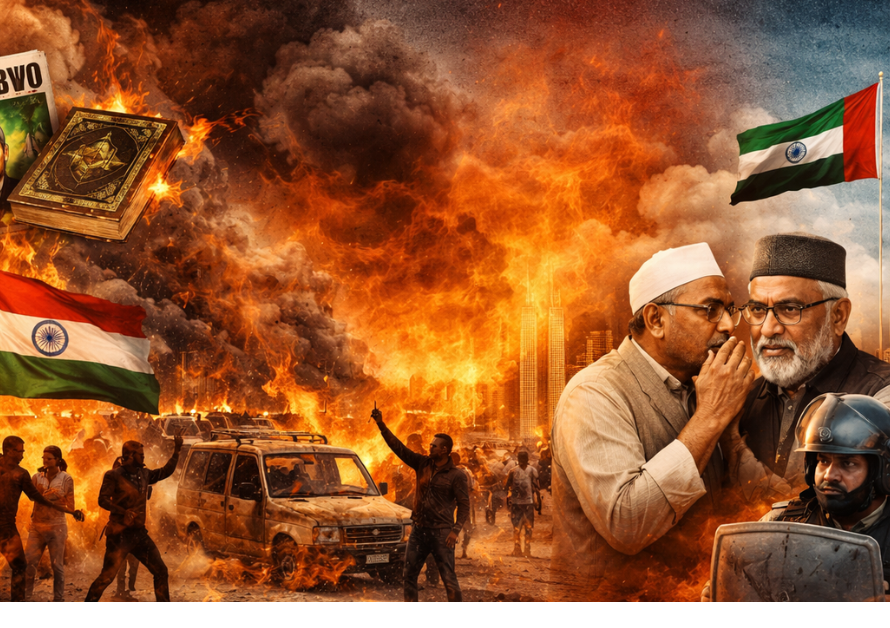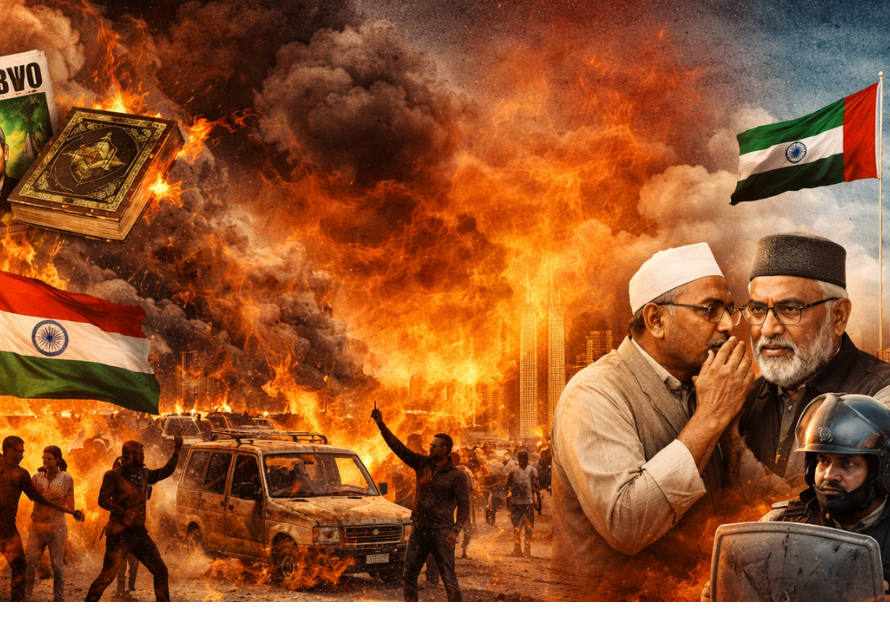
Why Early Vigilance Is Critical for Bharat’s Security
1. Why the PFI Case Matters for India’s Internal Security
- The Popular Front of India (PFI) has remained under sustained national scrutiny because investigative agencies allege that it evolved from a public-facing socio-political platform into a cohesive extremist ecosystem.
- Court submissions, digital records, financial trails, and documents seized during coordinated raids suggest a pattern that extends beyond episodic protests to ideological radicalisation, covert recruitment, engineered unrest, and long-term destabilisation planning.
- These findings matter not merely for understanding one organisation, but for recognising how modern extremist networks operate—quietly, patiently, and often behind civic façades.
2. NIA’s Court Disclosures: From Protest Mobilisation to Strategic Planning
Submissions placed before courts by the National Investigation Agency (NIA) outlined allegations that PFI activities went well beyond lawful dissent:
- Exploration of weapons procurement, including cross-border sourcing routes
- Ideological and physical training of cadres for violent action
- Planning to exploit a hypothetical India–Pakistan conflict, assuming security forces would be concentrated along northern borders
- A strategic focus on southern India, with objectives described as destabilisation rather than isolated unrest
These disclosures strengthened the legal basis for the five-year ban imposed in September 2022 under the Unlawful Activities (Prevention) Act.
3. The “Vision 2047” Document: A Long-Horizon Blueprint
- Among the most consequential recoveries during nationwide raids was a document investigators referred to as “Vision 2047.” Agencies described it not as a protest note, but as a generational roadmap.
Investigators highlighted that the document outlined:
- A multi-phase strategy aligned with the centenary of India’s independence
- Emphasis on gradual social, demographic, and institutional penetration rather than immediate confrontation
- Priority on cadre-building, indoctrination, and local-level control
- Reliance on front organisations—student bodies, women’s wings, charities, and legal-aid platforms—to expand reach
- A long-term objective of reshaping social and constitutional spaces along Islamist ideological lines
Agencies assessed Vision 2047 as evidence of strategic patience, designed to operate beneath early detection thresholds.
4. Organisational Lineage and Global Jihadist Alignment
- PFI emerged in 2006 after the ban on SIMI. A 2012 affidavit by the Kerala government stated that PFI functioned as a continuation structure, carrying forward ideology and methods.
Subsequent investigations reported:
- Seizure of explosives, weapons, and bomb-making material
- Recovery of jihadist literature linked to Al-Qaeda and Taliban ideologues
- Evidence of forged travel documents used by members who later joined Islamic State (ISIS) in Syria (confirmed by Kerala Police in 2017)
The cumulative assessment positioned PFI as a radicalisation and recruitment conduit, not a democratic reform platform.
5. Engineered Unrest: A Consistent Operational Pattern
Investigative agencies have linked PFI operatives to multiple episodes of civil unrest, alleging a repeating playbook:
- Financial and logistical facilitation during the Delhi riots (2020)
- Funding channels used to escalate CAA–NRC protests
- Covert meetings in sensitive cases to provoke communal tension
- Coordinated messaging during large-scale violence such as Assam (2012)
Authorities argue these incidents reflect manufactured instability, exploiting social flashpoints to weaken internal security.
6. Conversion and Grooming Allegations
Another major investigative strand concerns organised ideological conversion and grooming:
- Use of counselling centres, yoga classes, and educational fronts
- Deployment of women’s and student wings for targeted outreach
- Admissions by heads of certain centres regarding large-scale conversions
- References to “Shaheen Groups”, allegedly grooming Hindu women through false identities
Agencies categorised these activities as systematic and centrally coordinated, aligned with the long-term Vision 2047 framework.
7. Delhi Blast Plot: How Early Detection Prevented Escalation
- In a recent Delhi case involving an explosive device linked to a vehicle, agencies indicated that early intelligence inputs and swift coordination prevented what could have escalated into multiple attacks.
At a high level, authorities highlighted:
- Early digital and human intelligence cues flagging suspicious movements and materials
- Rapid forensic assessment linking the device to broader preparatory activity
- Timely arrests and searches disrupting logistics, safe houses, and communication chains
- Preventive action after credible indicators suggested multiple locations were under consideration
This case demonstrated how single incidents can be nodes in wider attack matrices, and how early intervention saves lives.
8. Bareilly Violence Plan: Containment Before Conflagration
- Separately, agencies acted on intelligence that large-scale communal violence was being actively planned in Bareilly.
Preventive measures reportedly included:
- Advance inputs about mobilisation, funding, and coordinated messaging
- Pre-emptive questioning and lawful detentions
- Visible policing and administrative coordination to deter flash mobs
- Disruption of organisers and communication nodes
By interrupting timing, crowd formation, and misinformation, authorities contained the threat before violence could erupt.
9. Why These Cases Reinforce the Need for Vigilance
Across investigations, a clear lesson emerges:
- Extremist plots mature quietly and incrementally
- Early indicators are often mundane—unexplained gatherings, unusual funding, stockpiling of materials, encrypted communications
- Community inputs, when shared responsibly, accelerate verification
- Inter-agency coordination converts fragments into prevention
10. Institutional Vigilance and Societal Responsibility
Institutional Vigilance
- Intelligence-led monitoring of networks with documented extremist histories
- Financial and digital scrutiny strictly under due process
- Rapid, coordinated responses across agencies and states
Societal Role
- Report abnormal or suspicious activities to local police or authorised helplines
- Avoid rumours, profiling, or harassment
- Trust verification and lawful action by authorities
- Public reporting supports prevention; it does not replace law enforcement.
11. Prevention Is the Strongest Defence
- The PFI investigations—particularly the recovery of Vision 2047—and the prevention of incidents in Delhi and Bareilly demonstrate that early, lawful vigilance works.
- Modern extremist threats are patient, adaptive, and long-term; countering them requires the same patience, legality, and coordination.
Protecting Bharat’s internal security and plural democracy depends on:
- Rule of law
- Credible intelligence
- Institutional coordination
- An alert, responsible society
Prevention may be quiet—but it is decisive.
🇮🇳Jai Bharat, Vandematram 🇮🇳
For old Blogs please visit our website www.saveindia108.in
👉Join Our Channels👈