🔎 Summary
- In the digital age, journalism has transformed dramatically. Alongside traditional television studios, YouTube channels, independent platforms, and social media influencers now shape public opinion on a massive scale.
- Over the past several years, some prominent journalists have published thousands of videos, most of which focus heavily on criticizing the central government, particularly Narendra Modi and his policies.
- Supporters raise an important question: Is this genuine accountability journalism — or selective political positioning?
- Does journalism mean questioning only the central government, or does it require holding all levels of power accountable?
- This discussion is not about attacking individuals. It is about examining balance, credibility, and the democratic role of journalism.
A Detailed Reflection on Credibility, Neutrality, and Democratic Responsibility in the Digital Media Era
📺 1️⃣ The Rise of Digital Journalism
- Over the past 5–6 years, many senior journalists have shifted to platforms like YouTube.
Their channels feature:
- Not hundreds, but thousands of videos
- A strong emphasis on criticism of the central government
Digital platforms allow:
- Editorial independence
- No institutional oversight
- Content shaped by audience demand
This creates a “narrative ecosystem” where viewers often consume content that reinforces their existing beliefs.
❓ 2️⃣ What Is the Core Principle of Journalism?
It is often said:
- “The job of journalism is to question those in power.”
That statement is correct. However, an important question follows:
- Is power located only at the central level?
- Are state governments not centers of authority?
- Should regional governments not face equal scrutiny?
If a journalist’s content overwhelmingly focuses on one political direction, questions about neutrality naturally arise.
🏛️ 3️⃣ Centre vs States — Where Is the Balance?
India has multiple states governed by different political parties, including:
- West Bengal
- Delhi
- Kerala
- Tamil Nadu
- Karnataka
- Telangana
- Jharkhand
- Himachal Pradesh
If journalism is about accountability, then:
- State policies
- Law and order issues
- Economic management
- Administrative failures
should also be examined with equal intensity.
- When criticism appears one-sided, it can create the perception that journalism is becoming advocacy rather than balanced analysis.
📊 4️⃣ Achievements vs Criticism — The Question of Proportion
Over the past decade, supporters highlight several central government initiatives, including:
- Housing construction for millions
- LPG connections under welfare schemes
- Large-scale sanitation infrastructure
- Jan Dhan financial inclusion accounts
- Highway and infrastructure expansion
- Direct Benefit Transfers (DBT)
- Digital payment transformation
Supporters argue that these initiatives receive little coverage compared to critical narratives.
- Journalists, on the other hand, may argue that their role is to scrutinize shortcomings, not promote achievements which is grossly incorrect.
This is precisely where the debate about balance and credibility emerges.
⚖️ 5️⃣ Criticism vs Political Positioning
- In a democracy, strong criticism is necessary.
However, if:
- Nearly all content flows in one direction
- Positive developments receive minimal mention
- Other governments escape scrutiny
then viewers may question whether the content reflects analysis or ideological alignment.
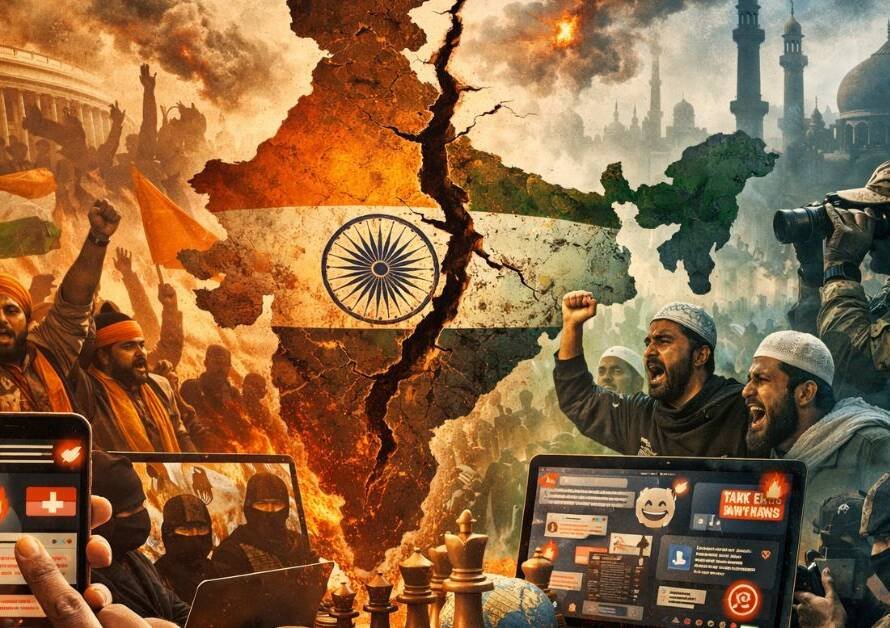
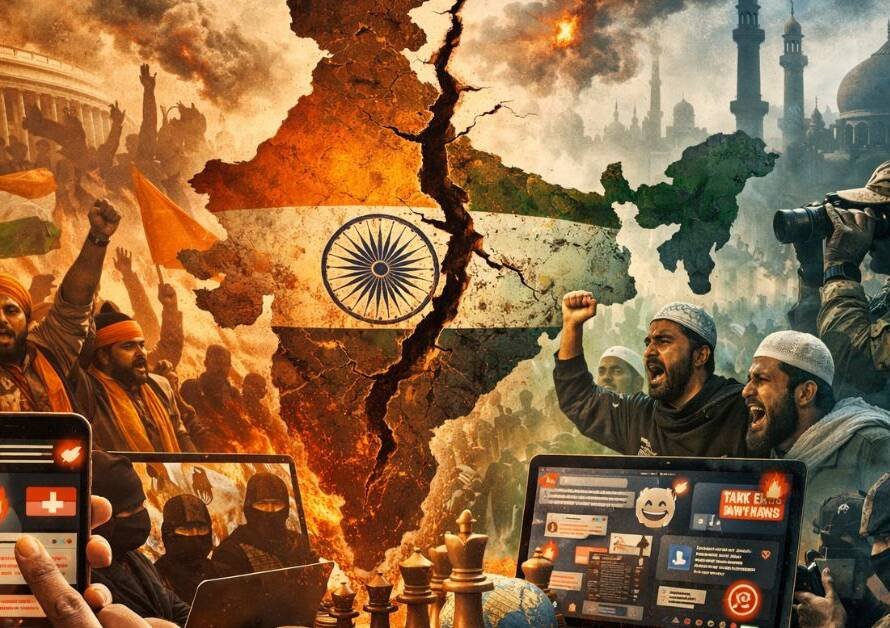
📱 6️⃣ Algorithms and the Audience’s Role
Digital platforms operate on algorithms that:
- Amplify emotionally charged content
- Reward polarization
- Promote engagement over nuance
As a result:
- Supporters watch content that reinforces support
- Critics watch content that reinforces opposition
Therefore, responsibility does not lie solely with journalists — audiences also shape the ecosystem.
🧠 7️⃣ Civility in Democratic Debate
Disagreement strengthens democracy.
- However, personal insults and labeling (such as calling someone a “broker” or worse) weaken serious debate.
If the goal is to improve journalistic standards:
- Criticism should be fact-based
- Arguments should be evidence-driven
- Civility should be maintained
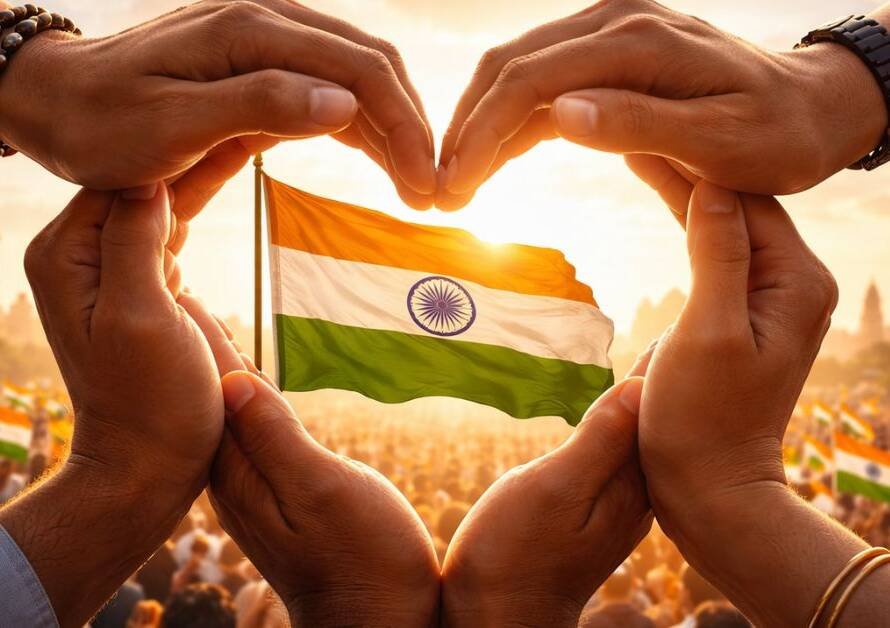
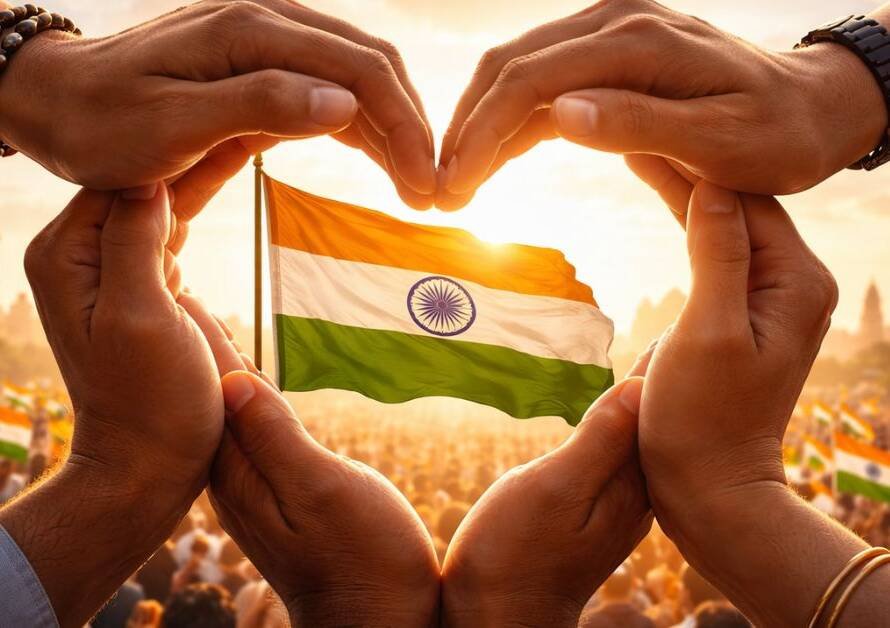
🇮🇳 8️⃣ The Real Strength of Democracy
India’s democracy is strong because:
- The government can be openly criticized
- Media operates independently
- Citizens can debate freely
But the quality of democracy depends on:
- Whether journalism is balanced
- Whether all levels of power are questioned
- Whether achievements and failures are both examined
- This conversation is not about targeting individuals.
- It is about examining journalism’s credibility, neutrality, and democratic responsibility.
- If journalism becomes only opposition, credibility suffers.
If journalism aligns too closely with power, independence suffers.
The right path lies in:
- Balance
- Fact-based analysis
- Equal accountability at every level of governance
🇮🇳 A strong democracy requires strong and balanced journalism.
🇮🇳 Jai Bharat, Vandematram 🇮🇳
Read our previous blogs 👉 Click here
Join us on Arattai 👉 Click here
👉Join Our Channels 👈