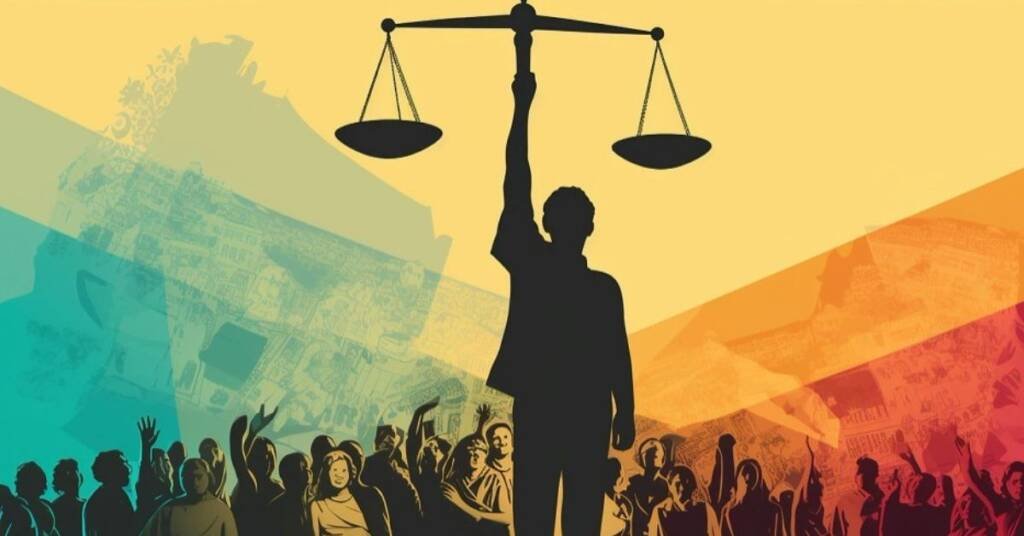
Shifting Judicial Lens
Years after the Hindu-targeted Delhi riots, the truth still flows in two parallel streams.
- One belongs to the courts, where conclusions are drawn from evidence, digital trails, witnesses, and timelines.
- The other belongs to media and ideological discourse, where selective facts are used to reinforce a pre-set storyline.
This clash has transformed the Umar Khalid–Sharjeel Imam case into a sustained “narrative war.”
1️⃣ Supreme Court’s Position: Stated Clearly, Reported Selectively
While rejecting bail, the Supreme Court held that the prosecution material prima facie indicates a well-planned conspiracy.
- The Court clarified that the case is not about ordinary protest or free speech.
Factors relied upon include:
- Sequence and timing of meetings
- Provocative language of speeches
- Digital communication trails
- Planned actions at strategic locations
Many media reports minimised or omitted these key judicial findings.
2️⃣ Riot Violence vs. Narrative Focus
- Over 50 deaths and hundreds injured
- Homes, shops, and religious places destroyed
- Brutal murder of an Intelligence Bureau officer
Yet media discourse shifted away from justice for victims and towards portraying the accused as “intellectual dissenters.”
- As a result, violence receded from focus while narrative dominance grew.
3️⃣ Bail vs. Conviction: A Manufactured Confusion
- Denial of bail does not mean conviction.
- But it does mean the Court found the prosecution’s case serious and credible at this stage.
- Media amplified the first point and suppressed the second—creating selective truth and public misperception.
4️⃣ Sharjeel Imam’s Statement: Beyond Academic Speech
- The Siliguri Corridor remarks were assessed with their timing, context, and related conduct.
- The Court did not treat them as ignorable.
- Calls implying territorial disruption are not academic debate, but matters of constitutional order and national security.
5️⃣ Signs of Judicial Rebalancing
- For decades, ideological rigidity and delay hindered governance and reforms.
Under CJI Justice Surya Kant, recent observations indicate:
- Greater emphasis on national interest
- Constitutional balance over ideological activism
- Focus on timely justice
This change in attitude was long overdue and institutionally necessary.
Bail was denied because the Court found the material serious; the trial continues.
- Question power—but present the full context.
- Erasing violence to manufacture narratives serves neither victims nor democracy.
🇮🇳 Jai Bharat, Vandematram 🇮🇳
Website: https://www.saveindia108.in
Email: info@saveindia108.com
Old Blogs: https://saveindia108.in/our-blog/
WhatsApp: https://tinyurl.com/4brywess
Arattai: https://tinyurl.com/mrhvj9vs
Telegram: https://t.me/+T2nsHyG7NA83Yzdl