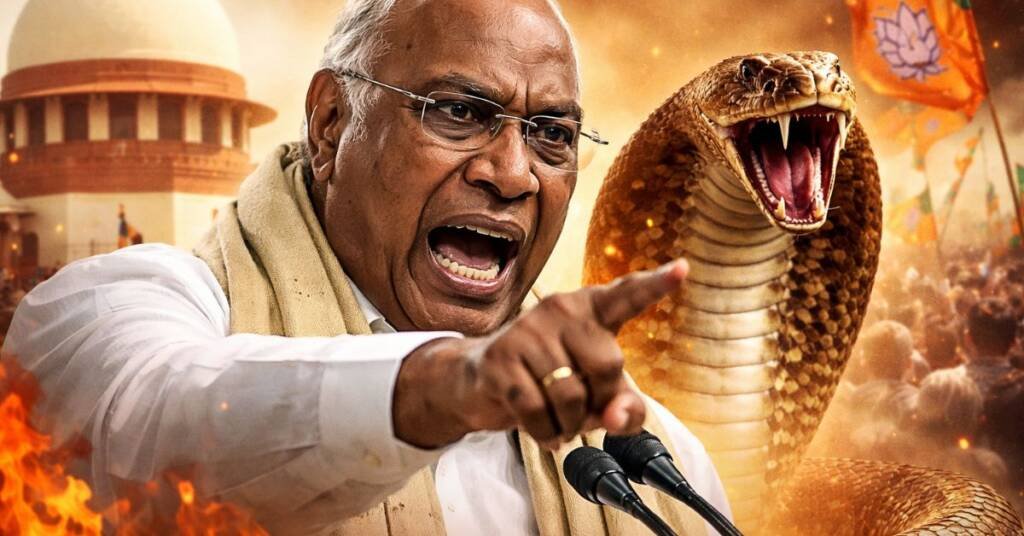
Deconstructing “Poisonous Snake” Rhetoric and Constitutional Crisis of Dual Standards
Summary
- A major political and constitutional controversy has erupted following a speech by Congress President Mallikarjun Kharge (delivered in April 2026, Sribhumi, Assam).
- Kharge utilized a fabricated religious reference to equate the BJP and RSS with a “poisonous snake” that must be “killed” even during prayer (Namaz).
- This narrative identifies the incident as a clear case of hate speech, examining the deliberate scriptural misrepresentation of the Quran, the alleged pattern of institutional destabilization by the Congress-led Thugbandhan.
- It urgently demands for the Judiciary and Hindutva organizations to intervene against a decades-long “dual standard” in law enforcement and media narratives.
I. The Incident: Fabricated Scripture and Violent Incitement
The core of the controversy lies in a speech delivered by Mallikarjun Kharge at an election rally in Assam, where he directed a specific religious instruction toward a Muslim audience to target political opponents.
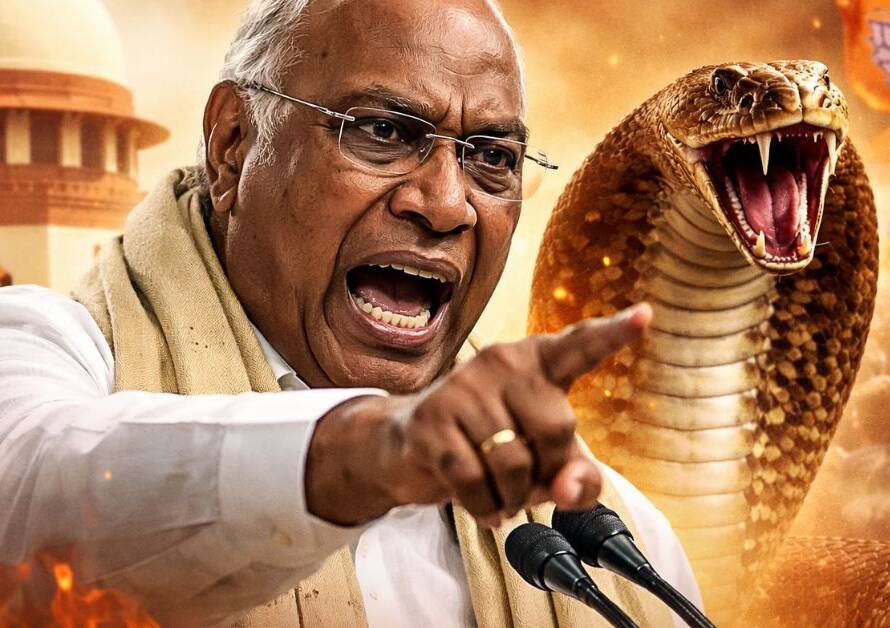
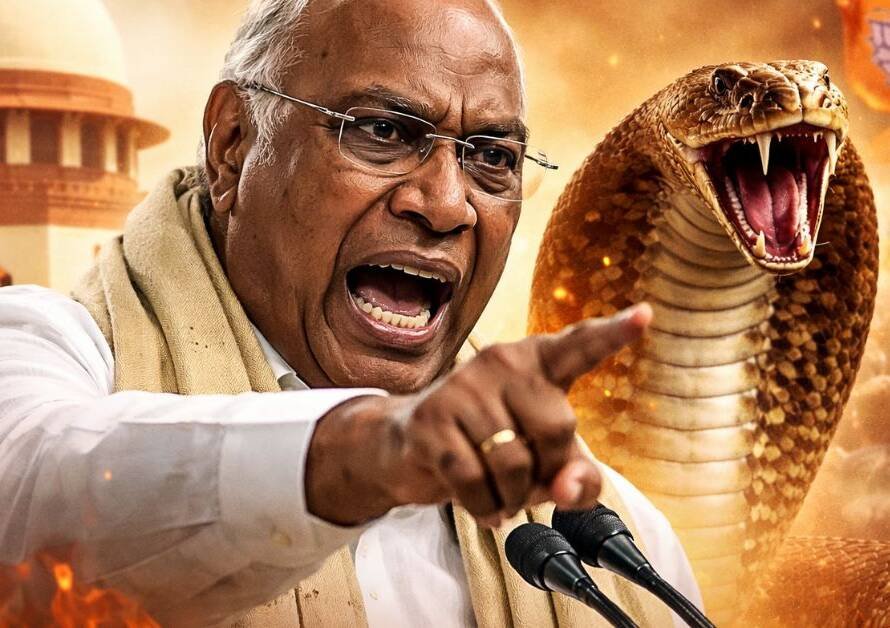
- The Provocation: Kharge stated, “It is written in the Quran that if you see a poisonous snake even at the time of Namaz, leave the Namaz and kill it. RSS/BJP is that very snake… if you don’t kill them, you won’t survive.”
- The Fabricated Reference: Theological scholars have confirmed that the Quran contains no such verse. By attributing “man-built” instructions to a holy book to justify the elimination of political rivals, Kharge is accused of both Hate Speech and Religious Misrepresentation. This is viewed as a direct insult to the sanctity of the Quran to serve a narrow political agenda.
- Dehumanization: By labeling millions of BJP/RSS members—and the Prime Minister—as “snakes” to be killed, the speech is viewed as a calculated attempt to dehumanize a specific demographic. This rhetoric is designed to create a “permission structure” for physical violence, radicalization, and social unrest.
II. A Constitutional Crisis: The Demand for Judicial Supremacy
This is primarily a Constitutional issue involving the gross abuse of the Freedom of Expression to incite communal hatred and threaten the safety of citizens.
- Judicial First-Strike: Critics argue the Judiciary must take suo motu (self-initiated) notice. Under Article 19(2) of the Indian Constitution, speech is restricted to prevent “incitement to an offense” and to maintain “public order.” The Judiciary’s role is to ensure that “secularism” is not used as a shield for leaders to radicalize vote banks through violent imagery.
- EC Action is Secondary: In the legal hierarchy, Election Commission (EC) action can only be effectively taken after a judicial finding. A court-mandated declaration of “hate speech” provides the necessary legal weight for the EC to disqualify candidates or de-recognize a party. Relying solely on the EC without a judicial directive allows offenders to claim “political vendetta.”
- Abuse of Expression: The narrative highlights that the “anti-national ecosystem” is hiding behind the “Freedom of Expression” to spread fake news and narratives that damage the social fabric. When the state fails to punish such clear incitement, it invites further degradation of democratic norms.
III. The Pattern of Destabilization and National Security
The Congress and its allies (Thigbandhan) are accused of a coordinated effort to destabilize the government by undermining national institutions:
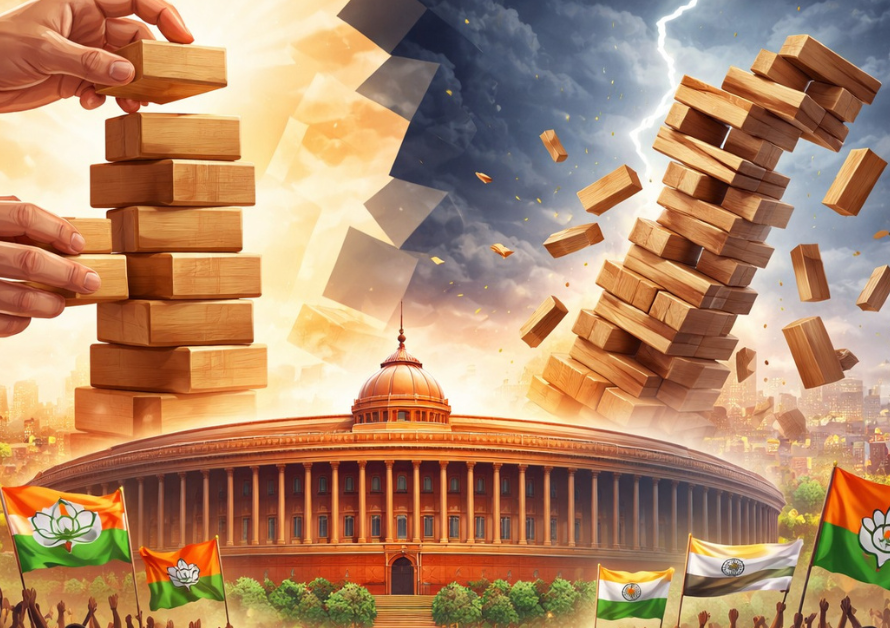
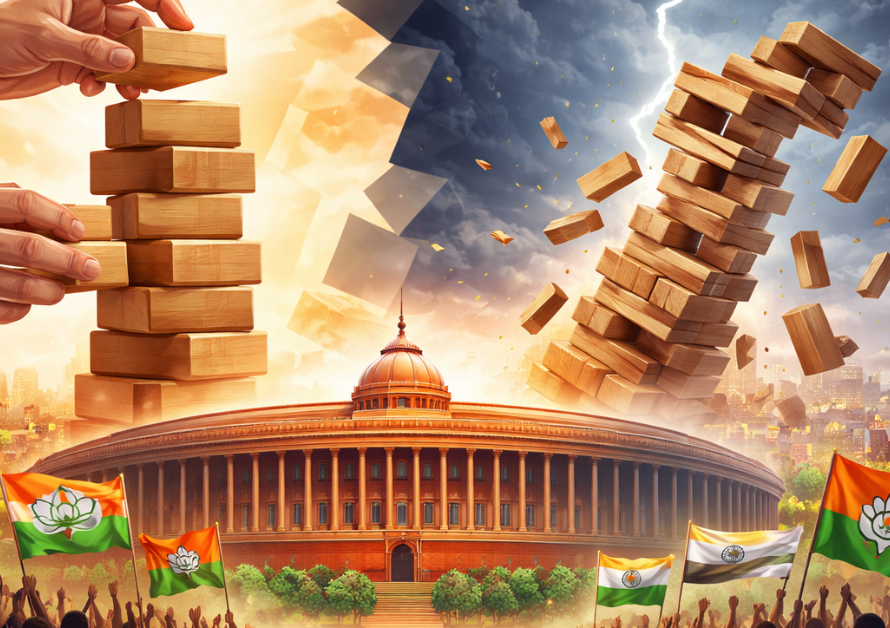
- Attacking the Pillars: Systematic attacks on the Judiciary, the Election Commission, and the Prime Minister (calling him a “chor” or “lier”) are seen as attempts to erode public faith in Indian democracy.
- Global Interference: The strategy involves “begging” for help in foreign forums and bringing disgrace to the country abroad. By suggesting the government is a “snake” to be killed, they signal to foreign powers that the Indian state is illegitimate, thereby inviting external interference.
- Threat to Sovereignty: Using religious imagery to provoke a community against the state and its largest social organizations is viewed as a direct threat to the security and sovereignty of India. This is seen as prioritizing personal and political gains over the survival of the nation.
IV. The “Dual Standards” Archive: Seven Decades of Impunity
A significant grievance remains the perceived imbalance in how law enforcement, the judiciary, and the media handle rhetoric against Hindus and Hindutva organizations:
- The Hindu Litmus Test: If a Hindu leader had made a similar comparison regarding other religions—suggesting they be “killed” based on scripture—it would have triggered an immediate nationwide media and political storm, followed by instant arrests.
- Historical Impunity: For over seven decades, Congress and certain Muslim leaders have reportedly given inflammatory speeches against Hindus, the RSS, and the BJP with minimal legal reaction. The archives are full of such reports that have been ignored by the “secular” media and treated with “kid gloves” by the system.
- Call for Hindutva Organizations: It is argued that Hindutva organizations and legal bodies must now aggressively pursue these cases in court. They must act as the “vigilant protectors” of the social fabric, ensuring that fake narratives and hate speech against their members are met with the full force of the law.
V. Demands for Immediate Action
To preserve the social and constitutional fabric of India, the following actions are demanded:
- Suo Motu FIRs: Police must register cases under Section 153A and 295A (BNS/IPC) for promoting enmity and outraging religious feelings.The “snake” analogy is not political criticism; it is a call to violence.
- Judicial Mandate: The Supreme Court must demand an immediate report on why such “toxic” speech has been allowed to pass without arrests, ensuring that the law is applied without an “identity-based” filter.
- Public Accountability: The media and “fact-checkers” must be held accountable for their silence on the fabrication of Quranic verses. Their refusal to call out this “fake news” proves their complicity in the anti-national narrative.
Final Assessment
- The “poisonous snake” speech by Mallikarjun Kharge is a test of India’s constitutional resilience.
- It exposes a strategy of destabilization where religious scripture is twisted to incite violence against a democratically elected government and its supporters.
- It is high time that the “dual standards” of the last seven decades are dismantled. The Judiciary and law enforcement must act now to ensure that no leader, regardless of their stature or party, is allowed to threaten the security and sovereignty of India for personal political gain.
🇮🇳 Jai Bharat, Vandematram 🇮🇳
Read our previous blogs 👉 Click here
Join us on Arattai 👉 Click here
👉Join Our Channels👈