Summary
- India demands strict qualifications for almost every profession — from civil services to teaching, policing, and clerical roles.
- Yet lawmakers, who shape national policy and constitutional direction, face no mandatory demonstration of governance literacy.
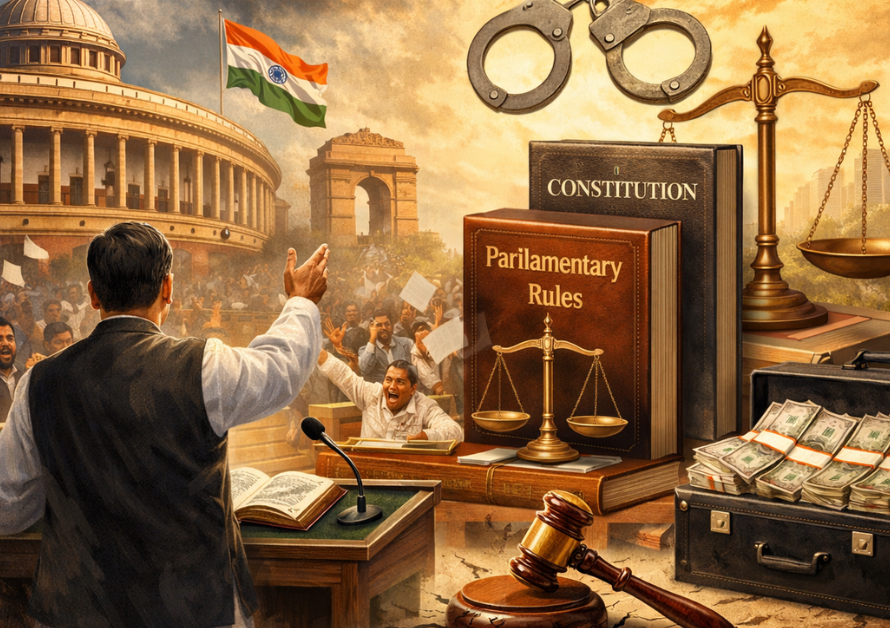
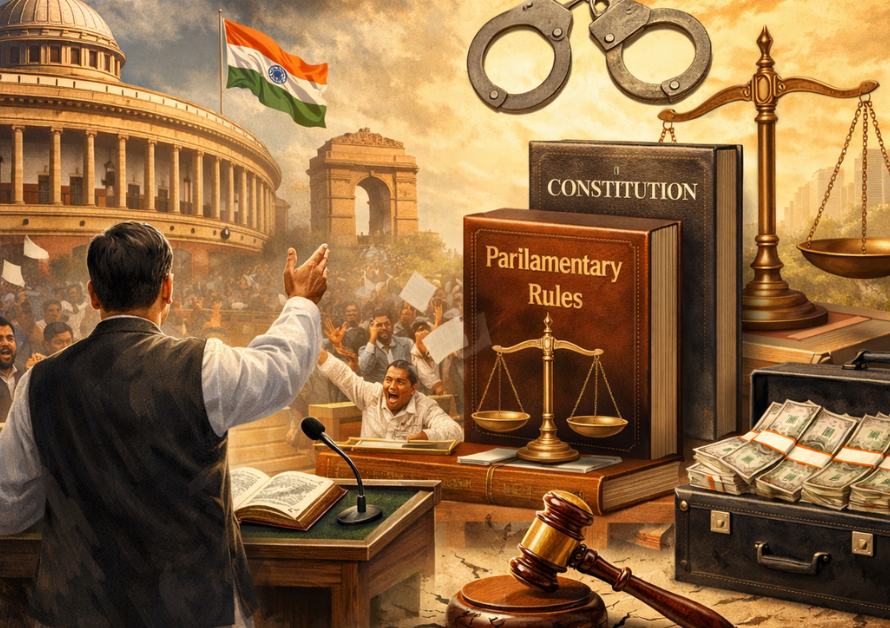
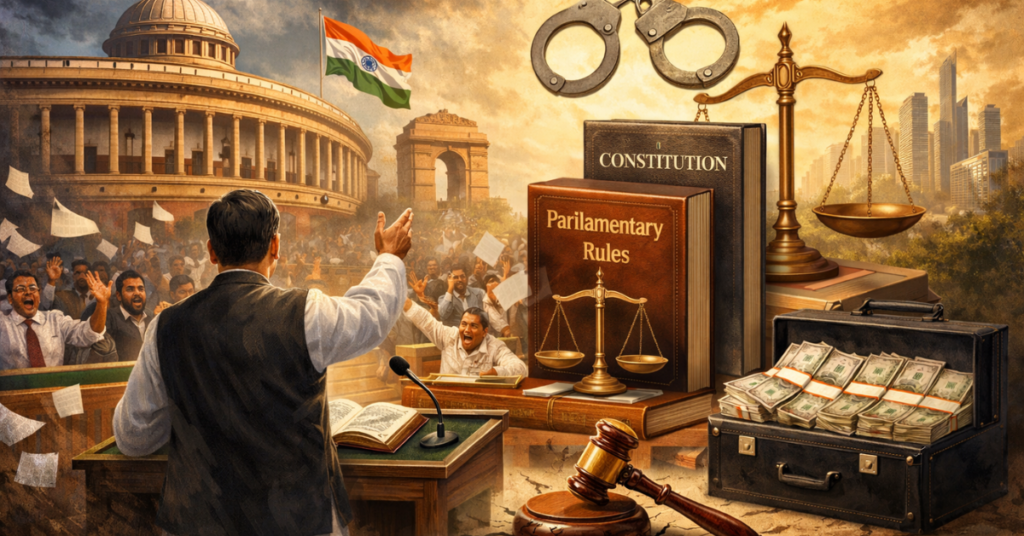
- At the same time, repeated disruptions, adjournments, and ruckus in parliamentary sessions are wasting precious time and public money.
- This dual challenge — declining procedural discipline and lack of structured preparedness — makes reform urgent.
- India must consider minimum governance literacy standards alongside strict enforcement of parliamentary procedures to restore dignity, efficiency, and national focus in legislative functioning.
The Foundational Question: Why Is Governance the Only Field Without Preparation?
In India:
✔️ Government jobs require competitive examinations.
✔️ Civil servants prepare for years to qualify.
✔️ Judges undergo rigorous legal education.
✔️ Teachers must be certified.
✔️ Even clerical posts require eligibility screening.
But lawmakers — who:
- Frame laws affecting 140+ crore citizens,
- Approve national budgets worth lakhs of crores,
- Debate national security,
- Amend constitutional provisions,
- Shape economic and foreign policy direction —
are not required to demonstrate even baseline understanding of:
- The Constitution,
- Legislative procedures,
- Fiscal systems,
- Federal structure,
- Regulatory frameworks.
Should the responsibility of governing the nation require less preparation than administering it?
🏛 The Growing Crisis: Parliamentary Ruckus and Institutional Erosion
Recent years have repeatedly witnessed:
🔹 Entire sessions disrupted by coordinated protests.
🔹 Frequent adjournments due to shouting and disorder.
🔹 Important bills stalled because debate was replaced by confrontation.
🔹 Valuable legislative hours lost without substantive discussion.
Each disrupted day:
💰 Costs crores of rupees in taxpayer money.
⏳ Delays policy implementation.
📉 Affects investor confidence.
🌍 Impacts India’s global perception of stability.
Parliamentary time is national time.
- When that time is consumed by chaos rather than policy deliberation, the loss is collective.
⚠️ The Real Cost of Repeated Disruption
Disruption is not merely symbolic. It has tangible consequences:
🏗 Delayed infrastructure approvals.
📊 Postponed economic reforms.
⚖️ Incomplete legal scrutiny of critical bills.
🛡 Interrupted national security discussions.
Beyond financial cost, repeated disorder sends a message that:
- Institutional discipline is negotiable.
- Emotional escalation overrides structured debate.
- Political spectacle replaces legislative seriousness.
A democracy cannot mature if its highest legislative institution struggles to function regularly.
📚 Governance Literacy: A Missing Pillar
The recurring ruckus raises a legitimate question:
- Is some of this disorder driven by political strategy — or by insufficient procedural understanding?
If representatives fully understood:
- Parliamentary rules of procedure,
- Motion structures and committee systems,
- Debate limitations and privileges,
- Constitutional boundaries of executive and legislative power,
>would repeated breakdowns be so frequent?
Basic governance literacy would:
✔️ Elevate the quality of debate.
✔️ Reduce procedural misuse.
✔️ Encourage structured opposition.
✔️ Strengthen committee-based oversight.
✔️ Shift political engagement from noise to nuance.
Knowledge strengthens representation; it does not weaken it.
⚖️ Reform Must Be Two-Dimensional
- To restore dignity and efficiency, reform must address both competence and discipline.
1️⃣ Minimum Governance Preparedness
Possible measures:
📘 Constitutional literacy certification before oath-taking.
📚 Mandatory parliamentary procedure training.
🏛 Structured legislative orientation programs.
📊 Continuous policy education modules.
🎓 Transparent disclosure of governance-related background.
The aim is not exclusion — but elevation.
2️⃣ Strict Enforcement of Parliamentary Procedures
- Rules already exist. Enforcement must become strict and consistent.
Necessary measures:
🚫 Automatic penalties for willful and repeated disruption.
⏱ Time-bound debate enforcement.
💼 Financial accountability mechanisms for lost session time.
📹 Transparent review of procedural violations.
⚖️ Equal application of rules to all parties.
Discipline is not anti-democratic. It is democracy’s backbone.
🚀 Aligning Governance Standards With National Ambition
India aspires to be:
🌍 A global economic powerhouse.
💹 A stable investment destination.
🛡 A strategic geopolitical actor.
🕉 A civilizational voice on the world stage.
Global respect is shaped not only by GDP growth — but by institutional stability.
International stakeholders observe:
- Parliamentary functioning.
- Debate maturity.
- Policy continuity.
- Legislative efficiency.
>Which is missing today
A disciplined and informed Parliament enhances India’s credibility globally.
🔥 Responsibility Before Authority
- Public office is not a ceremonial right. It is a constitutional duty.
Authority must be matched with preparedness.
- If citizens must qualify rigorously for public employment,
why should those supervising national direction be exempt from demonstrating foundational competence?
Democracy thrives when:
- Representation is informed.
- Debate is disciplined.
- Procedures are respected.
- National interest overrides performative politics.
🌟 A Vision of a Reformed Parliament
Imagine:
📜 Debates citing constitutional provisions accurately.
📊 Economic discussions grounded in data.
🧠 Opposition presenting structured alternatives instead of slogans.
⚖️ Committees acting as serious policy review forums.
🚀 Legislative sessions functioning without routine adjournment.
This is not idealism. It is institutional maturity.
📢 The Urgency of Now
- Looking at the recurring ruckus, procedural breakdowns, and wastage of national resources, reform is no longer theoretical.
>It is urgent.
India must:
- Raise leadership preparedness standards.
- Enforce parliamentary discipline consistently.
- Protect taxpayer resources.
- Safeguard institutional dignity.
- Prioritize national interest over disruption politics.
Democracy must be protected — not only from authoritarian excess, but from erosion caused by institutional disorder.
- India is a constitutional republic — not a platform for perpetual confrontation.
It deserves:
- Informed lawmakers.
- Disciplined sessions.
- Efficient debate.
- Responsible leadership.
>Leadership before power.
>Preparation before authority.
>Discipline before disruption.
If excellence is expected from citizens, preparedness must be expected from leaders as well.
🇮🇳 Jai Bharat, Vandematram 🇮🇳
Read our previous blogs 👉 Click here
Join us on Arattai 👉 Click here
👉Join Our Channels 👈