Summary:
- This comprehensive analytical report documents the seismic socio-political shifts occurring in Murshidabad, West Bengal. It details how, after years of perceived systemic suppression, the local majority community has pivoted toward a policy of “Active Resistance.”
- The “Karara Jawab” (Settling the Accounts) narrative is presented not merely as a localized reaction, but as a definitive signal of shifting electoral equations, administrative failure, and a cultural re-awakening ahead of the 2026 West Bengal Assembly elections.
Murshidabad: Changing Ground Realities and Social Response
1. Historical Context: From Endurance to Encounter
Murshidabad, long classified as a “sensitive” border district, has become the epicenter of a new social paradigm. Historically, the Hindu community in this region often accepted “compromises” in the name of maintaining a fragile communal peace.
- The Era of Silence: For decades, altering the routes of religious processions, lowering the volume of prayers, and ignoring minor provocations were the status quo.
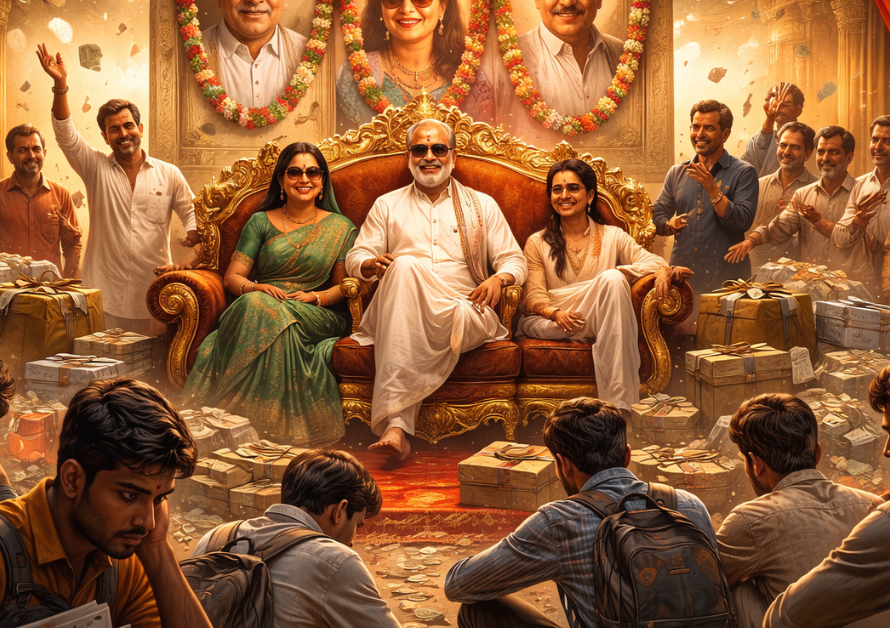
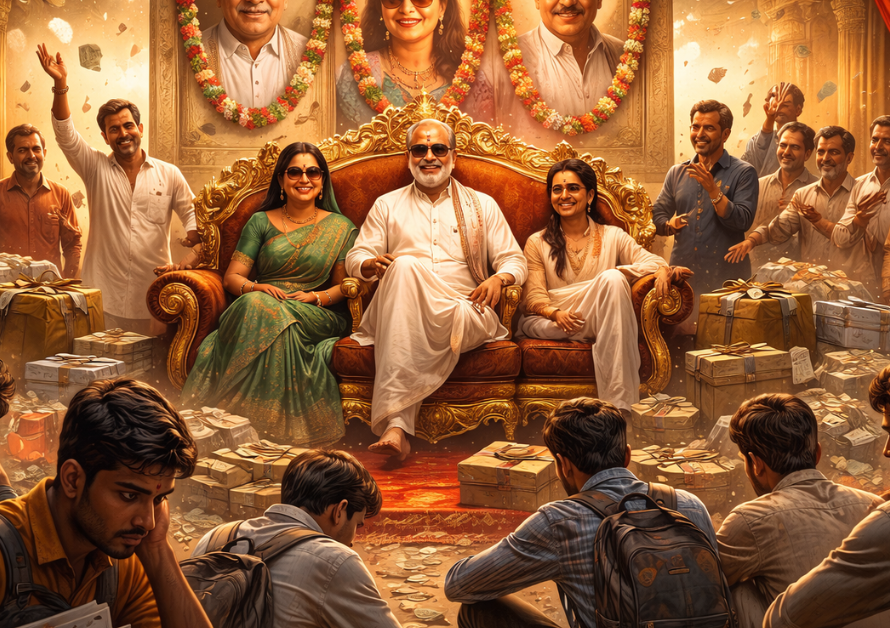
- Administrative Indifference: Locals believe that the state police and administration consistently prioritized the appeasement of a specific vote bank over the rule of law. This perceived bias created a subterranean reservoir of resentment.
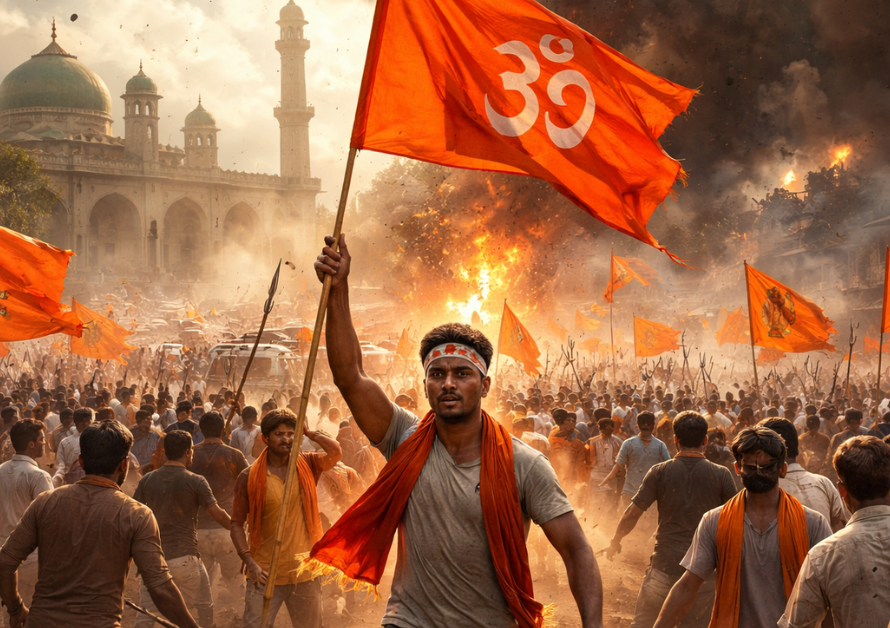
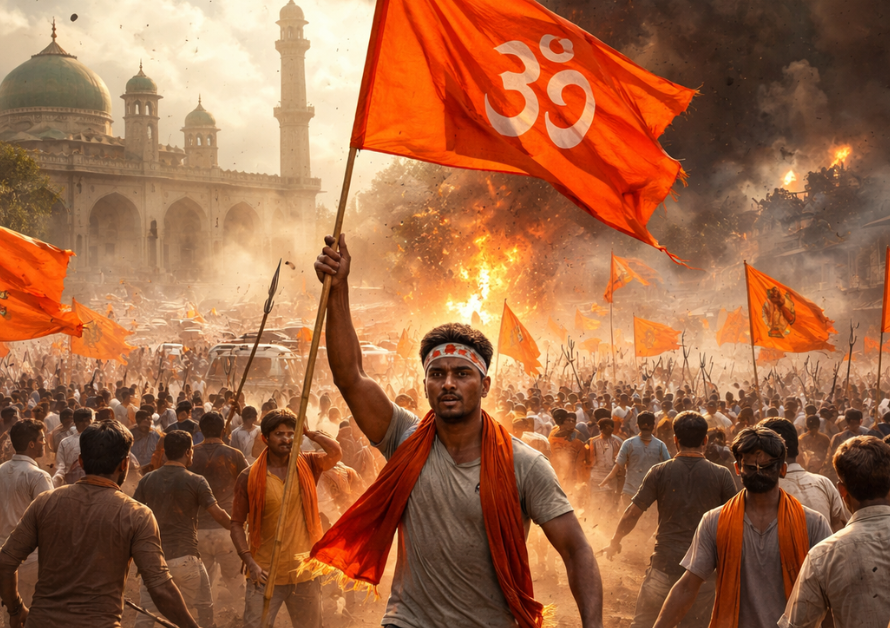
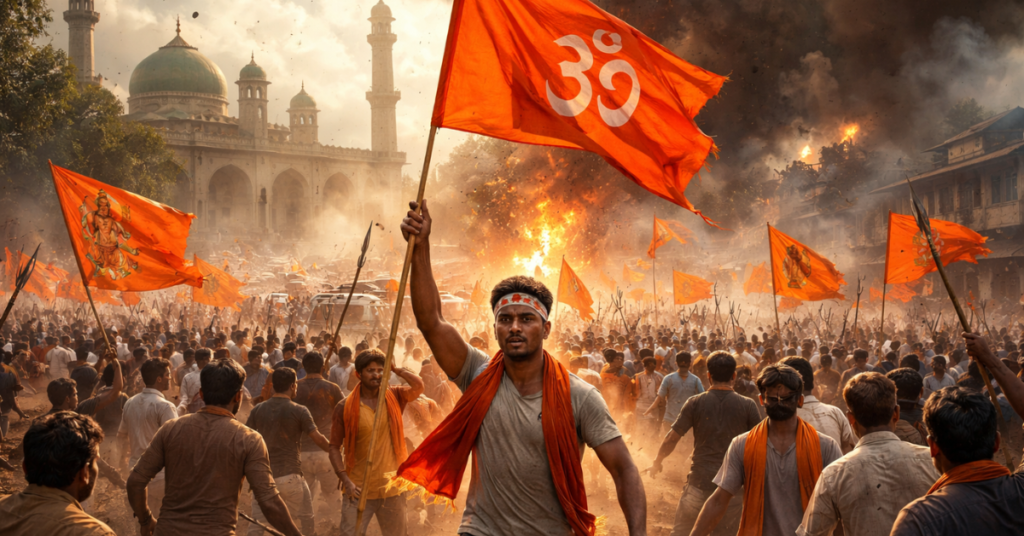
- The Ram Navami Turning Point: In recent years, organized attacks on Ram Navami and Shaurya Yatras acted as the ultimate catalyst. When stones rained down on women and children, the community decided to take its defense into its own hands.
2. The Mechanics of “Karara Jawab”: Beyond Defense to Deterrence
What recently transpired in Murshidabad was not just spontaneous mob violence; it was part of a “Psychological Shift.” The strategy has evolved from “Passive Defense” to “Active Deterrence.”
- Tit-for-Tat (Equivalent Response): The meaning of “karara jawab” is clear—if one side picks up a stone, the other will no longer stand with folded hands. It is the application of the principle of equal and opposite reaction.
- Economic Retribution: Resistance groups have realized that physical conflict alone is insufficient. Targeting the illegal businesses and strongholds of identified rioters is being used as an “Economic Lesson,” ensuring that the cost of stone-pelting is paid for with their own assets.
- Reclaiming Sovereignty: The concept of “No-Go Zones” is being dismantled. The community now insists on taking processions through streets and neighborhoods that were previously restricted under the guise of being “sensitive.”
3. Failure of the State Machinery and Self-Reliant Security
When the protector is perceived as a bystander or a collaborator, society chooses the path of “Self-Reliant Security.” This is the reality currently unfolding in Murshidabad.
- Distrust in Police: There is a widespread belief that the West Bengal Police acts as a “cadre” for the ruling Trinamool Congress (TMC). Instances of refusing to file FIRs for victims or turning victims into accused have become common grievances.
- Rise of Village Defense Committees: In villages and towns, youth have formed “Defense Committees.” These groups provide security during festivals and are trained for “Quick Response” in the event of an attack.
- The Legal Front: Despite administrative pressure, locals are now fighting organized legal battles. Documenting the truth on social media and ensuring representation in courts are integral parts of this new resistance.
4. Demographic Anxiety and Border Challenges
Murshidabad’s geography adds a layer of complexity. Bordering Bangladesh, the district faces unique challenges regarding demographic shifts.
- Infiltration and Radicalization: Local residents allege that elements from across the border have destabilized the district’s peace. They believe these elements receive local political patronage, making them feel immune to the law.
- A Battle for Survival: For the majority community, this is viewed not as a mere riot, but as a fight to save their land and culture. They see it as a desperate effort to “prevent Murshidabad from becoming another Kashmir.”
- Cultural Assertiveness: The display of saffron flags and the chanting of “Jai Shree Ram” are no longer just acts of worship; they are assertions of “Cultural Sovereignty.”
5. The Psychological Shift: “Fear Has Found a New Address”
The greatest impact of the “Counter-Strike” in Murshidabad is the shift in the psychology of fear.
- The End of the Unilateral Veto: Previously, radical elements decided where and how Hindus could celebrate. That veto has been effectively terminated.
- The Boldness of the Youth: The new generation of youth in Murshidabad does not believe in migration or silence; they believe in “Pratikar” (Retaliation). They are connected via social media and can mobilize across the state instantly.
- Collective Strength: The “Karara Jawab” incidents have unified a fragmented society. Rising above caste and sect, people are standing together under a singular ‘Hindu’ identity.
6. Political Future and the Clarion Call for 2026
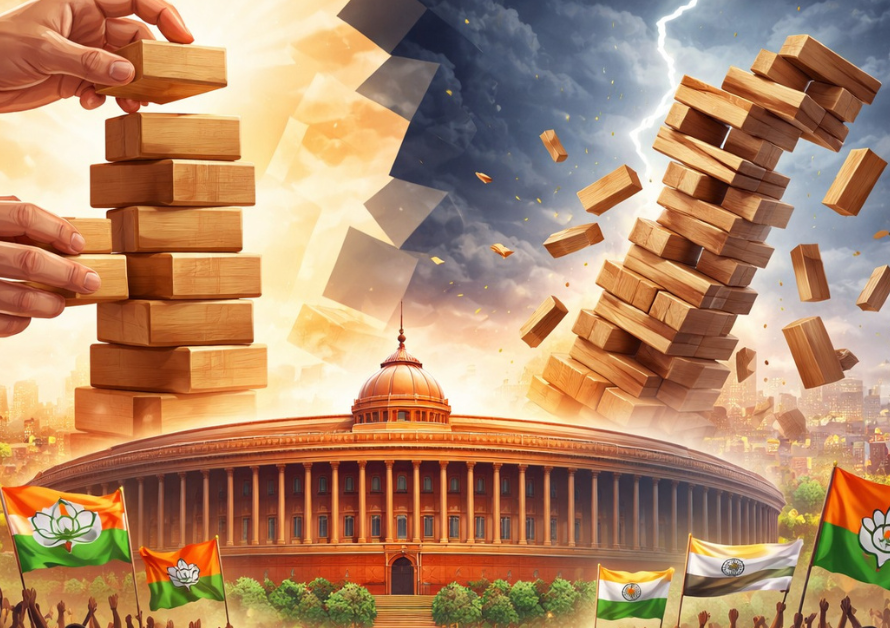
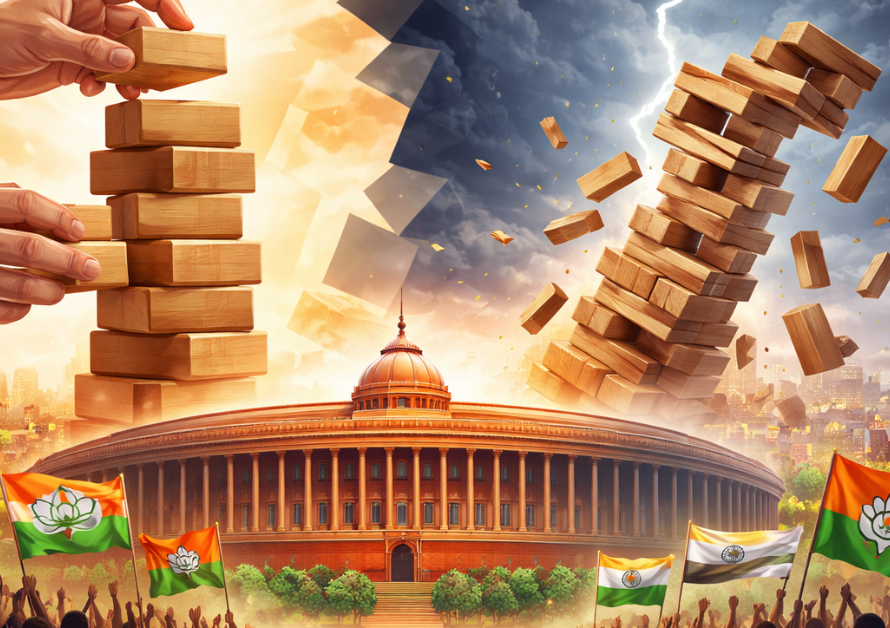
The fire ignited in Murshidabad is spreading across West Bengal, and its impact on the 2026 elections will be profound.
- Crisis for Appeasement Politics: It is becoming increasingly difficult for Mamata Banerjee to maintain her traditional “balancing act.” If she suppresses the resistance of the majority, she faces a massive backlash that benefits the BJP directly.
- The Breakdown of Voter Calculus: The cleanup of “Ghost Voters” combined with “Active Resistance” on the streets is disrupting the TMC’s traditional electoral arithmetic.
- A New Level of Polarization: Bengal has moved from “Silent Support” to “Vocal Opposition.” Murshidabad has demonstrated that the upcoming elections will not just be about votes, but about “Existence.”
7. The Dawn of a New Era
- The events in Murshidabad have made it clear: the West Bengal of today is not the Bengal of 2011 or 2016. This is an “Awakened Bengal” that will no longer wait for a messiah for its protection.
- The message from Murshidabad is loud and clear: Peace is only possible through strength. If the state fails to establish the rule of law, society will follow its own principles of Natural Justice. “An eye for an eye” is no longer just a proverb; it is the new reality of Murshidabad.
🇮🇳 Jai Bharat, Vandematram 🇮🇳
Read our previous blogs 👉 Click here
Join us on Arattai 👉 Click here
👉Join Our Channels👈