Why the Manufactured Insecurity in India Keeps Failing Again and Again
- Public perception, Gen-Z targeting, electoral evidence, and India’s strategic rise
1. The New Battleground: Perception Over Performance
- In today’s digital era, politics is increasingly fought through narratives rather than facts.
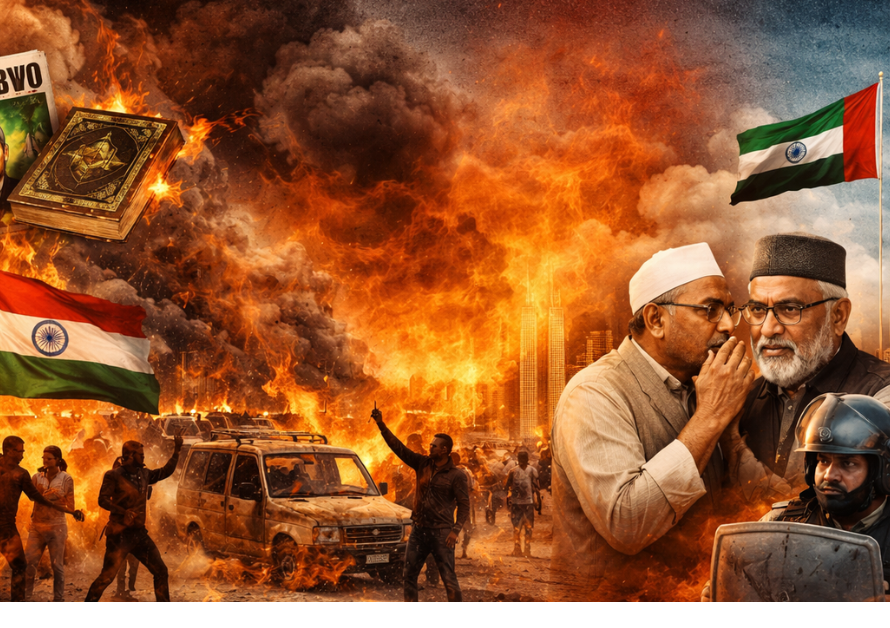
An entrenched anti-national and anti-Hindu ecosystem, consisting of opposition parties, ideological groups, and sympathetic media networks, has been making desperate attempts to:
- Confuse the public using selective and misleading narratives
- Project India as unstable, intolerant, or failing on global platforms
- Downplay national achievements while exaggerating isolated incidents
- Manufacture fear about the “inevitable fall” of the Modi government
This ecosystem relies more on perception management than on offering credible policy alternatives.
2. Targeting Gen-Z: Why Youth Are a Key Focus
Gen-Z voters consume politics differently:
- Short videos over detailed policy explanations
- Emotion-driven storytelling over data
- Influencer narratives over institutional credibility
To exploit this, narrative campaigns focus on:
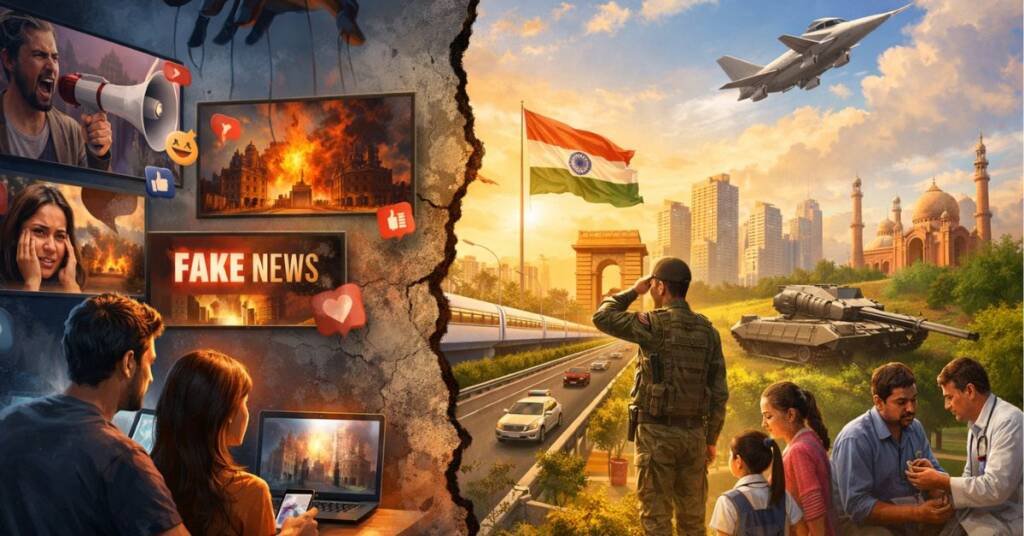
- Cooked-up images and viral clips
- Oversimplified binaries
- Repetitive pessimism about India’s future
- Glorification of leaders without performance
However, digital exposure does not mean political blindness. Over time, lived reality overtakes curated content.
3. Why Narrative Engineering Is Failing
Narratives can confuse temporarily—but they collapse against outcomes:
- Daily life improvements cannot be erased by online outrage
- Infrastructure, welfare delivery, and security are directly experienced
- Repeated predictions of government collapse lose credibility
The public has increasingly recognised that fear-based storytelling is not governance.
4. Elections: The Ultimate Reality Check
If insecurity narratives were real, elections would reflect them. In fact They haven’t.
- Repeated electoral results show public confidence, not panic
- Voters have rejected fear campaigns and rewarded continuity
- Narrative-driven pessimism has failed to translate into votes
Democracy has cushed propaganda brutally—through numbers.
5. A Track Record That Speaks for Itself
Over eleven years, governance outcomes are visible and verifiable:
- Strong macro-economic resilience and sustained growth
- Massive infrastructure expansion—roads, railways, ports, airports
- Digital public infrastructure transforming welfare delivery
- Military modernisation and strategic deterrence
- Independent foreign policy with national interest first
This record makes narrative manipulation increasingly ineffective.
6. India’s Rising Military and Economic Might
India today is not the India of a decade ago:
- Military preparedness has strengthened deterrence
- Economic scale has given India leverage in global negotiations
- Trade and tariff pressures from powerful economies have met resistance
- Several Western nations have recalibrated positions due to India’s market and strategic importance
India has challenged global power equations, not through submission, but through strength.
7. Global Acknowledgment vs Domestic Denial
Ironically:
- Global institutions, investors, and governments acknowledge India’s rise
- Yet some domestic voices remain trapped in denial
This contradiction is driven by:
- Ideological rigidity
- Political frustration
- Narrative addiction
Healthy criticism strengthens democracy—but denial of progress weakens it.
8. Performance Always Defeats Optics
- Curated images cannot replace built infrastructure
- Viral reels cannot erase national security gains
- Manufactured fear cannot undo economic momentum
In the long run, result delivery creates trust, not propaganda.
9. The Bigger Lesson for Indian Democracy
- Citizens increasingly judge governments by outcomes
- Gen-Z is learning to distinguish narratives from reality
- Electoral verdicts are reinforcing stability, not uncertainty
India’s democracy is maturing—less emotional, more evidence-based.
10. Performance Sets the Ceiling for Propaganda
Narratives matter—but results matter more.
- The last eleven years have built economic strength, military confidence, and global respect
- Repeated elections have validated public trust
No amount of narrative engineering can defeat lived progress
- In a democracy, propaganda has limits. Performance decides the future.
🇮🇳 Jai Bharat, Vandematram 🇮🇳
Website: https://www.saveindia108.in
Email: info@saveindia108.com
Old Blogs: https://saveindia108.in/our-blog/
WhatsApp: https://tinyurl.com/4brywess
Arattai: https://tinyurl.com/mrhvj9vs
Telegram: https://t.me/+T2nsHyG7NA83Yzdl