Summary
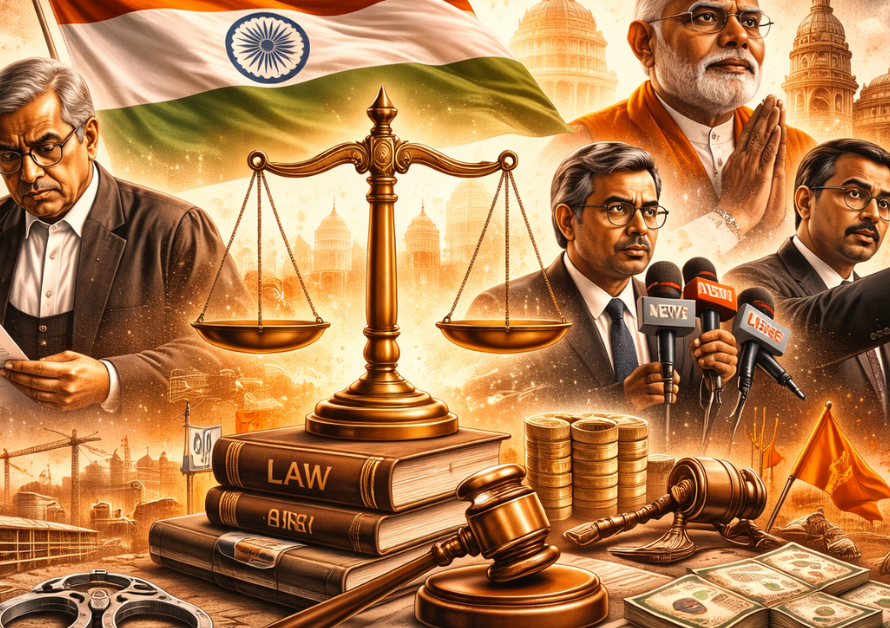
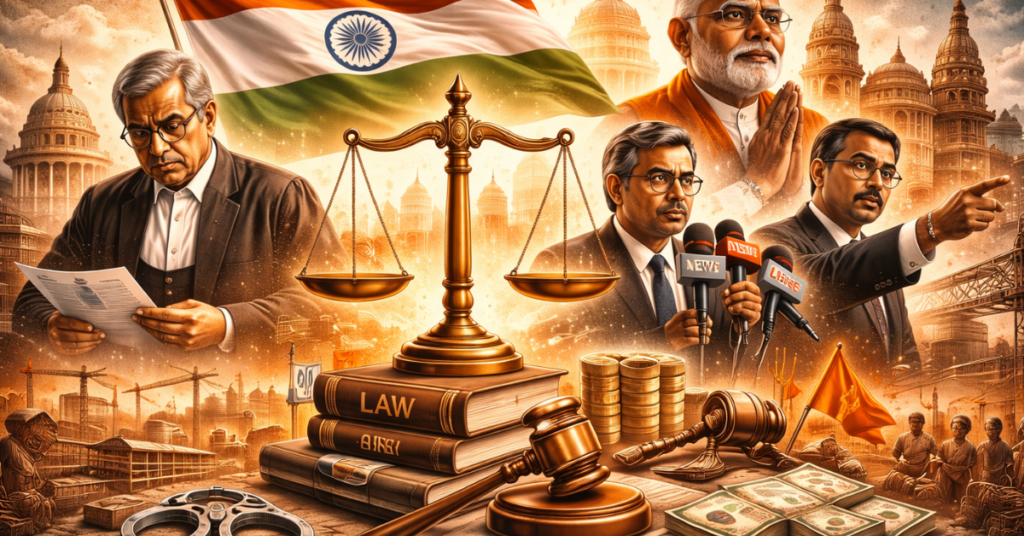
- In recent years, many citizens have begun noticing a concerning pattern in public discourse and legal activism. High-profile lawyers frequently appear to defend individuals accused of anti-national rhetoric, attacks on Hindu beliefs, or obstruction of national development projects.
- At the same time, comparatively less visible elite legal activism appears to champion civilisational protection, equal enforcement of secularism, and strategic development initiatives.
- This post does not question constitutional rights. Every accused person deserves legal representation. However, when legal energy appears disproportionately mobilized in ways that repeatedly challenge national security laws, stall infrastructure, or defend provocative rhetoric targeting Sanatana Dharma, citizens are justified in raising questions.
- National interest is not political extremism. It is a constitutional obligation. The real issue is not denying rights — but ensuring equal accountability, institutional neutrality, and uninterrupted development for the future of Bharat.
Due process is essential but national development, civilisational dignity, and security must not be undermined
1. National Interest Comes First
- Political correctness cannot override national priorities.
At the heart of this debate lies a simple principle:
- National security
- Civilisational dignity
- Economic development
- Social stability
must always take precedence over narrative battles.
When legal activism consistently aligns in one ideological direction — especially in cases involving:
- Anti-national slogans
- Attacks on Hindu traditions
- Attempts to derail infrastructure projects
- Legal obstruction of strategic reforms
citizens naturally begin to question the balance of the system.
- Asking questions is not extremism. It is democratic vigilance.
2. Due Process Is Sacred — But It Cannot Become a Shield for Disruption
Let us be clear:
- India is governed by the Constitution.
Every citizen has:
- The right to legal representation
- The right to a fair trial
- The presumption of innocence
No nationalist opposes these principles.
However, the concern arises when:
- Legal defense morphs into ideological endorsement.
- Procedural arguments are repeatedly used to delay accountability.
- Litigation becomes a tool to stall national momentum.
Due process must protect rights — not paralyze governance.
3. The Pattern People Are Observing
Across multiple high-profile cases, a pattern appears:
A. Rapid Legal Mobilization
When individuals are accused of:
- Insulting Sanatana Dharma
- Raising anti-national rhetoric
- Justifying secessionist or divisive narratives
top-tier legal defense teams are assembled almost immediately.
B. Aggressive Challenges to National Laws
- National security legislation
- Citizenship and immigration reforms
- Anti-conversion frameworks
- Development clearances
often face immediate and sustained legal challenges.
C. Strategic Development Under Litigation Pressure
Major projects in:
- Infrastructure
- Energy
- Manufacturing
- Strategic transport corridors
are frequently delayed through prolonged court battles.
While judicial review is essential, motivated obstruction harms:
- Employment generation
- Investor confidence
- India’s global competitiveness
4. Meanwhile, Civilisational Issues Receive Less Visible Advocacy
On the other side:
- Temple management inequalities persist in several states.
- Historical injustices tied to civilisational heritage receive slow attention.
- Selective secularism is rarely challenged with equal intensity.
- Rhetoric targeting Hindu symbols often attracts softer scrutiny.
This asymmetry fuels public perception of imbalance.
- Even if the system is legally functioning, the perception of unequal urgency weakens trust.
5. Development Cannot Be Held Hostage
India stands at a crucial moment in its economic rise.
- Manufacturing expansion
- Infrastructure modernisation
- Digital transformation
- Strategic defense growth
are not ideological projects — they are national necessities.
When projects are stalled through serial litigation driven by political motivations, the ultimate losers are:
- Young job seekers
- Small businesses
- Rural aspirants
- Future generations
National development must not be derailed under the cover of perpetual activism.
6. Sanatana Dharma and Equal Respect
- For decades, targeting Hindu traditions was normalized under the banner of “progressive critique.”
Today, when there is pushback demanding:
- Equal respect
- Symmetrical enforcement of hate speech standards
- Accountability for provocative rhetoric
it is often labeled majoritarianism.
Let us be firm:
- Demanding equal protection for Sanatana Dharma is constitutional equality — not intolerance.
A civilisational majority asking for parity is not extremism.
- It is overdue balance.
7. The Psychological Irony Citizens Feel
Ordinary Indians often see:
- Elite defense for controversial figures.
- Intense scrutiny of nationalist policies.
- Immediate activism against reforms.
- Slower momentum in addressing cultural grievances.
This creates a sense that:
- Disruption receives faster mobilization than development.
- Provocation receives stronger defense than preservation.
Even if partially perceptual, such sentiments must not be dismissed. They reflect deeper public unease.
8. The Way Forward: Strengthen, Don’t Destabilize
- This is not a call to weaken the judiciary or silence dissent.
Instead, it is a call to:
- Ensure equal enforcement of laws across religions.
- Discourage motivated litigation aimed purely at delay.
- Promote legal scholarship that defends constitutional nationalism.
- Encourage young lawyers to engage in development-positive jurisprudence.
- Reinforce institutional neutrality free from ideological pressure.
National strength and rule of law must reinforce each other.
9. A Confident Bharat Does Not Fear Debate — But Demands Fairness
India’s rise as a global power depends on:
- Institutional credibility
- Legal symmetry
- Cultural confidence
- Development momentum
>Political correctness must never silence legitimate national concerns.
>But national interest must always operate within constitutional discipline.
A mature nation must protect both.
Awareness Without Hostility
- The question is not whether lawyers should defend the accused. They must.
The question is whether:
- Legal activism is ideologically skewed.
- National development is excessively obstructed.
- Civilisational dignity receives equal institutional protection.
- Law is applied symmetrically.
National interest and constitutional fairness are not opposites.
- They are partners.
If Bharat is to become a global superpower and civilisational leader, its legal and intellectual ecosystem must align with:
- Equal justice
- Development continuity
- Cultural respect
- Institutional integrity
>Awareness is not anger.
>Demanding balance is not extremism.
>National interest is not negotiable.
🇮🇳 Jai Bharat, Vandematram 🇮🇳
Read our previous blogs 👉 Click here
Join us on Arattai 👉 Click here
👉Join Our Channels 👈