Summary
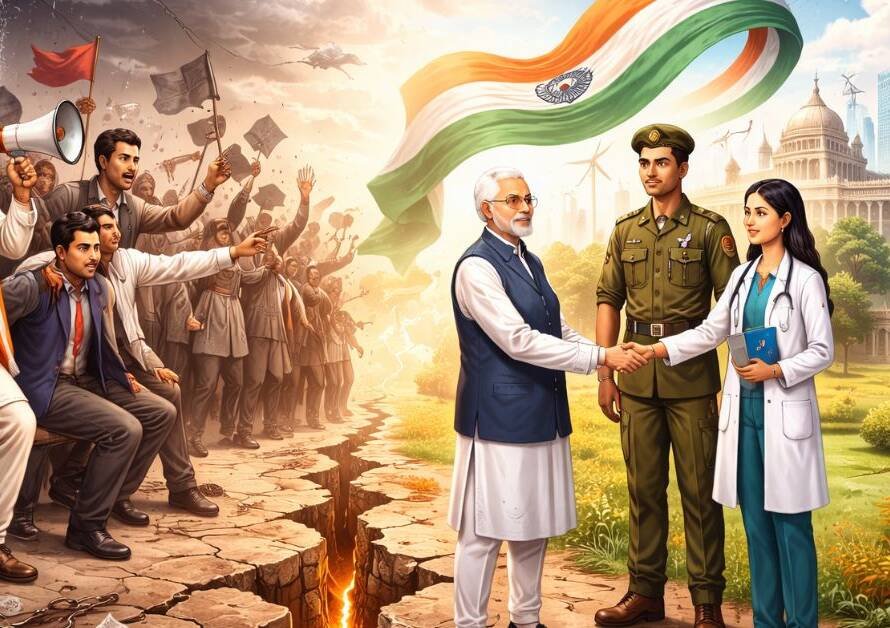
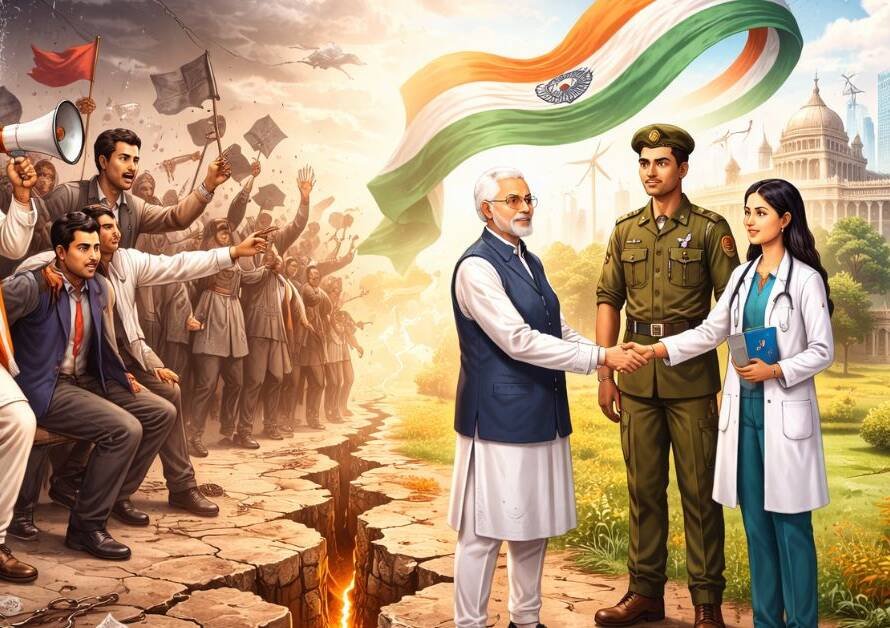
- Political accusations are not new in Indian democracy. However, when parties that ruled for decades begin issuing certificates of nationalism and accuse current leadership of “selling the nation,” it becomes essential to rise above emotions and examine facts.
- Post-independence India has faced partition, wars, border disputes, economic crises, and internal instability. Different governments have been responsible for decisions during different eras.
- Today, India is emerging as a confident, globally respected, and rapidly developing power. In such a moment, politics driven by distortion and misinformation weakens democratic discourse. The time has come for accountability, transparency, and nation-first politics.
History, Accountability, and the Direction of New India
1️⃣ Historical Responsibility: Are We Willing to Confront the Truth?
- India’s post-independence journey has not been simple.
Major historical events include:
- The 1947 Partition and resulting border instability
- The Kashmir issue and the Line of Control situation
- The 1962 India–China war
- Border-related agreements and geopolitical decisions
- Strategic positioning during the Cold War
The effects of these decisions continue to shape India’s reality. The key questions are:
- Was there ever comprehensive political introspection?
- Was accountability assigned for historical miscalculations?
- Or is the past ignored while blame is redirected at the present?
Today’s electorate does not simply listen to speeches — it compares historical records with current realities.
2️⃣ Nationalism: Emotional Slogan or Policy Commitment?
Patriotism is not proven by rhetoric. It is proven by:
- Strengthening border security
- Modernizing defense capabilities
- Maintaining a firm policy against terrorism
- Strategic diplomatic balancing
- Advancing economic self-reliance
Today’s India:
- Is expanding indigenous defense production
- Plays an active role on global platforms
- Has hosted global summits like the G20
- Is emerging as a major global economy
When economic and strategic strength is increasing, accusations like “selling the nation” must be evaluated through evidence — not political noise.
3️⃣ Land, Institutional Assets, and Resource Governance
- Land management, institutional properties, and public resource allocation are governed by complex legal frameworks.
Important questions include:
- Are all institutions operating transparently?
- Are public resources being used in national interest?
- Is accountability uniform across systems?
Political discourse should focus on reform and transparency —
not on division and emotional polarization.
4️⃣ The Rise of New India: Development and Global Standing
India is advancing on multiple fronts:
🌍 Global Diplomacy
- Strategic international partnerships
- Balanced foreign policy
- Active participation in a multipolar world order
🛡️ Defense and Security
- Strengthened border infrastructure
- Modernized weapons systems
- Clear counter-terror policies
💰 Economy
- Digital payments revolution
- Expanding startup ecosystem
- Massive infrastructure investment
- Direct benefit transfer systems
🚀 Self-Reliance
- Make in India initiatives
- Indigenous defense production
- Technological innovation
In such a phase of growth, politics based on fear and misinformation must be carefully scrutinized.
5️⃣ The Political Maturity of the Indian Voter
Today’s voter:
- Distinguishes between social media propaganda and verified facts
- Compares previous and current governance
- Evaluates promises against performance
- Is less influenced by emotional provocation
India is gradually transitioning from slogan-driven politics to performance-driven politics.
6️⃣ Difficult Decisions and Leadership Courage
Decisions taken in national interest:
- May attract criticism in the short term
- Carry political risks
- But often deliver long-term stability
Such decisions require:
- Clear vision
- Strong intent
- Political courage
- Long-term planning
Parties that governed for decades must remain accountable for their decisions.
- The present leadership is equally accountable to the people.
- That is the essence of democracy — accountability and transparency.
7️⃣ Falsehood vs. Accountability: The Real Battle
The real struggle today is not merely between political parties. It is between:
- Falsehood and facts
- Allegations and accountability
- Fear and confidence
- Confusion and development
- When politics becomes opposition for the sake of opposition, democracy weakens.
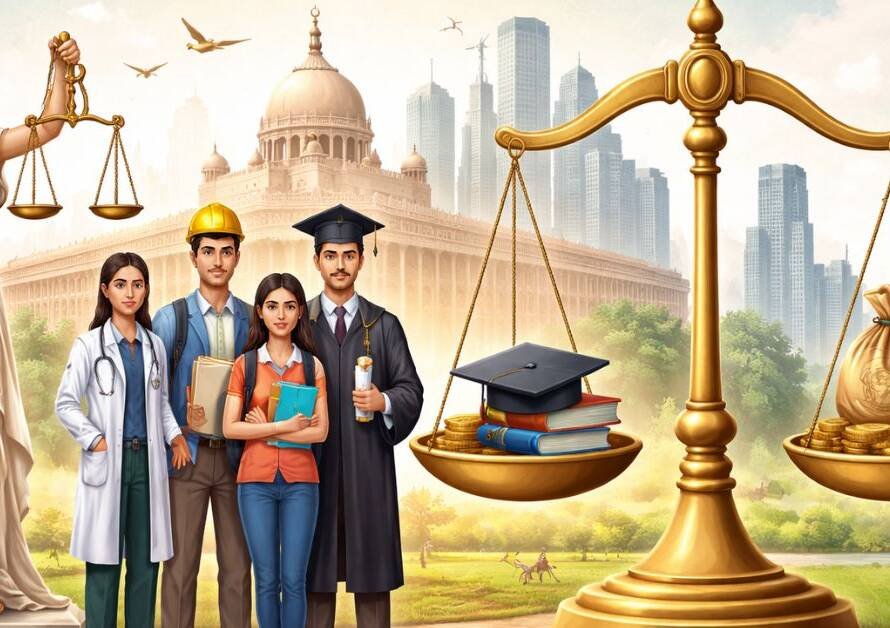
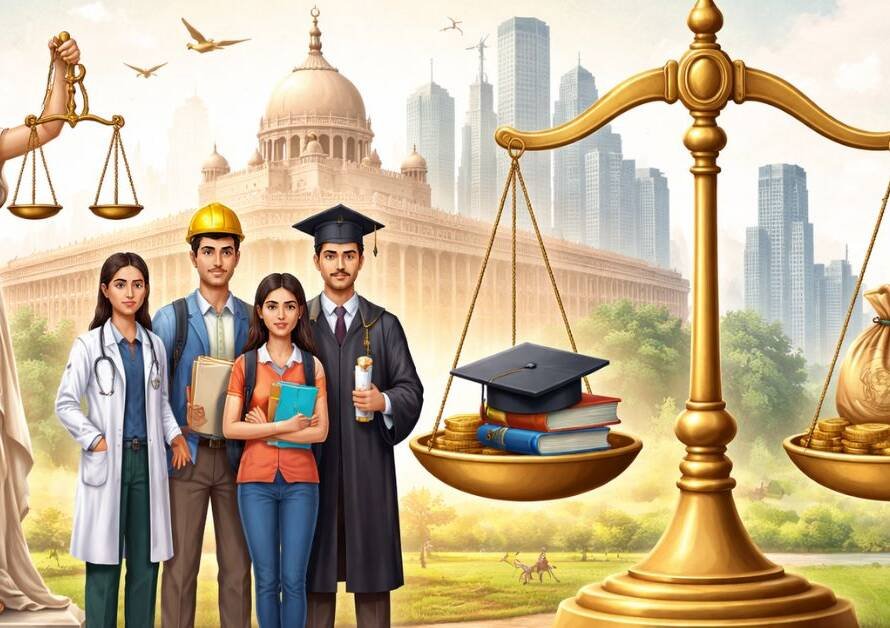
When politics becomes constructive competition for national progress, democracy strengthens.
8️⃣ The Final Authority Lies with the People
In a democracy, ultimate power does not rest with:
- Social media trends
- Political speeches
- Campaign rhetoric
- It rests with the voter.
The core questions are:
- Will we learn from history?
- Will we evaluate the present objectively?
- Will we place national interest above partisan interest?
India today is:
- Confident
- Aware
- Decisive
A strong nation ensures secure and prosperous citizens.
- The time has come for politics to rise above falsehood and embrace responsibility.
🇮🇳 Jai Bharat, Vandematram 🇮🇳
Read our previous blogs 👉 Click here
Join us on Arattai 👉 Click here
👉Join Our Channels 👈