Summary
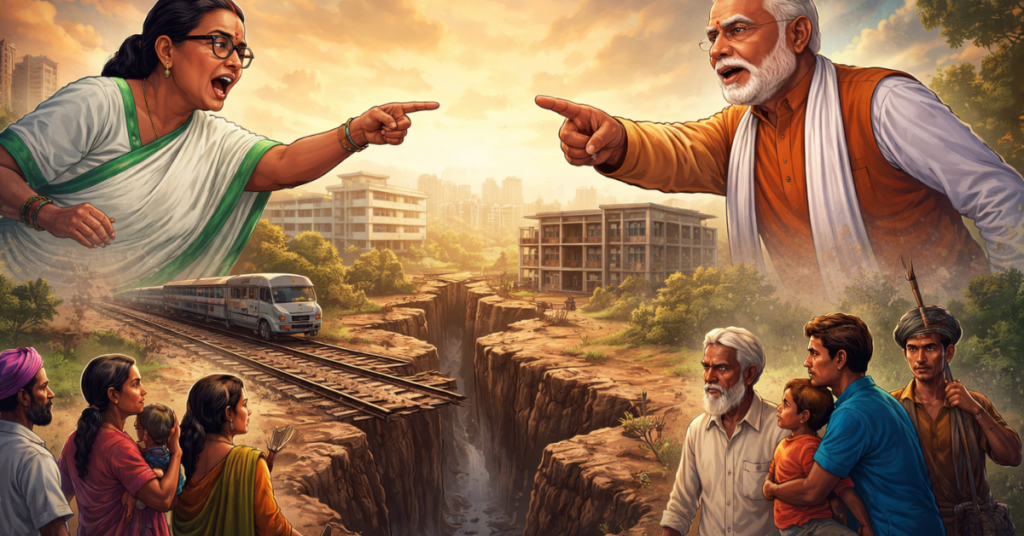
- Between 2020 and 2026, Mamata Banerjee’s Trinamool Congress (TMC) government has repeatedly blocked or delayed key central government schemes and infrastructure projects in West Bengal. This has slowed economic development, weakened public infrastructure, and left crores of people—especially the Hindu majority—without welfare benefits and modern facilities they could have received under national programmes.
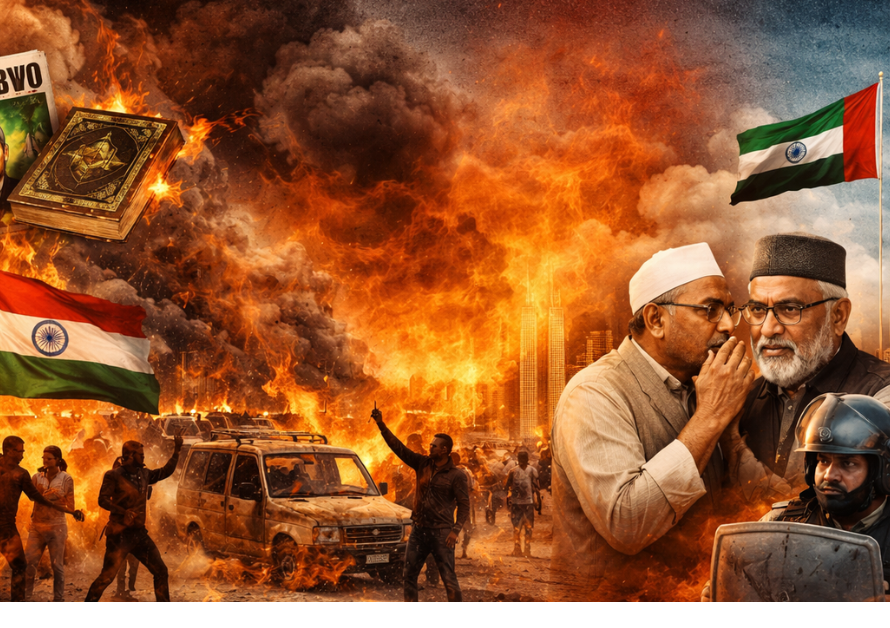
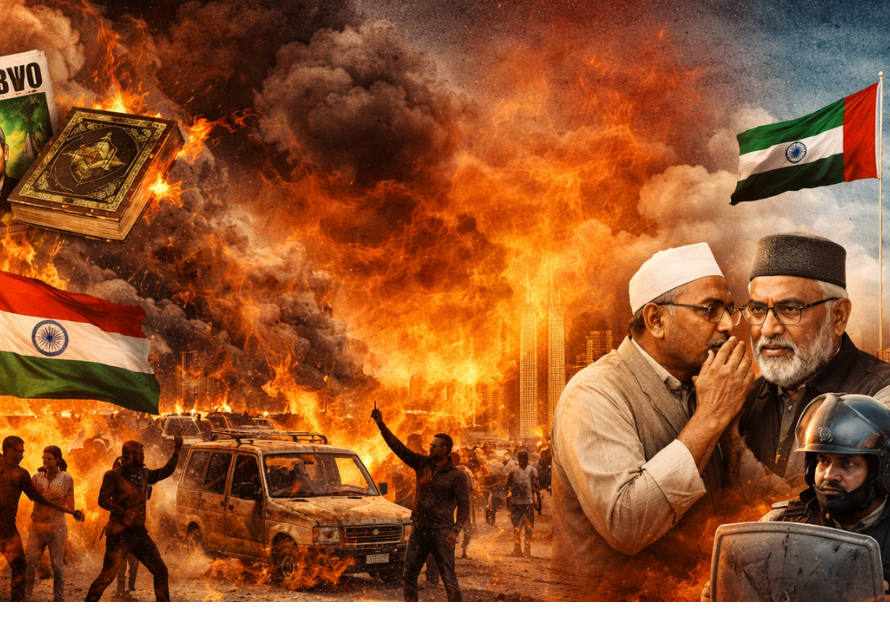
- At the same time, state funds and local schemes are seen as disproportionately directed toward the Muslim community to secure a loyal vote bank. This pattern not only deepens social mistrust and inequality but also sets a dangerous precedent for other opposition‑ruled states.
- These episodes makes a strong case for stronger central oversight so that centrally funded schemes and projects cannot be held hostage to the political agenda of any one state government. Only then can India shift from “politics over progress” to genuine “progress over politics.”
Vote‑Bank Politics
Central schemes blocked, development stalled
- Under TMC rule, many flagship central schemes and projects have either not been implemented at all or have been significantly delayed. The Union Government bears a large share of the cost, but delivery depends on state cooperation. In the railway sector, for example, official figures on 7 March 2026 showed that only about 27 percent of the land required for various railway projects in West Bengal had been acquired—far below the average of many other states. This has left at least 43 projects pending, including new lines, gauge‑conversion works, and track‑doubling, which would otherwise generate better connectivity, faster travel, and job opportunities. The delayed Nabadwipghat–Nabadwipdham link in Nadia district exemplifies how ordinary people, including pilgrims and daily commuters, are directly harmed by these hold‑ups.
- In healthcare, West Bengal has refused to join the Ayushman Bharat – Pradhan Mantri Jan Arogya Yojana, the central government’s flagship health insurance scheme for poor and vulnerable families. Across India, this scheme provides cashless treatment up to a fixed limit in a wide network of public and private hospitals, with portability across states. Because the TMC government has opted out, millions of eligible residents—many of them poor Hindu families in rural and peri‑urban belts—cannot receive Ayushman cards or benefit from this coverage. Instead, they either avoid treatment or fall into debt when a serious illness hits the household.
- Similar delays and non‑implementation can be seen in other key areas. The Pradhan Mantri Matsya Sampada Yojana for fisheries was largely ignored for nearly two years because the state did not submit timely project proposals, affecting the incomes of fish‑farmers and workers. Border fencing along the India–Bangladesh frontier has been slowed because of delays in acquiring land, which impacts national security and the safety of border communities.
- Rural welfare schemes, too, have faced serious problems. Investigations into MGNREGA and Pradhan Mantri Awas Yojana – Gramin have revealed irregularities such as ghost work, project splitting, fund diversion, and selection of ineligible beneficiaries, eventually leading to a temporary suspension of MGNREGA funds.
- Programmes like Beti Bachao Beti Padhao were not implemented at all, and funds under the Nirbhaya scheme for women’s safety remained unspent. In agriculture, after participating for a few seasons, West Bengal exited the Pradhan Mantri Fasal Bima Yojana, leaving farmers in a flood‑ and cyclone‑prone state without central crop insurance. During the COVID‑19 pandemic, the Garib Kalyan Rojgar Abhiyaan, designed to provide employment to returning migrant workers, was not launched here because the state authorities did not provide the necessary data and inputs.
- Collectively, these choices show a persistent pattern: central schemes are either blocked, delayed, or mismanaged, and ordinary citizens bear the cost in lost welfare, jobs, and infrastructure.
Double burden on the Hindu‑majority community
- The Hindu majority in West Bengal has, in effect, faced a double disadvantage. On one hand, TMC’s opposition to the Modi government has translated into a refusal or delay of national schemes and fast‑tracked projects that could have benefited its own people.
- On the other, there is a widespread perception that state‑level funds and local welfare measures are structured in a way that disproportionately favours the Muslim community as a political vote bank. State‑funded allowances, grants, and targeted programmes are often seen as crafted with this appeasement objective rather than through a lens of equal treatment for all communities.
- While poverty relief should, in principle, reach everyone regardless of religion, the problem lies in the consistency and optics of the pattern. Many people in Hindu‑majority areas see that central schemes such as Ayushman Bharat, national crop insurance, and central‑funded housing either do not reach them or arrive in a half‑hearted, symbolic way. At the same time, they watch the state government announce and promote new benefits specifically directed at particular minority groups, framed in political and community‑centric terms.
- This creates a sense of injustice and alienation among the majority community, which feels punished for its electoral preferences and identity, even as other groups appear to be rewarded. The result is not just economic loss but also a slow erosion of social trust and common citizenship.
Politics over progress: vendetta against the Centre
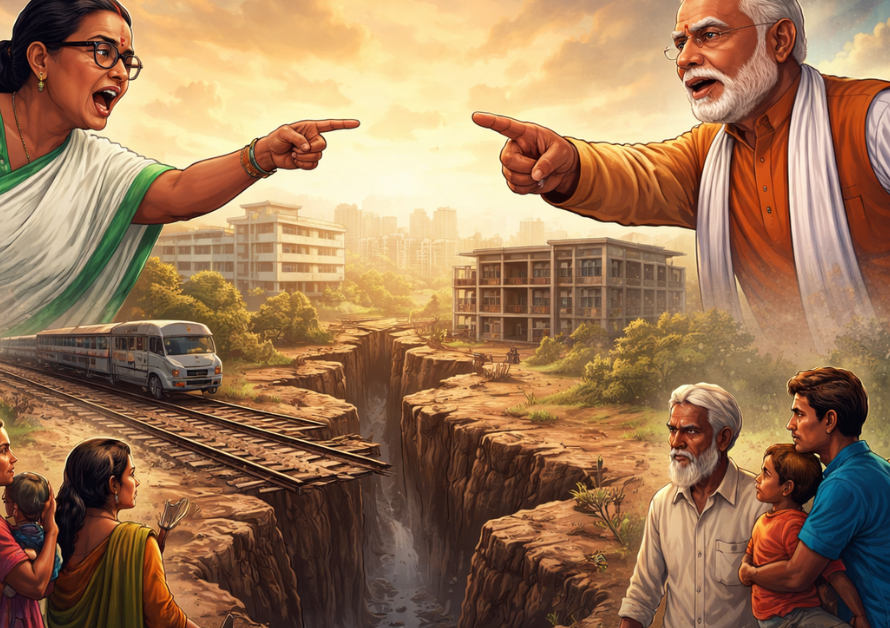
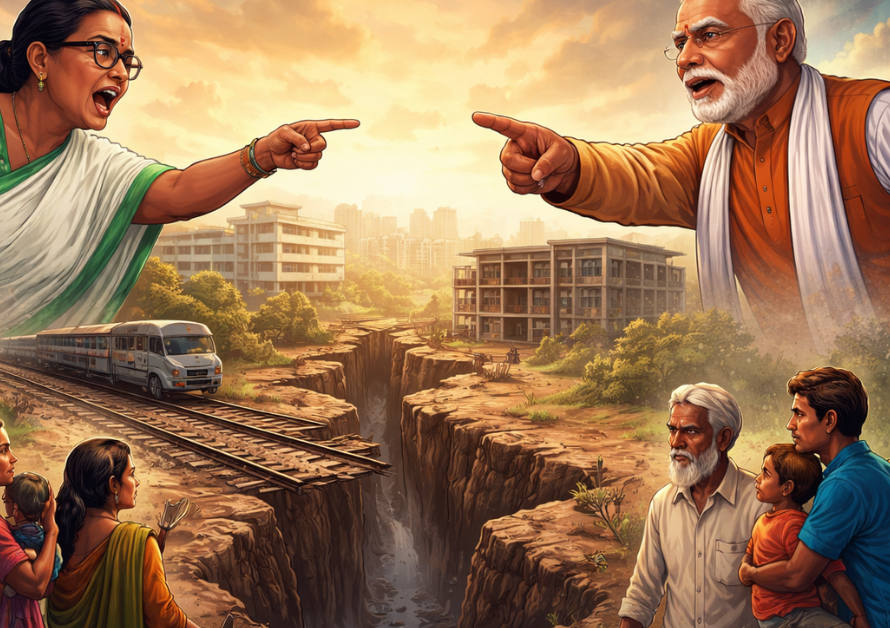
- The underlying logic of these decisions increasingly points to “politics over progress.” Rather than evaluating schemes by their potential to improve lives, the TMC government appears to treat them as markers of political loyalty or disloyalty to the Centre.
- Refusing a nationwide health insurance scheme, delaying national railway projects, holding up border fencing, underusing funds for women’s safety, exiting a national crop‑insurance programme, and ignoring an employment drive for migrant workers—all of these choices come at a direct cost to the people of West Bengal. Yet, they are often justified in political or ideological language, as if opposing the Union Government were more important than protecting the welfare and dignity of citizens.
- In parallel, the state has developed a model in which selective use of state funds is meant to keep a particular community politically satisfied, while leaving others dependent on less generous or neutral central benefits.
- These patterns are not unique to West Bengal; and other opposition‑ruled states have also shown tendencies to slow down or poorly implement central schemes while using state resources for targeted appeasement. When this turns into a broader trend, it undermines the idea of equal citizenship and plants long‑term resentment across communities.
Need for stronger central oversight and reform
- These repeated episodes raise a national question that cannot be ignored: how can India ensure that centrally funded schemes and infrastructure projects are not sabotaged or distorted by state governments for narrow political reasons? When the money comes from the Union Government and the schemes are meant for the entire country, it is reasonable to expect that states should not be free to arbitrarily block, delay, or misuse them.
- There is now a strong argument for stronger legal and institutional safeguards—tighter monitoring of scheme implementation, more use of Direct Benefit Transfer into beneficiaries’ bank accounts, stricter supervision of land acquisition for infrastructure, and clear rules that make it harder for any state to opt out of key national programmes without concrete, justifiable reasons. Penalties or corrective measures should follow if a state clearly distorts or neglects centrally funded initiatives.
- Such reforms would protect people not only in West Bengal but also in other opposition‑ruled states where similar patterns of delay or misuse have been reported. Ultimately, these national schemes are financed by taxpayers across India, and their benefits must reach all communities and regions on an equal and non‑discriminatory basis. No state government should be allowed to deprive its own people of development and welfare simply to sustain a political rivalry with the Centre or to pursue short‑term vote‑bank politics.
- The Bengal experience from 2020 to 2026 shows how a state government’s political agenda can block progress, delay infrastructure, and deny citizens national welfare. Under TMC, the majority community has faced both exclusion from central schemes and a perception of bias in the use of state funds. This model deepens poverty, weakens social harmony, and drags a state backwards while the rest of the country moves forward.
- There is an urgent need for both public awareness and stronger central action: citizens must question why they are denied schemes that people in other states enjoy, and the Union Government must ensure that its funds and programmes reach every state fairly and effectively, whoever is in power. Only then can India move from “politics over progress” to true “progress over politics.”
🇮🇳 Jai Bharat, Vandematram 🇮🇳
Read our previous blogs 👉 Click here
Join us on Arattai 👉 Click here
👉Join Our Channels👈