Summary
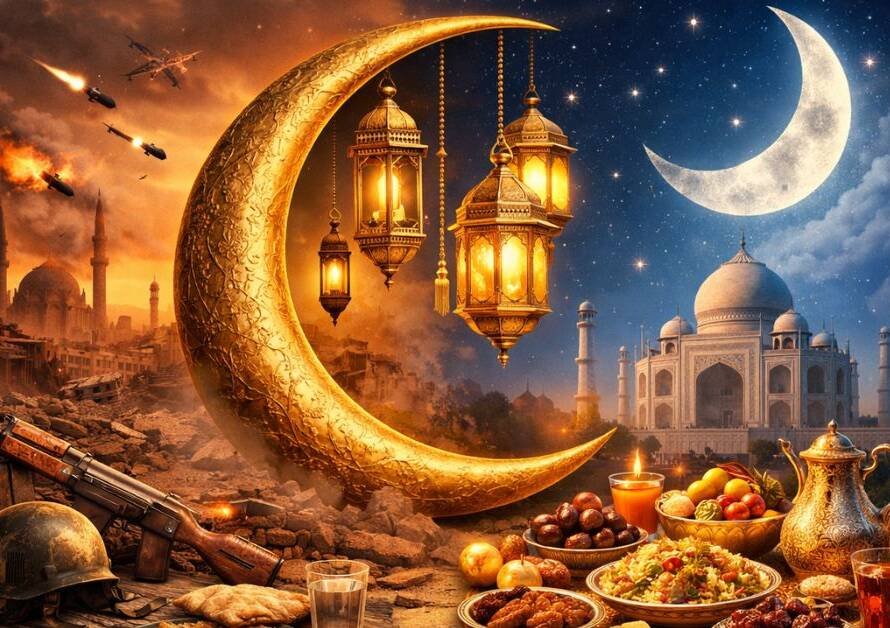
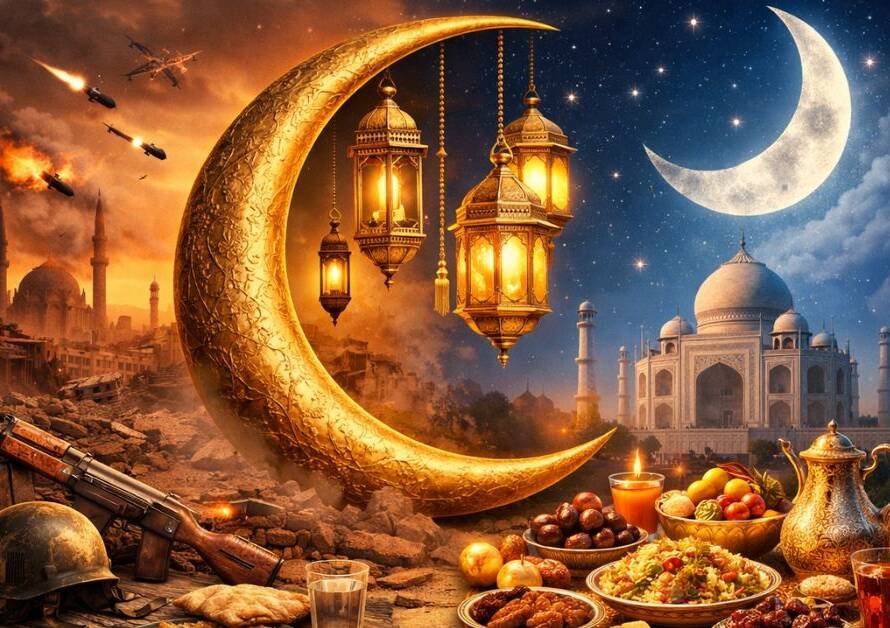
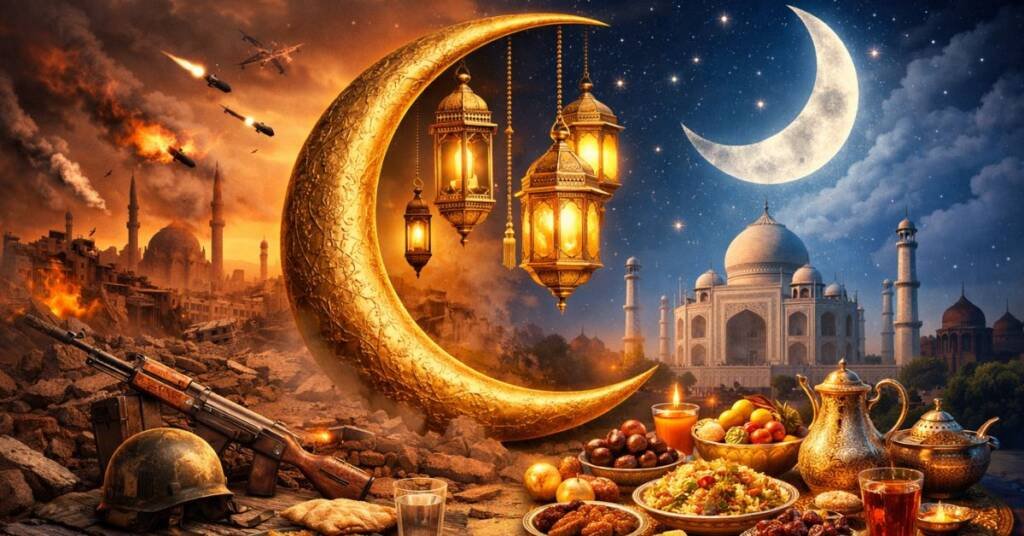
- This narrative explores a profound geographical and ideological chasm within the global Muslim community during the holy month of Ramadan 2026. On one side are regions like Gaza, Syria, Afghanistan, and Balochistan, where “Iftar” is synonymous with survival and the air is thick with the scent of gunpowder.
- On the other side is the Indian landscape, where a political narrative of “minority persecution” is peddled despite a ground reality of gold ornaments, silver utensils, and absolute security.
- This analysis deconstructs the layers of this irony, challenging the reader to distinguish between genuine existential dread and manufactured political propaganda.
Global Conflict and the Reality of India
I. The Global Islamic Belt: A Geography of Ammunition and Despair (2026)
In March 2026, as Muslims across the world engage in prayer, the Ramadan moon has brought terror rather than tranquility to many Islamic nations. In these regions, “Iftar” is determined not by a menu, but by the trajectory of missiles:
- The Hellscape of Gaza and the Levant: By 2026, the streets of Gaza are nothing but mountains of rubble. Here, Muslims do not break their fast with dates; they endure the onslaught of Israeli and Western ammunition. There is no water to quench their thirst—only the salt of tears shed for buried children. Their prayer mats are laid on ruins, and their “feast” consists of smoke, ash, and the stench of white phosphorus.
- The Fire of Iranian and Arab Conflicts: Regional power struggles in the Gulf have snatched the morsel from the mouth of the common citizen. Caught between American sanctions and retaliatory missile strikes, the average Iranian or Arab Muslim has forgotten what a peaceful Iftar feels like. Here, the holy cry of “Allahu Akbar” is frequently drowned out by the roar of suicide blasts.
- The Bloody Game of the Durand Line (Pakistan-Afghanistan-Balochistan): Border disputes have reached a boiling point in 2026. On one side, the Pakistani military rains shells upon Balochi and Afghan Muslims; on the other, retaliatory strikes ensure that Pakistani Muslims fall victim to the ammunition of their own brothers in faith. This is a “Muslim vs. Muslim” war where the same hands that hold the Quran are used to spill each other’s blood.
- The Silence of the African Famine: The 2026 famine in Sudan, Somalia, and Mali has become the darkest chapter in modern humanitarian history. Muslims here have neither clean water nor a roof over their heads. For them, “fasting” is not a religious choice but a permanent state of being, for they simply have nothing to eat.
- The Syrian Tragedy of Displacement: For Syrian Muslims living in tents for over a decade, “home” is now a fading memory. In the freezing cold of early 2026, without electricity or fuel, they sit in the ruins of former cities, praying for mercy while scavenging for scraps to sustain their lives.
II. The Indian Reality: The Affluence Behind the “Fear” Narrative
Now, let us turn to India, where a specific section of society and the international media constantly scream that Muslims are “in danger” and “persecuted” under the Modi administration. However, the ground reality of March 2026 serves as a stinging rebuttal to this trope:
- Commercial Vibrancy and Economic Power: Walk through the lanes of Jama Masjid in Old Delhi, Bhendi Bazaar in Mumbai, or the Old City of Hyderabad—there is no room to even stand during Iftar. The daily turnover of billions of rupees in these markets proves that the community is not just safe but is a thriving pillar of India’s economic growth story.
- The Shimmering “Oppression” of Gold and Silver: Notice the irony: the hands described as “helpless and broken” are often adorned with heavy gold rings and expensive watches. The homes described as “targets” host dasterkhans (dining spreads) where silver utensils are filled with royal chicken, kebabs, and exotic fruits. What kind of “fear” is this that does not stop people from celebrating in the streets at 3:00 AM, wearing the finest silks, and indulging in gourmet delicacies?
- Religious and Constitutional Sovereignty: In 2026, while mosques in neighboring Islamic countries are targeted by suicide bombers, every mosque and shrine in India remains secure. Taraweeh prayers are held with grand fervor, the Azaan echoes through loudspeakers, and the state administration ensures tight security for Iftar gatherings.
- Uninterrupted Access to Welfare: From Ayushman health cards to free rations and minority scholarships, every government scheme reaches the community without discrimination. In this light, the claim of being “persecuted by Modi” appears as nothing more than an ungrateful political maneuver.
III. Analysis of the Political Narrative and the “Victim Card”
In India, the “Scared Muslim” has become a manufactured political product designed for specific ends:
- The Construction of “AC-Room Anxiety”: This is a sense of insecurity woven by intellectuals and political parties sitting in air-conditioned rooms. It is designed to keep the community alienated from the national mainstream to preserve a consolidated vote bank.
- The Lack of Comparison: Those who curse India never look at the plight of their brothers in Kabul, Tehran, or Damascus. The Indian Muslim is statistically among the most secure, prosperous, and free Muslim minorities in the entire world.
- Development vs. Destruction: While many Islamic nations are hurtling toward destruction due to radicalism and war, the Indian Muslim is becoming an integral part of “Digital India” and “Viksit Bharat 2047.” Their growing participation in modern education and startups punctures the balloon of this propaganda.
IV. Moral Conclusion: Gratitude or Malice?
- The month of Ramadan is a time for deep soul-searching. This narrative compels us to take off the political glasses and see the reality with naked eyes.
- True “helplessness” is where a parent has no bread to give their child. True “fear” is when you don’t know if the roof over your head will exist in the next hour. To sit in India, eating chicken with a silver spoon and calling oneself a “victim,” is an insult to the millions of actual victims dying today in the streets of Gaza and Syria.
- Peace, security, and a full stomach are the greatest blessings of the Almighty. To honor the land and the leadership (Modi) that provides these is not just a civic duty—it is the essence of true faith.
- The India of 2026 is not just safe; it is a sanctuary that allows every citizen to celebrate their identity with dignity and pride.
🇮🇳 Jai Bharat, Vandematram 🇮🇳
Read our previous blogs 👉 Click here
Join us on Arattai 👉 Click here
👉Join Our Channels👈