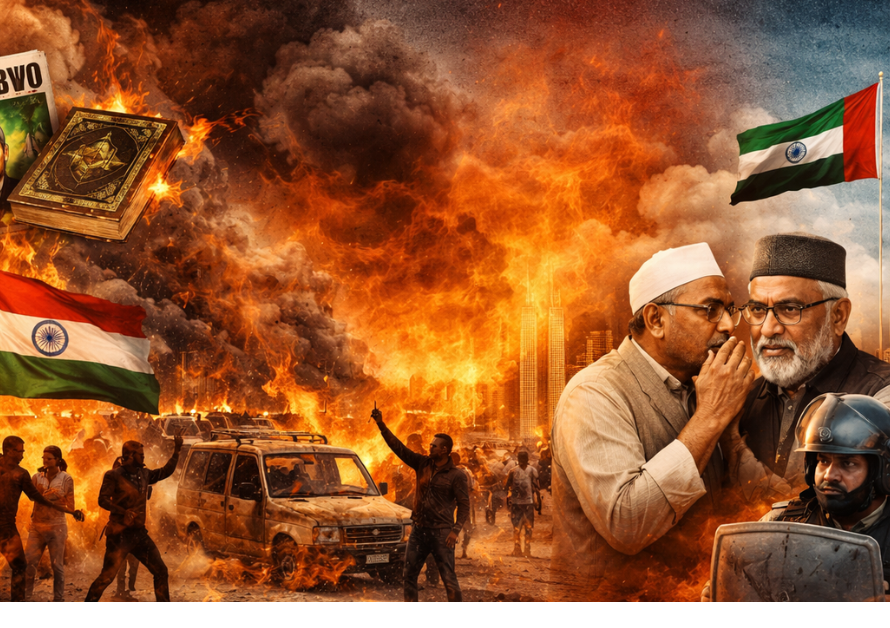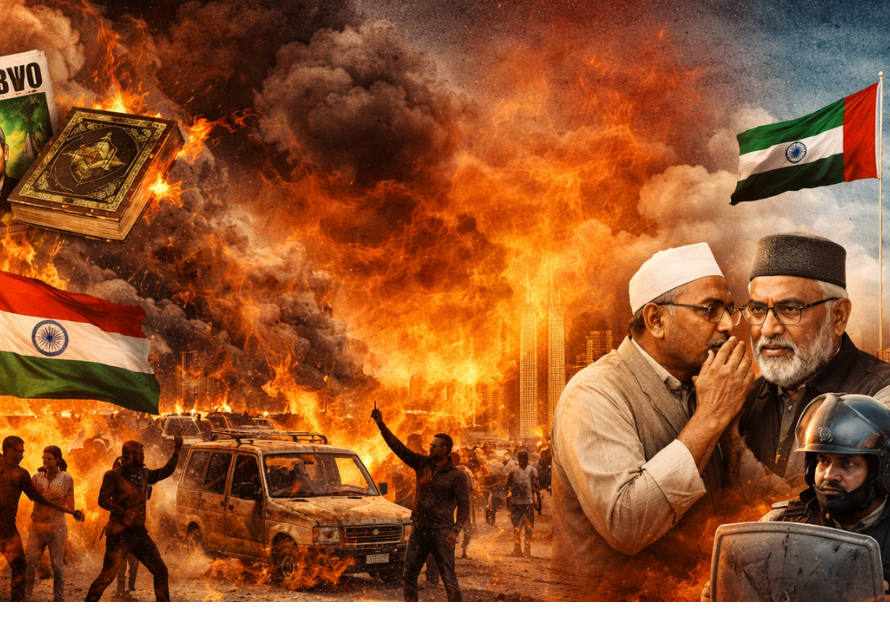
After 2014, the Congress–Thugbandhan shifted its political focus from governance and development to religious identity and selective secularism. Through state legislatures, laws are being proposed that, under the banner of constitutional strategy, raise questions on equal citizenship, due process, and fundamental rights. This article presents a brief analysis of the impact and risks of this identity-based constitutional strategy.
Politics of Identity After Losing Power
- After losing power at the Centre in 2014, congress and thugbandhan chose identity-based appeasement as their primary strategy instead of competing on governance, development, national security, and institutional reforms.
- Many proposals presented in the language of social justice and sensitivity raise serious questions about the intent and process of law-making.
- The concern is not with justice or welfare—both are core constitutional values—but with frameworks that open the door to selective persecution.
State Assemblies: Laboratories of Unacceptable Ideas
After facing resistance at the national level, some state legislatures are increasingly being used as testing grounds for controversial proposals.
- Emotional language is employed, while constitutional scrutiny remains limited.
- Vague provisions grant excessive discretion to the executive.
- Safeguards against misuse are weak or absent.
- Vote-bank signalling takes precedence over durable reform.
Consequences:
- Ideas unacceptable in national discourse become normalised at the local level.
- The Constitution is subjected to political pressure.
- Legal uncertainty itself becomes a political weapon.
Rohith Vemula–Type Proposals in Karnataka: When Process Becomes Punishment
- Mandatory action based on minimal preliminary inquiry.
- Administrative or disciplinary penalties imposed before judicial determination.
- Time-bound procedures that force institutions into a defensive posture.
- In practice, the burden of proof shifts to the accused.
Constitutional Impact:
- Erosion of Article 14 (equality before law).
- Violation of Article 21 (due process and personal liberty).
- Reversal of the principle of “innocent until proven guilty”.
- Institutionalisation of grievance-based politics.
Hate Speech Bill jn Karnatka: Abuse of Vagueness
- Use of highly subjective terms such as “hurt sentiment,” “offence,” and “hatred”.
- Absence of clear, objective definitions and standards.
- Excessive scope for arbitrary executive interpretation.
Risks:
- Weakening of Article 19 (freedom of expression).
- Criminalisation of dissent, satire, academic inquiry, and religious discourse.
- High likelihood of one-sided enforcement, intensifying political polarisation.
Religion-Based Reservation: Deviation from Purpose
- Attempts to introduce religion-specific quotas or reclassification.
- Departure from the original purpose of reservation—redressal of historical social injustice.
- Welfare reduced to identity arithmetic.
Constitutional Conflict:
- Incompatibility with the principle of equality.
- Undermining the moral legitimacy of affirmative action.
- Potential conflict with Articles 14, 15, and 16.
Sachar Committee in Parliament: From Diagnosis to Politics
The Sachar Committee was originally a diagnostic study identifying gaps in education, employment, and access to resources.
Its objective was need-based, inclusive solutions.
However, selective findings were used to justify identity-first policies.
Focus shifted from poverty alleviation to religion-centric entitlements.
However, the proposal could not be implemented due to instituational opposition.
Communal Violence Bil in Parliamentl: A Prior Warning
- Concepts such as group liability.
- Expansion of executive power with weak safeguards.
- Risk of presumption based on identity.
Its failure due to repeated opposition by BJP prevented passage of the bill and sent a clear message: identity-based penal laws damage equal citizenship and hence are constitutionally not acceptable.
All these Proposals indicate a Clear Pattern
- Shift from equal citizenship to an identity-first framework.
- Broad and ambiguous legal provisions.
- Weak procedural protections.
- Law converted into a political instrument.
- An unconstitutional drift in both intent and structure.
Role of the Government and Judiciary
Expectations from the Government:
- Oppose laws that dilute equality and due process.
- Ensure rigorous constitutional scrutiny before legislation.
- Provide precise definitions, limited scope, and strong safeguards.
Expectations from the Judiciary:
- Conduct strict review of identity-based appeasement laws.
- Prevent selective persecution enabled by vague provisions.
- Maintain continuous and uncompromising protection of fundamental rights.
National Cost of Ignoring Constitutional Limits
- Normalisation of legal harassment.
- Permanent grievance-driven politics.
- Social fragmentation and institutional distrust.
- Obstruction of India’s global leadership trajectory.
- True social justice rests on:
- Precision in law,
- Equality in enforcement,
- Protection of due process,
- Unwavering loyalty to the Constitution.
Identity-based appeasement laws weaken India.
- India’s future lies not in political convenience, but in constitutional courage.
🇮🇳 Jai Bharat, Vandematram 🇮🇳
Old Blogs: https://saveindia108.in/our-blog/