Summary
- India’s reservation system emerged from a historical necessity for social justice. Its purpose was to provide representation in education, administration, and opportunities to communities that had been socially marginalized for centuries. The policy has positively transformed millions of lives.
- However, more than seven decades later, India’s socio-economic landscape has changed. Poverty today is not limited to specific castes. Education has become expensive, competition has intensified, and global competitiveness has become a national priority.
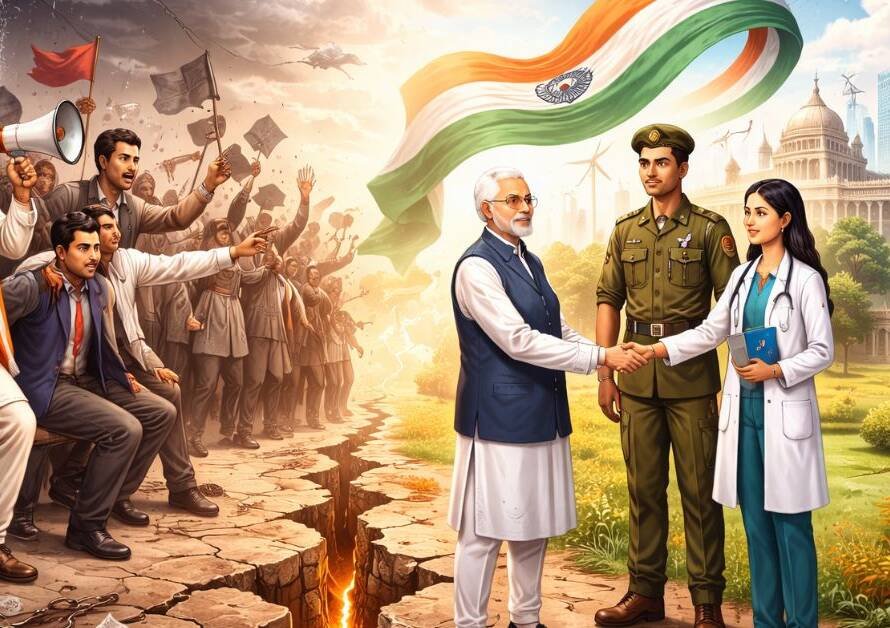
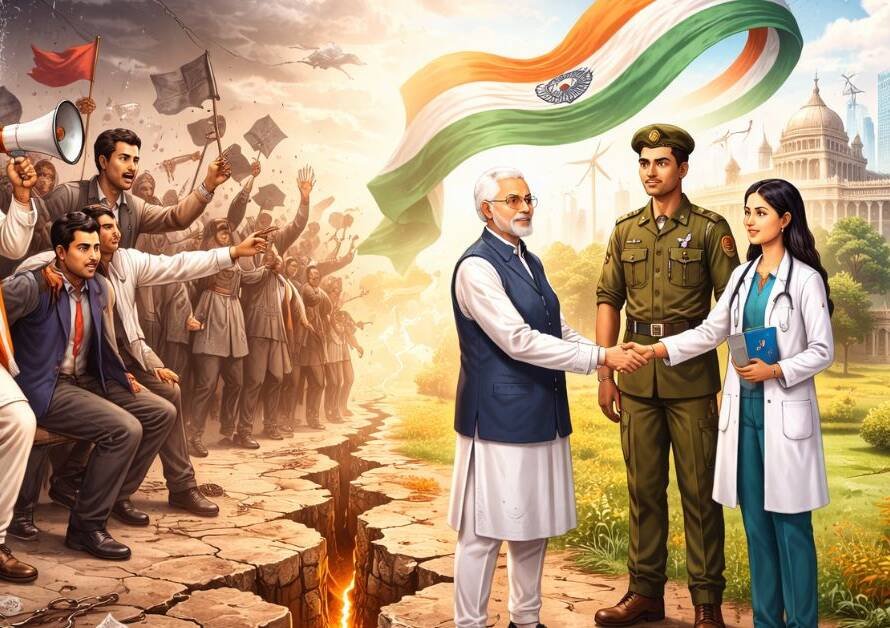
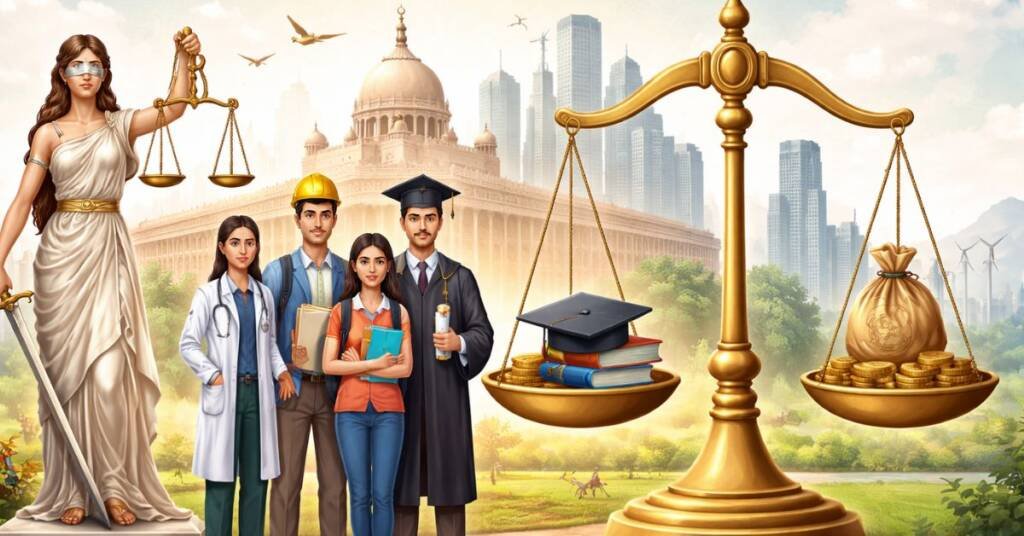
- The present debate is not about abolishing reservations, but about modernizing them — ensuring that benefits reach the economically vulnerable and genuinely needy, rather than continuing across generations solely on the basis of group identity. If reforms are balanced and constitutional, social justice and merit can move forward together.
Balancing Social Justice, Economic Reality, and National Competitiveness
1. Constitutional Background of Reservation
The reservation system emerged in a historical context where:
- Social discrimination was deep
- Access to education was limited
- Administrative representation was negligible
- Economic mobility was blocked
Its objectives were to:
- Ensure representation
- Facilitate institutional access
- Break generational barriers
- Provide equal opportunity
It was conceived as a corrective measure — not a permanent privilege.
2. Changing Socio-Economic Landscape
- India today is not the India of the 1950s.
- Educational institutions have expanded
- Urbanization has increased
- Economic mobility has occurred across communities
- A new middle class has emerged
Yet:
- Poverty exists across all groups
- Education is increasingly expensive
- Competition for limited seats is intense
- Youth employment concerns are rising
This raises a natural question: Should reservation policy evolve according to present realities?
3. The Question of Generational Continuity
A key concern is whether families that have already achieved:
- Economic stability
- Educational advancement
- Government employment
- Social mobility
should continue to receive identical benefits without periodic reassessment.
- This question is not directed against any group. It concerns policy precision.
Without review:
- Economically strong families may continue benefiting
- Economically weak individuals in the general category may feel excluded
- Resentment may grow
Periodic evaluation strengthens policy legitimacy.
4. Economic Imbalance Concerns
A financially poor student from the general category may:
- Pay full fees
- Face higher cut-offs
- Compete for limited open seats
- Lack structured scholarships
Meanwhile, an economically stable reserved-category student receives:
- Reduced fees
- Lower cut-offs
- Reserved seats
- Job quotas
This creates a perception that economic vulnerability is not treated uniformly.
- The goal is not to remove benefits, but to refine targeting.
5. Quality and National Competitiveness
India aspires to become a developed nation by 2047. This requires:
- Skilled doctors
- Competent engineers
- Innovative scientists
- Efficient administrators
Maintaining academic standards is crucial. Possible solutions include:
- Preserving minimum eligibility criteria
- Offering bridge courses and academic support
- Providing financial assistance post-selection
- Mentorship for students from weaker backgrounds
Support should enable competition, not replace it.
6. Political Sensitivity
Reservation is a sensitive issue. Governments often avoid reform due to:
- Fear of social unrest
- Political pressure
- Emotional attachment
However, policy evolution is necessary. Reform does not mean removal — it means balance.
7. A Balanced Reform Framework
(a) Stronger Economic Criteria
- Strict income verification
- Periodic eligibility review
- Exclusion of economically advanced families
(b) Educational Expansion
- Increase seats in professional courses
- Invest in public universities
- Develop regional centers of excellence
(c) Quality Safeguards
- Maintain minimum standards
- Academic support systems
- Performance-based review
(d) Transparency
- Independent impact studies
- Decadal review mechanisms
- Public data disclosure
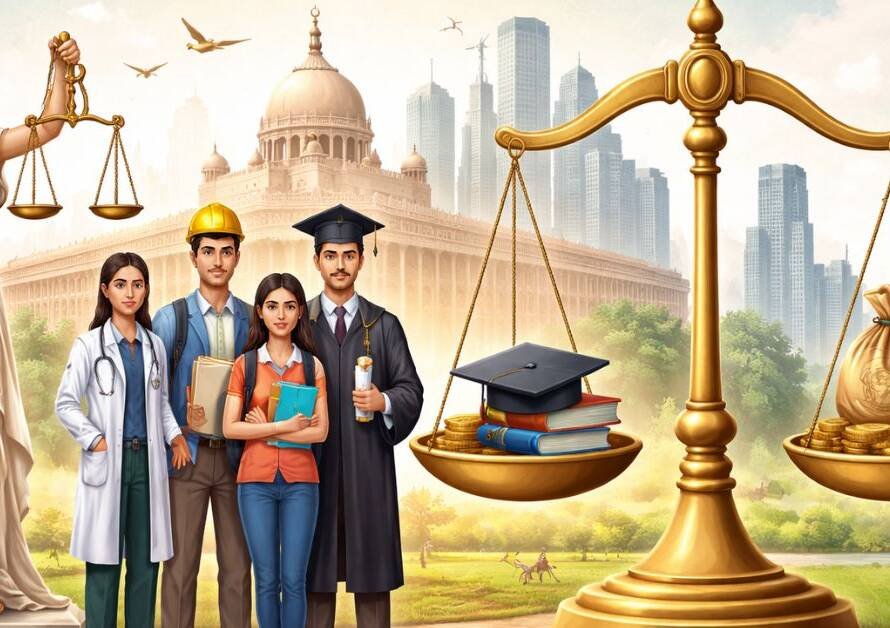
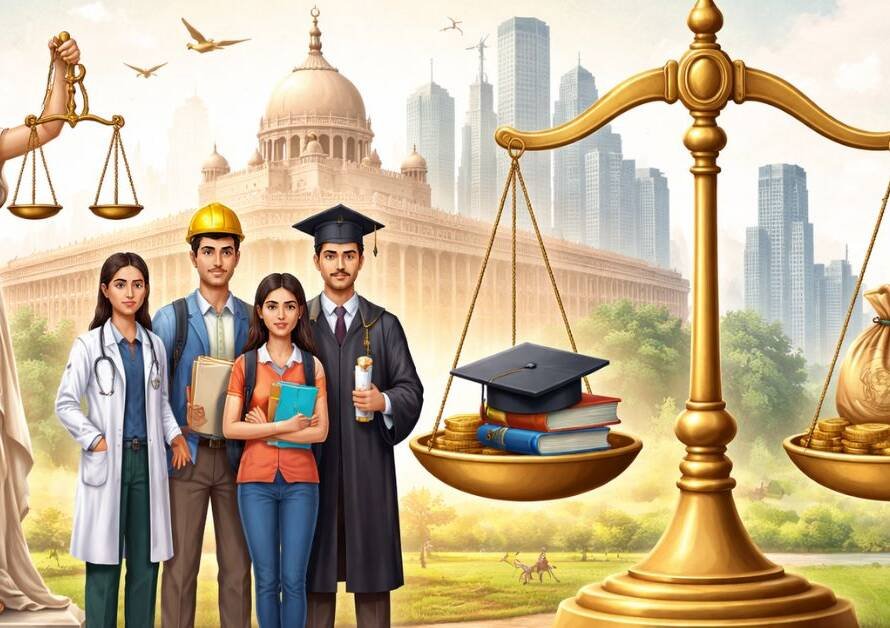
Such reforms can protect both justice and excellence.
8. Leadership and Patience
Sensitive reforms require:
- Constitutional balance
- Judicial clarity
- Social consensus
- Political stability
Many supporters believe that under current nationalistic leadership, national interest remains paramount. Structural reforms must be gradual and carefully considered. Patience and prudence are essential.
9. Avoiding Polarization
This debate must not:
- Become caste conflict
- Create social fragmentation
- Turn emotionally extreme
The goals are:
- Economic fairness
- Institutional strength
- National unity
- Quality protection
10. Vision 2047
If India aims to become a developed nation, it must:
- Provide opportunity to every talented student
- Prioritize economic vulnerability
- Maintain institutional standards
- Strengthen social harmony
Policies of the 20th century must evolve for the 21st century.
Responsible Evolution
- Reservation emerged from moral necessity and created meaningful change.
Now the need is to:
- Preserve historical justice
- Add economic precision
- Safeguard quality
- Expand opportunity
If benefits reach the truly needy while standards remain strong, India can balance justice and excellence.
- Justice must remember history,
- Understand the present,
- And prepare for the future.
🇮🇳 Jai Bharat, Vandematram 🇮🇳
Read our previous blogs 👉 Click here
Join us on Arattai 👉 Click here
👉Join Our Channels 👈