Summary
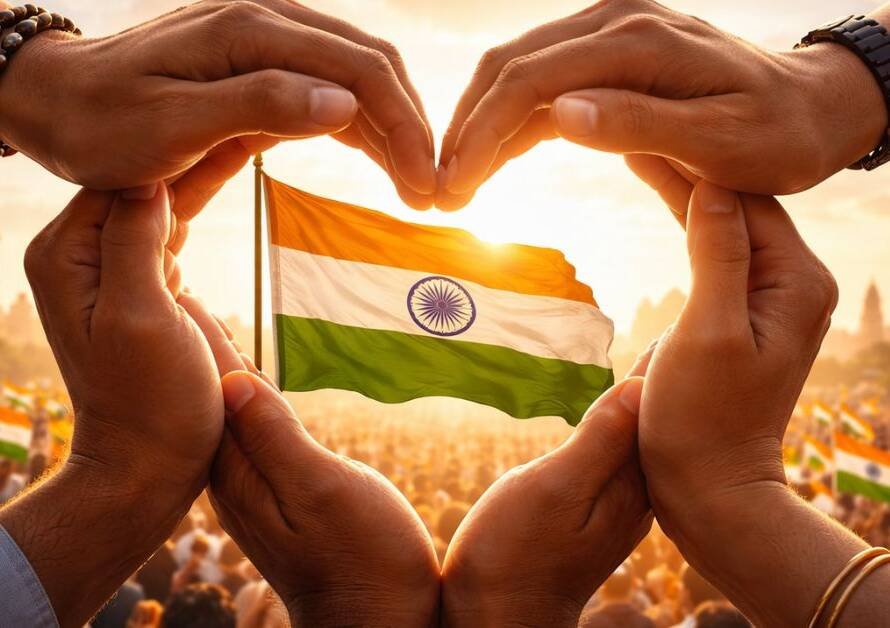
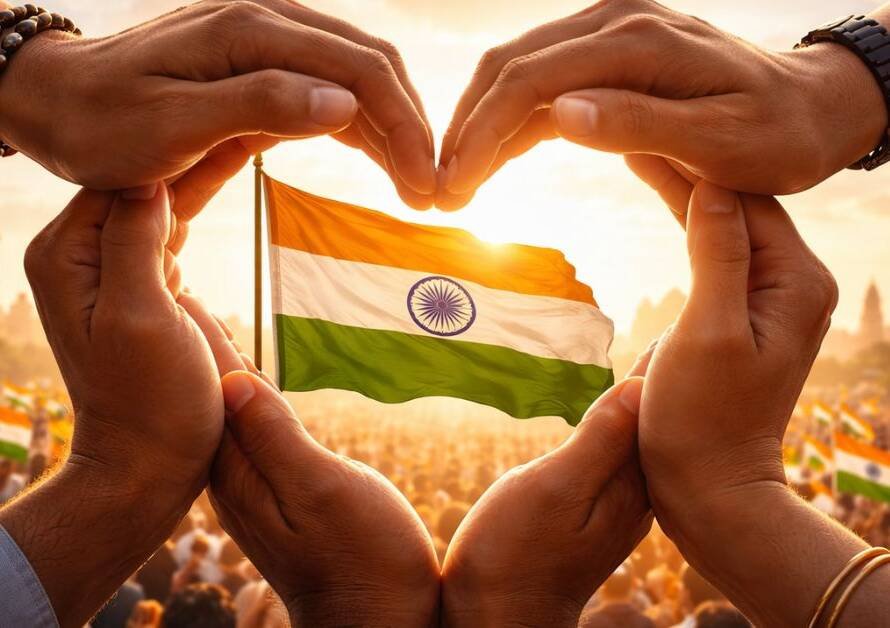
- Over the past decade, India has emerged as a more confident and decisive nation on the global stage. Economic reforms, digital transformation, infrastructure expansion, defense strengthening, and diplomatic activism have enhanced the country’s international image.
- Supporters of Prime Minister Narendra Modi link his popularity to this transformation.
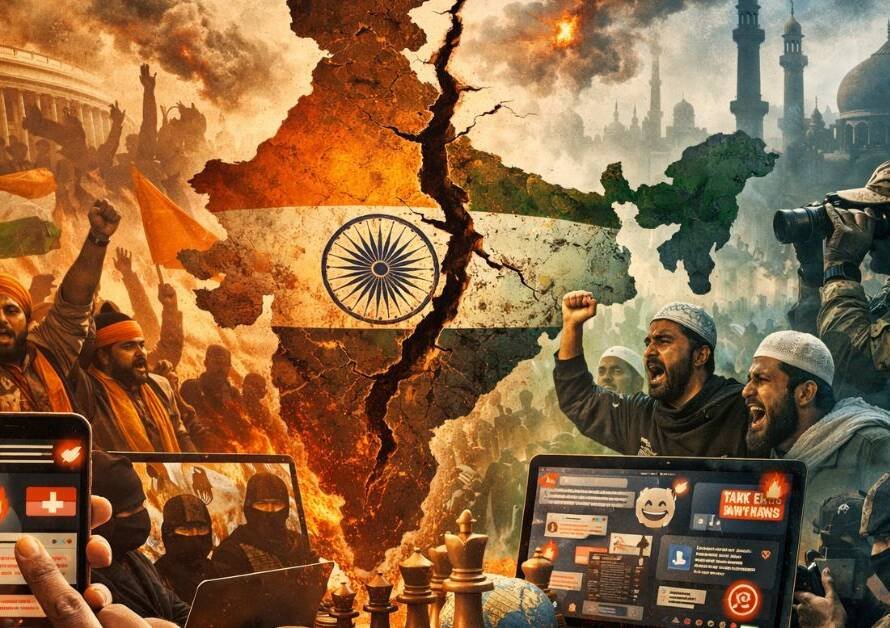
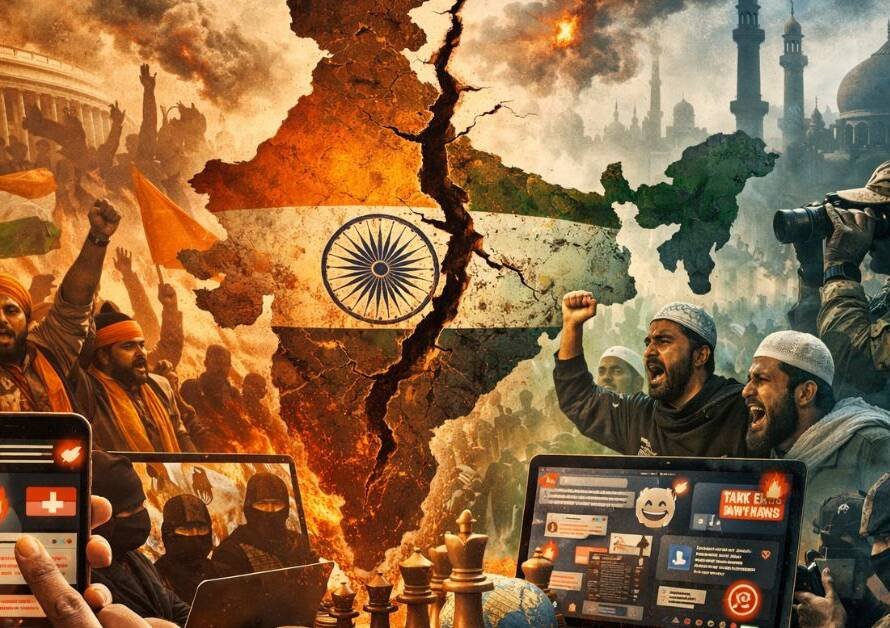
- At the same time, it is argued that a strong and self-reliant India may be uncomfortable for certain domestic political forces and foreign interest groups—especially those who must have benefited from a weak or fragile India in the past.
- The central question is this: Will political competition rise above national interests, or will stability and long-term growth remain the top priority?
Global Progress, Leadership Popularity, and the Debate Over Divisive Strategies
1️⃣ India’s Growing Global Standing: A Changing Image
India’s international position has evolved significantly in recent years.
🌍 Diplomatic Engagement
- Active participation in global platforms
- Hosting major international summits such as the G20
- Positioning itself as a voice for the Global South
💻 Digital Transformation
- A globally recognized digital payments ecosystem
- Large-scale use of Direct Benefit Transfer (DBT) systems
- Technology-driven governance models
🏗️ Infrastructure Development
- Expansion of highways, railways, airports, and ports
- Major rural and urban development initiatives
🛡️ National Security
- Assertive stance on border issues
- Expansion of strategic defense partnerships
Supporters view this as not merely policy change, but a psychological shift—India acting with confidence rather than hesitation.
2️⃣ The “Modi Factor” and Political Dynamics
According to supporters, what is often called the “Modi Magic” stems from:
- Direct welfare delivery mechanisms
- A strong anti-corruption image
- Clear positions on national security
- A visible global presence for India
When a leader enjoys broad popularity, political competition intensifies. Opposition strategies may become sharper and more aggressive as a result.
- Political contestation is natural in democracy. The debate is about how it is conducted.
3️⃣ Is a Strong India Inconvenient for Some Interests?
- A recurring argument suggests that A weak and divided India may have benifited certain foreign and domestic power structures in the past.
- A self-reliant and globally assertive India alters existing geopolitical balances.
Supporters claim that:
- Continuous attacks on leadership and institutions
- Negative international narratives
- Attempts to project instability
may be intended to slow India’s rise.
- However, it is equally important to distinguish between legitimate democratic criticism and attempts at destabilization.
- Democracy thrives on accountability—but stability is essential for sustained growth.
4️⃣ Identity Politics: An Old Strategy?
When development and national achievements dominate public discourse, some analysts argue that:
- Caste dynamics are reactivated
- Community divisions are amplified
- Social tensions are leveraged for political gains
Examples often cited include narratives such as:
- OBC versus upper caste
- SC/ST versus other communities
- Regional identity versus national identity
Supporters argue that such strategies represent “old politics,” whose effectiveness is diminishing in an increasingly aware electorate.
5️⃣ The Role of the Opposition: Essential but Responsible
In a democracy, the opposition plays a crucial role:
✔ Scrutinizing government policies
✔ Offering alternative frameworks
✔ Raising public concerns
However, concerns arise when:
✘ Institutions are portrayed as entirely illegitimate
✘ The country’s international reputation is undermined
✘ Social divisions are deepened
Political competition may revolve around gaining power—but national stability should not be collateral damage.
6️⃣ A More Aware Electorate
Today’s voters are:
- More connected through digital platforms
- More informed through multiple information sources
- Direct beneficiaries of welfare and development schemes
Many observers believe:
- Appeasement politics has lost some of its earlier effectiveness
- Caste polarization is not as determinative as before
- Development, employment, security, and global stature are increasingly important electoral considerations
Voter maturity has grown alongside information access.
7️⃣ Why National Interest Must Remain Paramount
National interest includes:
- Economic stability
- Social harmony
- Institutional credibility
- Global reputation
- Internal security
If political competition undermines these pillars, the long-term cost is borne by the nation as a whole.
8️⃣ The Need for Balance
It is equally true that:
- No government is beyond criticism
- Policy review is central to democracy
- Leadership change is a legitimate democratic outcome
But balance is critical:
✔ Fact-based debate
✔ Policy-focused critique
✔ Respect for institutions
✔ Protection of national credibility
Strong democracies combine accountability with responsibility.
9️⃣ The Road Ahead
For India’s rise to continue:
- Social cohesion must be strengthened
- Political disagreements must remain within democratic norms
- Development must remain central
- National interest must take precedence over short-term political calculations
- Governments may change. The nation remains.
✔ India’s global progress is visible
✔ Leadership popularity is a political reality
✔ Opposition is essential in democracy
✔ Divisive politics carries long-term risks
✔ National interest must rise above partisan competition
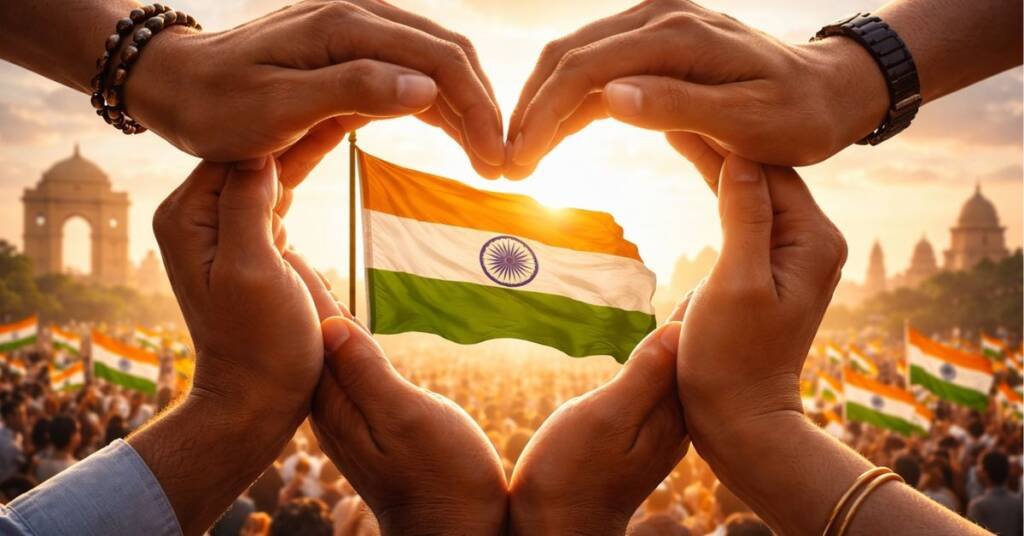
India’s strength is not the achievement of one individual alone—it is the collective effort of its people.
- Political competition will continue. But unity, institutional stability, and development must remain the foundation of India’s future.
🇮🇳 Jai Bharat, Vandematram 🇮🇳
Read our previous blogs 👉 Click here
Join us on Arattai 👉 Click here
👉Join Our Channels 👈