🔥 Summary
- For decades, India drifted away from its civilizational compass due to appeasement-based politics, systemic corruption, tolerance of extremism, and intellectual subservience to foreign interests—all pursued for narrow political or personal gains at the cost of national welfare.
- Since 2014, India has witnessed a historic course correction. Under the Modi–Yogi leadership, governance has increasingly reflected the practical application of Sanatana principles—dharma (righteous duty), nyaya (justice), raksha (security), and lokakalyana (collective welfare).
- This transformation is not merely political. It is civilizational—and India’s renewal is emerging as a template for stability, balance, and ethical governance in a chaotic world.
How the Modi–Yogi Model Is Rebuilding India—and Why It Matters to the World
🌍 1. A World in Crisis: Progress Without Purpose
- Despite unprecedented advances in science, technology, and wealth, the modern world faces deep instability.
Global realities today:
- Endless wars and geopolitical confrontations
- Mental health epidemics and social loneliness
- Environmental destruction and climate anxiety
- Polarization, extremism, and identity conflicts
👉 This exposes a fundamental truth:
- Material progress without moral direction leads to collapse.
India understood this thousands of years ago.
🕉️ 2. Sanatana Dharma: Not a Religion, but a Governance Framework
- Sanatana Dharma is often reduced to rituals or faith. In reality, it is a comprehensive civilizational system governing life, society, and the state.
Core Sanatana principles relevant to governance:
- Dharma – righteous duty, not convenience
- Nyaya – equal justice without fear or favor
- Raksha – protection of citizens and society
- Lokakalyana – welfare of the collective, not elites
- Ahimsa with Shakti – compassion backed by strength
- Balance – rights aligned with responsibilities
In Sanatana thought, state power exists to protect society and uphold justice, not to manage vote banks or appease pressure groups.
⚠️ 3. The Long Drift: When Governance Abandoned Dharma
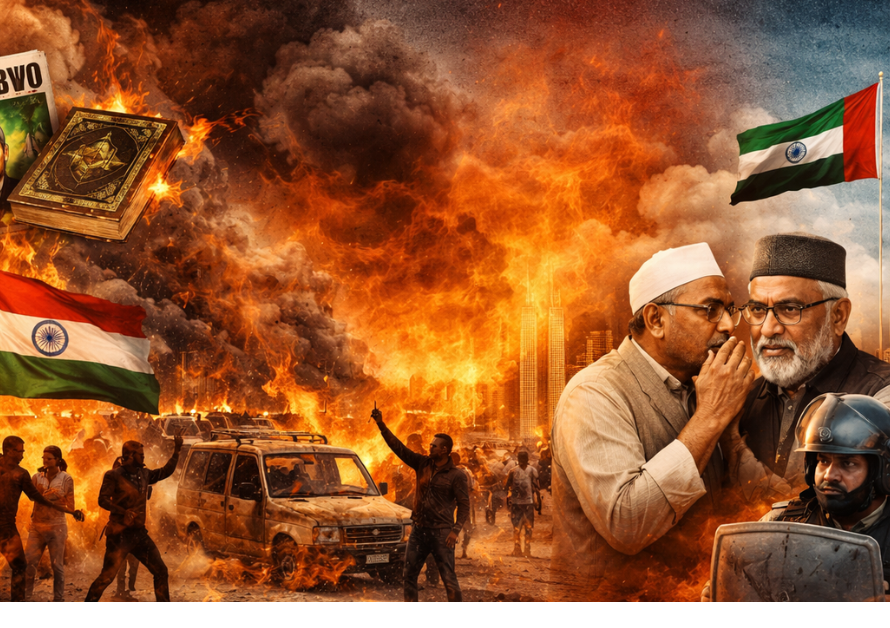
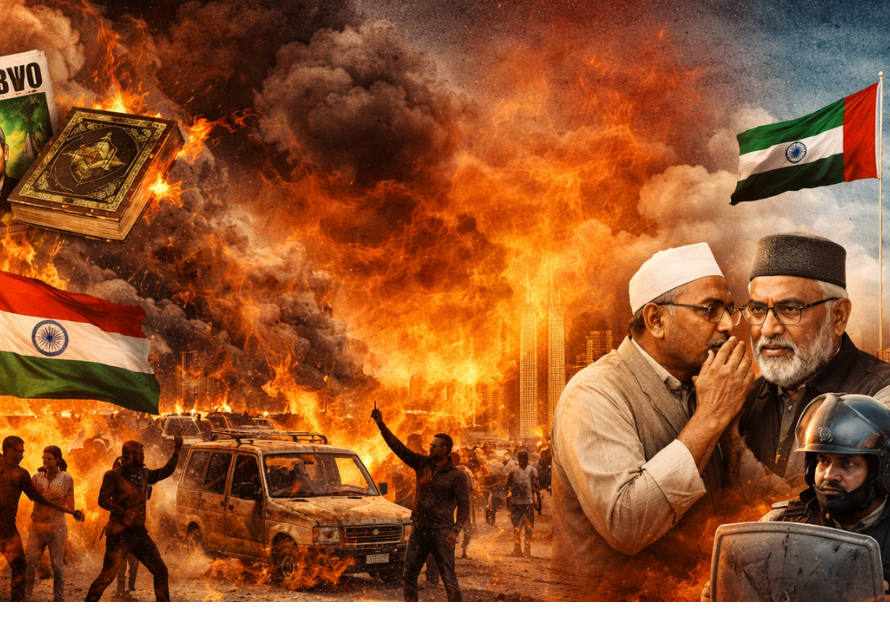
- For decades after independence, India was governed by an ideology that increasingly moved away from these principles.
Key characteristics of this era:
- Appeasement politics replacing equal justice
- Corruption normalized as a political tool
- Protection—direct or indirect—of extremist elements due to electoral calculations
- Weak internal security and delayed response to threats
- Policy paralysis driven by fear of foreign criticism and approval
- Strategic dependence and intellectual slavery to external narratives
The cost to India:
- Slowed economic growth
- Fragile institutions
- Erosion of national confidence
- Deepening social divisions
- A global image of India as a “soft state”
India suffered not due to lack of talent or resources, but due to absence of dharmic governance.
🔄 4. 2014: A Democratic and Civilizational Reset
The year 2014 marked a turning point.
- With the rise of Prime Minister Narendra Modi, and later the assertive governance demonstrated by leaders like Chief Minister Yogi Adityanath, India began returning to Sanatana principles in practice—not symbolism.
What fundamentally changed:
- National interest placed above vote-bank politics
- Zero tolerance toward high-level corruption
- Firm, lawful action against crime and extremism
- Restoration of state authority and rule of law
- Cultural self-confidence without exclusion
- Strategic autonomy in foreign policy
This shift was not authoritarian—it was clarity of purpose.
Not intolerance—but equal application of law.
🏛️ 5. The Modi–Yogi Model: Sanatana Dharma in Action
The governance style of the Modi–Yogi team reflects the classical idea of Rajdharma.
- Protection, justice, and welfare are the three pillars of righteous governance.
Visible outcomes on the ground:
- Strong action against organized crime and mafias
- Improved internal security and faster responses to threats
- Massive infrastructure development without paralysis
- Welfare delivery with reduced leakage and corruption
- Renewed faith in state institutions
Key distinction:
- Compassion remains
- Welfare continues
- Inclusion is preserved
👉 But appeasement is rejected, and law is applied equally.
- This balance mirrors Sanatana wisdom—soft where needed, firm where required.
🌱 6. Rebuilding India: A Civilizational Imperative
- India’s reconstruction is not about one government or one election cycle.
It means:
- Education rooted in Indian knowledge systems
- Technology guided by ethics
- Economic growth aligned with social responsibility
- National pride without hostility
- Global engagement without submission
Only a strong, confident, and culturally rooted India can share its wisdom credibly with the world.
🌐 7. Why India’s Revival Matters to the World
A Sanatana-rooted India offers the world something rare today:
- Balance instead of excess
- Dialogue instead of domination
- Responsibility instead of reckless freedom
- Harmony instead of hegemony
India does not seek to rule the world. India seeks to stabilize it by example.
🇮🇳 Message
- The solutions to the world’s problems lie in Indian tradition,
but only a strong India can deliver them. - The Modi–Yogi era represents the practical application of Sanatana principles to modern governance—restoring justice, security, and national confidence.
India’s rise is not about power. It is about purpose.
- Because when India stands firmly on dharma— the world finds direction.
🔔 Call to Citizens
- Judge ideologies by outcomes, not slogans
- Support governance rooted in dharma and national interest
- Reject appeasement; uphold equality before law
- Participate actively in India’s civilizational renewal
🇮🇳 Jai Bharat, Vandematram 🇮🇳
Read our previous blogs 👉 Click here
Join us on Arattai 👉 Click here
👉Join Our Channels 👈