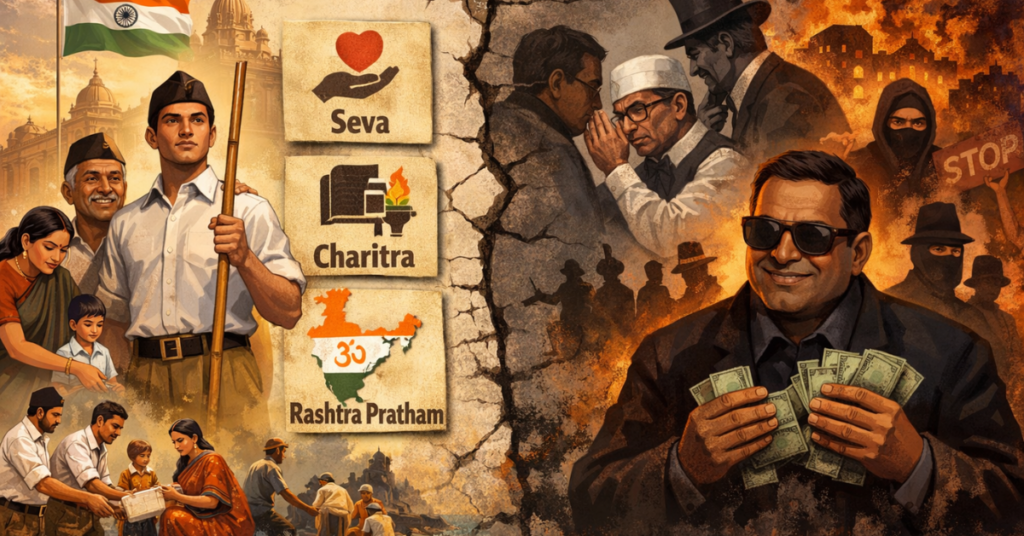
Why RSS Has Always Been Opposed
- From its inception, the Rashtriya Swayamsevak Sangh (RSS) has represented a nation-first, service-oriented, and character-driven model rooted in Sanatana Dharma.
- It grew without power, money, or foreign backing—only through discipline, service, and public trust.
- This very independence made it a permanent source of insecurity for Congress and later the so-called “Thugbandhan,” whose politics relied on power, appeasement, and control over narratives.
The opposition to RSS is therefore not accidental or episodic, but structural and fear-driven.
1️⃣ RSS: A Unique National Movement Without Power Politics
The RSS was founded in 1925 with a vision radically different from conventional politics.
- No participation in elections
- No hunger for posts, ministries, or privileges
- No dependence on state funding or foreign support
- No personality cult
Yet, it steadily expanded because it focused on:
- Character-building
- Discipline and selflessness
- Social harmony
- Cultural unity
- Long-term nation-building
This created a parallel source of moral authority outside state power—something deeply unsettling for power-centric political parties.
2️⃣ Sanatana Dharma in Action: Service Without Discrimination
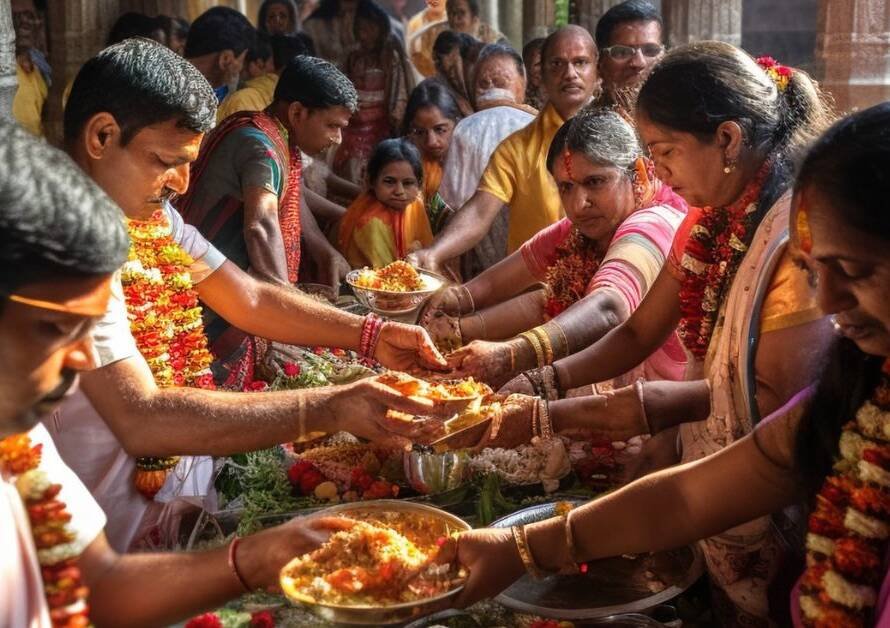
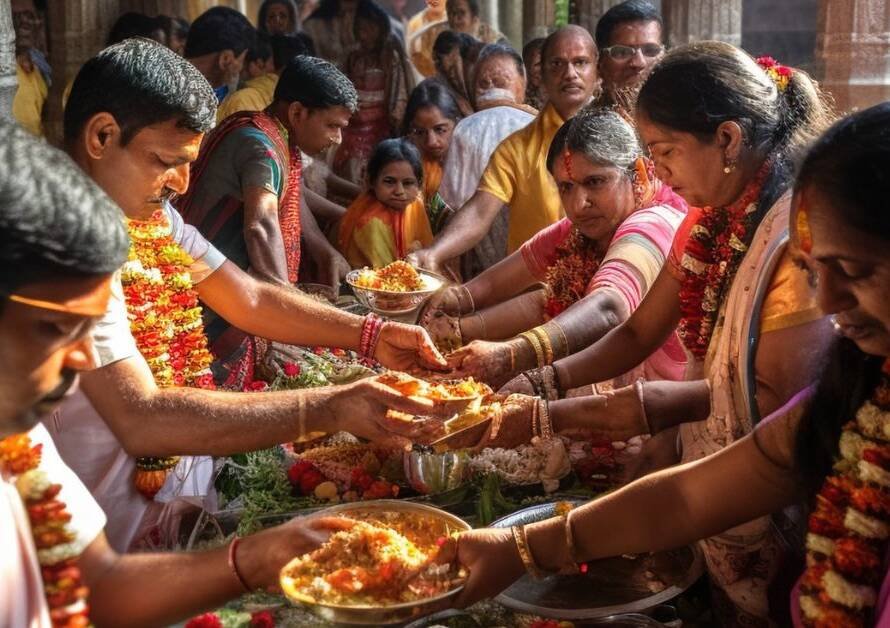
RSS and its inspired organisations have consistently stood with the people in times of crisis, living the Sanatana ideal of “Seva hi Sadhana hai”.
- Relief work during famines, floods, earthquakes, cyclones, and pandemics
- No distinction of caste, religion, language, region, or political belief
- Immediate ground-level response, often before the state machinery
- Focus on rehabilitation, not publicity
This service:
- Is quiet, disciplined, and continuous
- Seeks no votes, no credit, and no political mileage
Such selfless service earns genuine public trust, which cannot be bought or manufactured.
3️⃣ Pillars of Character, Honesty, and Patriotism
RSS has always emphasised that nation-building begins with character-building.
- Discipline over entitlement
- Duty over rights
- Service over self-interest
- Nation over party
Its swayamsevaks are widely seen as symbols of:
- Personal integrity
- Moral discipline
- National loyalty
This moral capital stands in stark contrast to decades of allegations of corruption, scams, and governance failures associated with Congress-led regimes.
4️⃣ Congress–Thugbandhan’s Discomfort: Character vs Loot-Based Politics
For decades, Congress and its ecosystem dominated power structures, often accused of:
- Large-scale corruption and scams
- Minority appeasement politics
- Weak national security postures
- Exploitation of institutions for political survival
RSS, by contrast:
- Operated outside power structures
- Built society rather than vote banks
- Strengthened national consciousness rather than dependency
A service- and character-based organisation naturally threatens a system dependent on power, patronage, and narrative manipulation.
5️⃣ 2014: When the Old System Began to Collapse
After 2014, the political landscape changed dramatically.
- Corruption networks were disrupted
- Transparency and accountability increased
- National security and sovereignty were prioritised
- Cultural confidence and indigenous identity were revived
As avenues of unchecked loot closed, the old ecosystem reacted by:
- Intensifying attacks on RSS
- Targeting BJP and PM Modi with constant allegations
- Painting every nationalist reform as “dangerous” or “authoritarian”
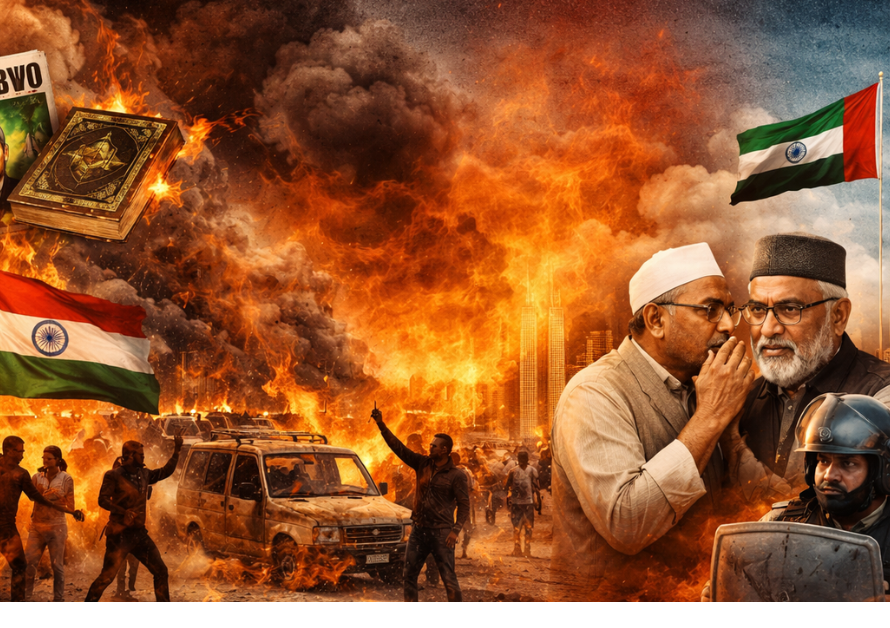
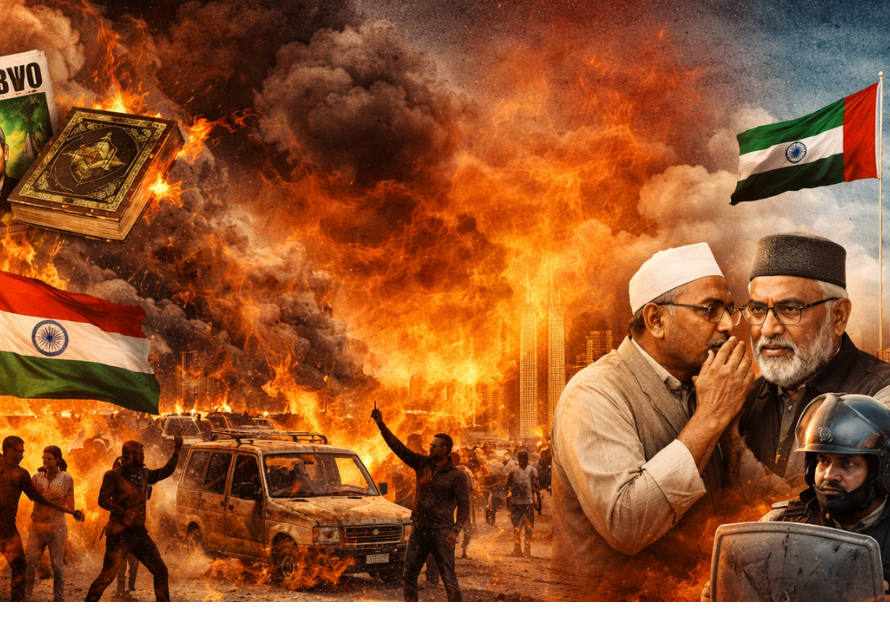
6️⃣ Attempts at Destabilisation and Narrative Warfare
There is a growing perception that:
Certain political and ideological groups
With support from hostile global lobbies and “deep-state” style networks
Are attempting to weaken India internally
Methods include:
- Creating social divisions
- Undermining faith in institutions
- Damaging India’s global image
- Obstructing governance through constant disruption
RSS and nationalist forces remain the biggest obstacle to such designs—and hence the primary targets.
7️⃣ People Have Understood the Game
The Indian electorate has shown increasing clarity.
- Distinguishing service from propaganda
- Identifying nationalism versus appeasement
- Rejecting chaos, instability, and fear-mongering
Repeated electoral outcomes indicate:
- Growing public trust in nationalist leadership
- Rejection of parties seen as anti-stability or anti-national interest
This is not merely a political choice, but a civilisational assertion.
8️⃣ The Larger Vision: A Strong India and Vishwaguru Bharat
The RSS-inspired worldview looks beyond elections.
- A secure and sovereign India
- A culturally confident civilisation
- An economically strong nation
- A moral global leader—Vishwaguru
Under the leadership of PM Modi:
- Economic growth and strategic assertiveness have gone together
- Cultural revival has complemented development
- India’s global stature has risen steadily
This aligns with the vision of India’s past patriotic leaders and thinkers.
🕉️ Why RSS Will Always Be Targeted
- RSS is opposed not because it harms the nation—but because it strengthens it without depending on power.
When an organisation:
- Seeks no office
- Demands no privilege
- Works without discrimination
- And earns trust through service and character
- It becomes a permanent challenge to politics built on fear, division, and loot.
History shows:
- Power fears character.
- Corruption fears discipline.
- And selfish politics fears selfless service.
That is why RSS stands firm—and why the people increasingly stand with it.
🇮🇳 Jai Bharat, Vandematram 🇮🇳
For old Blogs please visit our website www.saveindia108.in
👉Join us on Arattai 👈
👉Join Our Channels👈