Social Media, Fake News & Reputation
- The controversy surrounding Congress media department chairman Pawan Khera has moved beyond routine political sparring.
- A single social media post has now resulted in a ₹100-crore defamation notice, transforming what began as online commentary into a serious legal and institutional matter.
- This case is not merely about an individual versus another individual. It raises broader questions about responsibility in political communication, the spread of unverified allegations, and the protection of constitutional institutions from reputational harm.
1. The Trigger: A Tweet That Sparked a Legal Storm
On 12 December, a tweet posted by Pawan Khera questioned circumstances around a media company acquisition involving R. P. Gupta, Chairman of The Statesman and Director of United News of India.
- While the tweet was framed as a question, the legal notice argues that it implied impropriety involving:
- A high-value acquisition,
- Alleged undue influence,
- And indirect references to the highest constitutional office.
According to the notice, these insinuations crossed the line from inquiry into defamatory assertion, causing reputational harm.
2. The Legal Response: Why This Is Not an Ordinary Defamation Notice
The notice sent on behalf of R. P. Gupta is notable for both its tone and scope:
It states that the acquisition:
- Was conducted through a transparent, competitive process,
- Lasted nearly two years,
- Involved multiple bidders,
- And received approvals from both NCLT and NCLAT.
The notice argues that questioning such a transaction without evidence amounts to:
- Casting doubt on judicial processes,
- Undermining constitutional offices,
- And damaging public trust in institutions.
Key demands in the notice include:
- Immediate deletion of the tweet,
- A public and unconditional apology,
- A written assurance against repeating such claims,
- Warning of civil and criminal proceedings, including damages up to ₹100 crore, if compliance is not met.
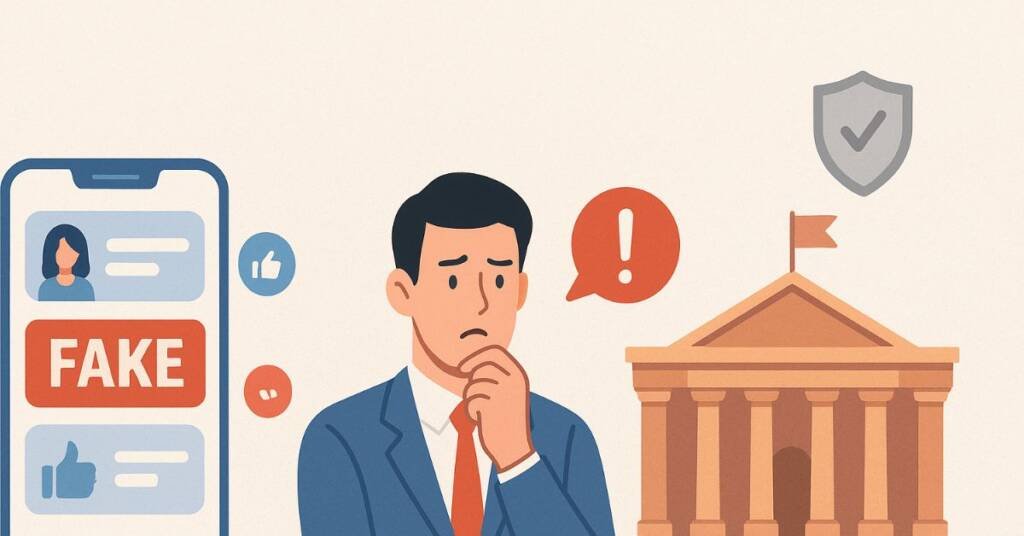
3. The Larger Context: Political Speech in the Age of Viral Misinformation
This incident does not exist in isolation. Across India’s political ecosystem, concerns are growing about:
- The weaponization of social media,
- The blurring of lines between criticism and allegation,
- And the rapid spread of unverified narratives that can damage reputations instantly.
Key concerns increasingly raised by legal experts and civil society:
- Claims framed as “questions” but designed to suggest guilt,
- Repetition of similar narratives across platforms within minutes,
- Anonymous or coordinated amplification on multiple platforms by multiple people that gives allegations a false sense of credibility.
4. Allegations of Coordinated Misinformation Campaigns: A Democratic Concern
Observers across the political spectrum have expressed concern that:
- Multiple political actors and aligned ecosystems may rely on coordinated digital messaging,
- Similar talking points appear simultaneously across accounts,
- The objective often seems to be public confusion rather than informed debate.
It is important to note:
- These are claims and concerns, not judicially established facts.
- However, the pattern of repetition and amplification has prompted calls for deeper scrutiny.
Why this matters:
False or unproven allegations harm not just individuals, but:
- Democratic institutions,
- Public confidence,
- And the credibility of political discourse itself.
5. Free Speech vs. Legal Accountability: Where Should the Line Be Drawn?
Freedom of expression is a cornerstone of democracy. But legal systems worldwide recognize limits when speech:
- Is knowingly false,
- Causes demonstrable harm,
- Or undermines constitutional bodies without evidence.
This case highlights a key principle:
- Questioning power is legitimate.
- Implying criminality without proof is not immune from consequences.
Courts have consistently held that:
- Apologies alone may not suffice if reputational damage is substantial,
- Deterrence is sometimes necessary to prevent repeated misuse of platforms.
6. Why Strong Legal Action Is Being Demanded by Many Observers
A growing section of legal analysts and commentators argue that:
- Repeated misinformation cannot be treated as harmless political rhetoric,
- Allowing baseless allegations to end with casual apologies encourages repetition,
Strong legal consequences can:
- Deter future misconduct,
- Restore institutional trust,
- Encourage responsible political communication.
Suggested measures often discussed include:
- Identification of coordinated fake accounts,
- Transparency in political digital campaigning,
- Accountability for those who finance or amplify false claims,
- Swift judicial processes in high-impact misinformation cases.
7. Implications for Political Culture Going Forward
For Pawan Khera, already facing legal scrutiny in other matters, this notice may significantly raise stakes.
For Indian democracy, the implications are broader:
- Social media is no longer an informal space,
- Political actors are increasingly held to the same legal standards as traditional media,
- Institutions—constitutional, judicial, and civic—are asserting their right to protection from reckless narratives.
8. A Defining Moment for Digital Political Accountability
This episode underscores a critical truth of the digital age:
- A single tweet can carry consequences worth crores—politically, legally, and institutionally.
- Healthy democracies thrive on debate, dissent, and scrutiny.
But they weaken when falsehood replaces fact, and innuendo replaces evidence.
Whether this case ends in apology, litigation, or judicial precedent, it sends a clear signal:
- Political messaging must be responsible,
- Institutions cannot be collateral damage,
- And the rule of law applies equally online and offline.
🇮🇳Jai Bharat, Vandematram 🇮🇳
For old Blogs please visit our website www.saveindia108.in
👉Join Our Channels👈