The Rise of Security, Diplomacy, and Self-Reliance
Summary
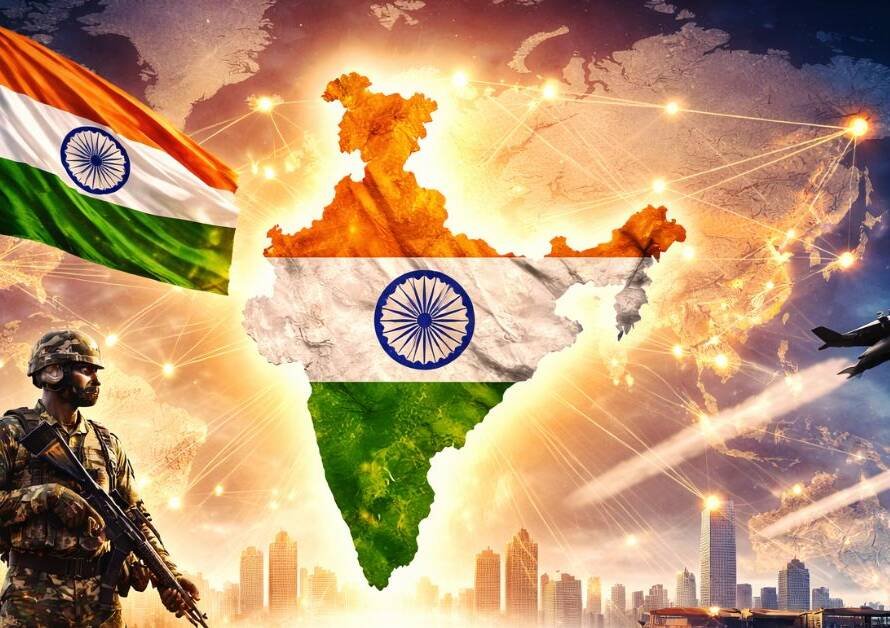
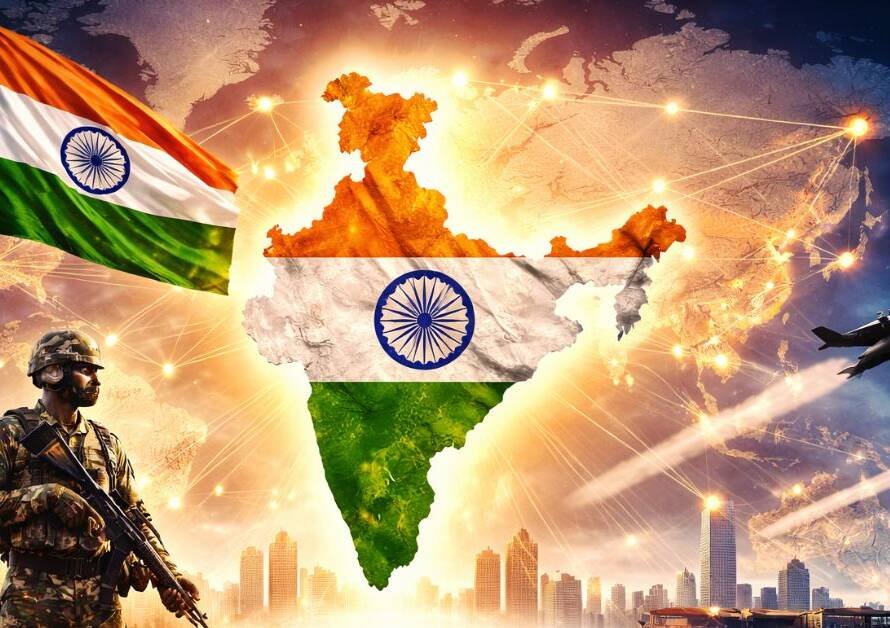
This narrative analyzes the revolutionary transformation in India’s security landscape, foreign policy, and economic sovereignty since 2014. It highlights how, under Prime Minister Modi’s leadership, India transitioned from a “defensive” posture to a “pro-active defense” policy, effectively curbing internal terrorism. The article underscores that the foreign trips frequently criticized by the “anti-national ecosystem” have served as a Strategic Shield during times of global instability and war. By discovering alternative markets and taking a firm stand against global blackmailing, India has successfully established itself as an “island of stability” in an uncertain world.
1. Public Mandate: A New Benchmark of Trust
- One Voice, One Nation: During the COVID-19 crisis, when the Prime Minister called for clapping, clanging plates, and lighting lamps, it was not merely a ritual. Science had its place, but that sight was a symbol of a “collective consciousness” that India felt after decades.
- Beyond Political Boundaries: It is noteworthy that this solidarity was observed even in states where the BJP has never held power. It was a testament to an unbreakable trust in leadership that has risen above vote-bank politics.
- The Message of Approval Ratings: At that time, PM Modi’s approval rating was around 67%, which has now crossed the 75% mark. This growth indicates that the public no longer believes in mere slogans but in “delivery” and “intent.”
2. Security Landscape: Changing the Geography and Psychology of Terror
- The Gruesome Era Before 2014: Remember, it was the same Pakistan, the same army, and the same terror commanders. Whether it was Diwali in Delhi, local trains in Mumbai, the ghats of Varanasi, or the sanctity of Parliament—terrorists shed blood everywhere. Thousands of innocent Indians lost their lives while the then-governments were limited to “strong condemnation” and sending paper dossiers.
- Strategic Shift (Shift in Strategy): After 2014, India made it clear: “We will not provoke, but if provoked, we will not spare.” Surgical strikes and air strikes created a fear in the minds of terrorists that had been missing for the last 70 years.
- The New “Workplace” of Terror: Today, Indian metropolises are safe because the battle against terror is being fought across the border. The elimination of terror masterminds in their own homes by “unknown men” is an introduction to the invisible power of this New India.
- The Neighbor’s Internal Crisis: The Taliban that was once a threat to India is now proving to be a nemesis for the Pakistani army itself. The plight of the Pakistani army in Balochistan is the fruit of their own actions. The situation has reached a point where Pakistani generals no longer dare to go anywhere without bulletproof protection.
3. Diplomacy and the “Return on Investment” of Foreign Trips
- Criticism vs. Achievement: The anti-India ecosystem always ridiculed the Prime Minister’s constant foreign trips. But today, when the Middle East and Europe are engulfed in the fires of war, the relationships built during those trips are proving their worth.
- Global War and India’s Stability: While global supply chains have collapsed, India remains one of the least affected countries. This is a direct result of personal global relationships ensuring that even warring nations respect India’s energy and food requirements.
- Alternative Markets and Sources: Over the past 10 years, the government has very wisely sought new markets for exports and developed alternative sources for critical needs (such as crude oil and defense equipment). This has eliminated the need for India to “pander” to any single nation.
4. An Impregnable Wall Against Global “Blackmailing”
- Pressure from Developed Nations: For decades, the US and other developed nations have “blackmailed” India in the name of technology, defense deals, and crude oil. Threatening sanctions was their old habit.
- Strategic Autonomy: Today’s India does not succumb to pressure. Whether it is buying oil from Russia or signing the Chabahar Port agreement with Iran, India has made it clear that “India First” is our only policy.
- The End of Blackmailing: Our diversification has neutralized the blackmailing attempts of Western nations. They now know that India has options, forcing them to engage with us as equals rather than attempting to intimidate us.
5. The Reality of the LPG Crisis and Economic Management
- The Opposition’s Hollow Narrative: The opposition is exaggerating the LPG crisis, whereas the truth is that this is a global phenomenon. Despite wars in the Gulf, the availability of cylinders in India has been maintained—that is the greatest achievement.
- Mirror to the Past: During the Manmohan Singh era, a single global announcement by Obama would trigger hoarding and black-marketing of rations and oil. Today, Congress is trying to mislead the public by showing pictures of those old days, even though today’s situation is far more under control.
- Public Maturity: The public of 2026 is not the public of 2004. Today’s youth knows that inflation is due to global factors, not administrative failure. The public is willing to endure hardship as long as the leadership is honest.
6. Information Warfare and the Need for Transparency
- The “Alliance” of Congress and Pakistan: Pakistan’s main weapon now is not bombs, but “information.” It seeks to spread distrust within India, and unfortunately, elements like the Congress carry that narrative forward. Rahul Gandhi’s statements often seem to fan the agenda of Asim Munir.
- Operation Sindoor and Rafale: The success of Operation Sindoor was a symbol of the valor of our Air Force. Rafale jets were not bought as “showpieces” but for the destruction of the enemy. The loss of aircraft in war is a tactical reality, but it does not mean we have become weak.
- The Necessity of Transparency: To crush the “ecosystem” spreading distrust, the government must adopt even greater transparency. Sharing the truth in a timely manner is the biggest weapon to cool down the market of rumors.
7. The Mistake of 2004 Will Not Be Repeated
- A Transformed India: The BJP and the citizens of the country must realize that this is not 2003-04. Today’s BJP is more organized, and today’s citizen is more aware. The blunder of 2004 will not be repeated because the public knows that if Congress were in power today, terrorists and extremist elements would be dancing on our heads.
Final Message: The path to India’s security and prosperity passes through “transparency” and “iron will.” We are safe because we have a leadership that can look global powers in the eye.
🇮🇳 Jai Bharat, Vandematram 🇮🇳
Read our previous blogs 👉 Click here
Join us on Arattai 👉 Click here
👉Join Our Channels👈