Summary
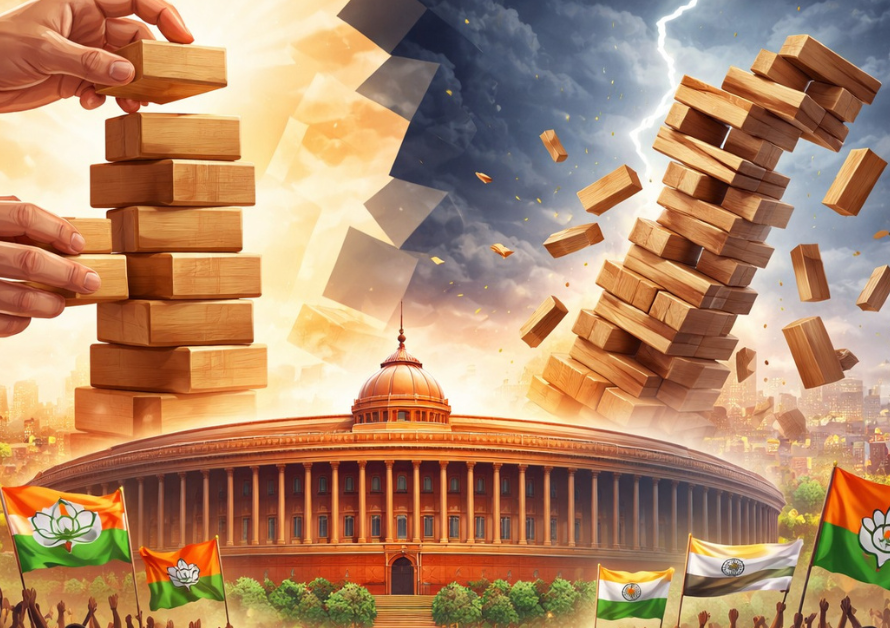
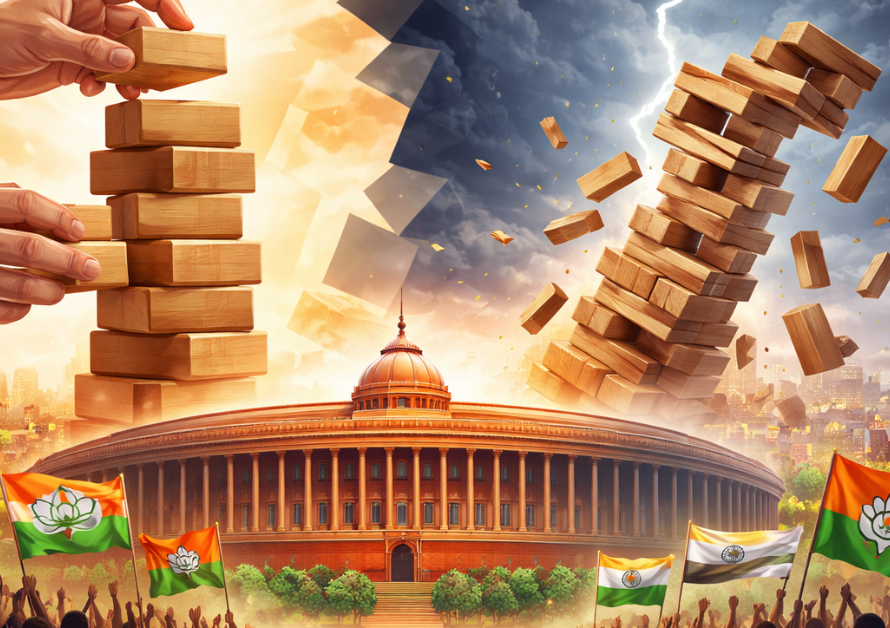
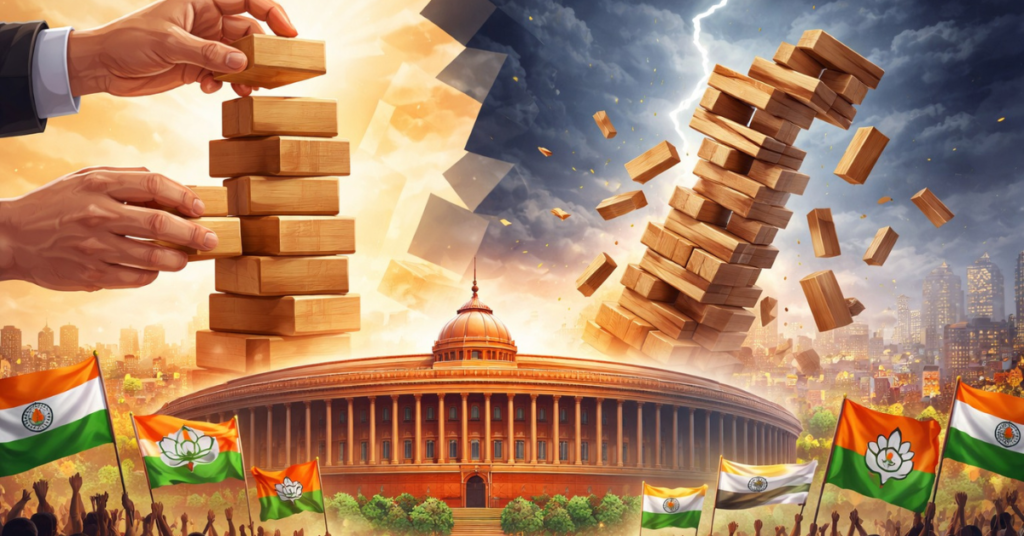
- This analysis highlights the conflict between ‘coalition politics’ and ‘strong leadership’ within the current landscape of Indian politics.
- By comparing the pre-2014 era—often remembered for policy paralysis and corruption—with the current development-oriented governance, this article explains why a ‘mishmash coalition’ could push the country back toward anarchy or ‘Jungle Raj.’
- It provides a detailed account of potential threats to national security, economic sovereignty, and infrastructure development, while delivering the message that public awareness is the ultimate shield for national integrity.
Political Balance and Path to Development
1. Historical Perspective: Pre-2014 Challenges and the Shadows of ‘Jungle Raj’
The decade preceding 2014 is remembered in the history of Indian democracy as a turning point where the central government’s decision-making capacity was extremely limited. When the term ‘Jungle Raj’ is used, it refers not only to the law-and-order situation but also to administrative collapse.
- Policy Paralysis: During that era, coalition partners wielded a power akin to a veto. Major economic reforms were often stalled because a regional partner would block them to suit their local political interests.
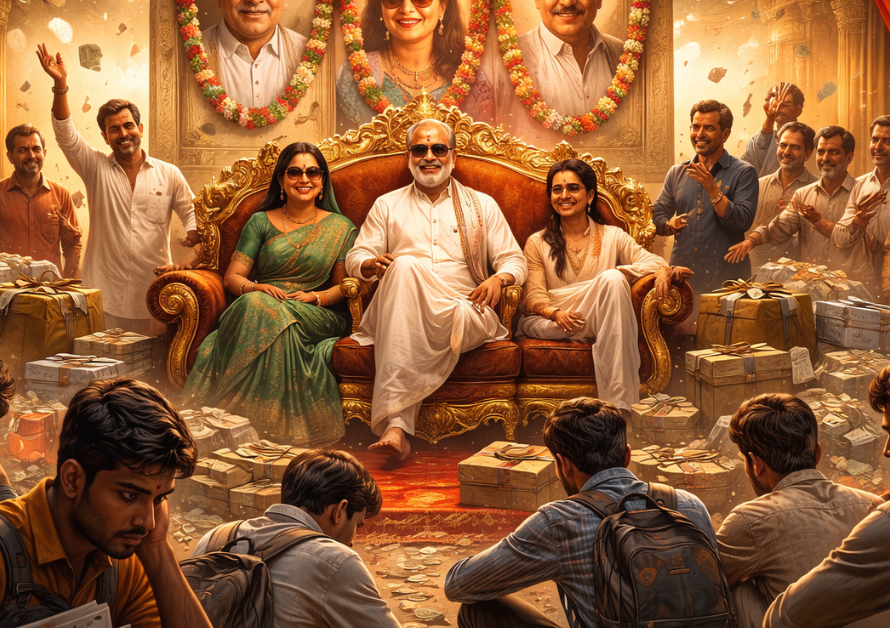
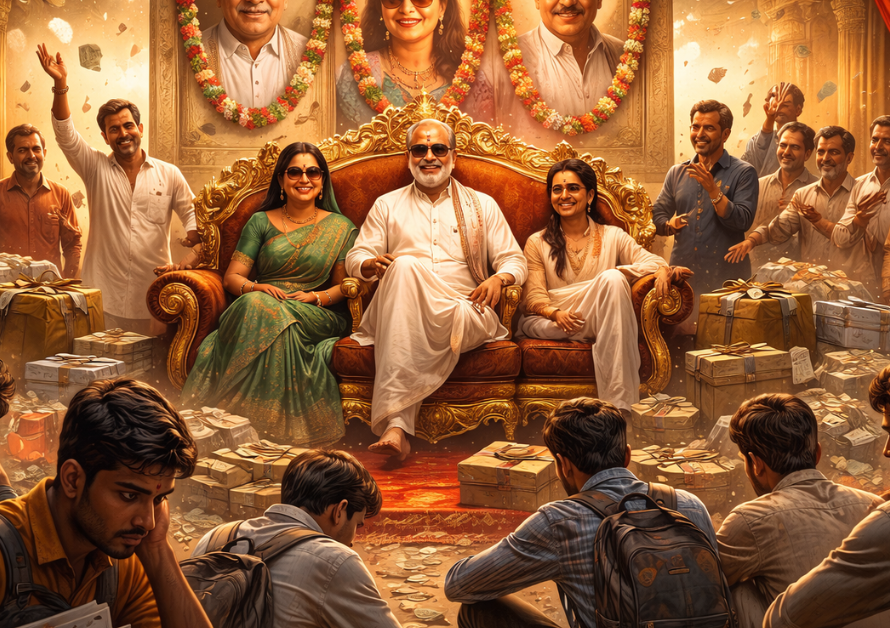
- A String of Scams: Scandals such as 2G Spectrum, Coal Block allocation, and the Commonwealth Games not only drained the national exchequer but also established India’s global image as a ‘corrupt nation.’
- Terrorism and Internal Security: It was a time when cities like Delhi, Mumbai, and Jaipur were rocked by frequent bomb blasts. Due to a weak and divided leadership, the fear of consequences had vanished from the minds of terrorists.
- Weak Global Standing: India was counted among the ‘Fragile Five’ economies, meaning our economy was considered vulnerable and on the verge of collapse at any time.
2. The Rise of the ‘Thug-bandhan’: Lack of Principles or Mere Lust for Power?
The manner in which various parties with opposing ideologies are coming together today makes the label ‘Thug-bandhan’ (a coalition of cheats) seem appropriate rather than hyperbolic. There are solid political and strategic reasons behind this.
- The Erasure of Ideology: Parties that fought against each other for decades and whose supporters are arch-rivals are now on one platform solely to remove one individual from power. This is a form of betrayal of the public mandate.
- Leadership Crisis: This coalition lacks a single face capable of leading the country. Every regional leader considers themselves a contender for the Prime Minister’s post, which signals future internal strife and instability.
- Regional Self-Interest vs. National Interest: In coalition politics, critical subjects like national security and international relations are often sacrificed for the sake of regional vote-bank politics.
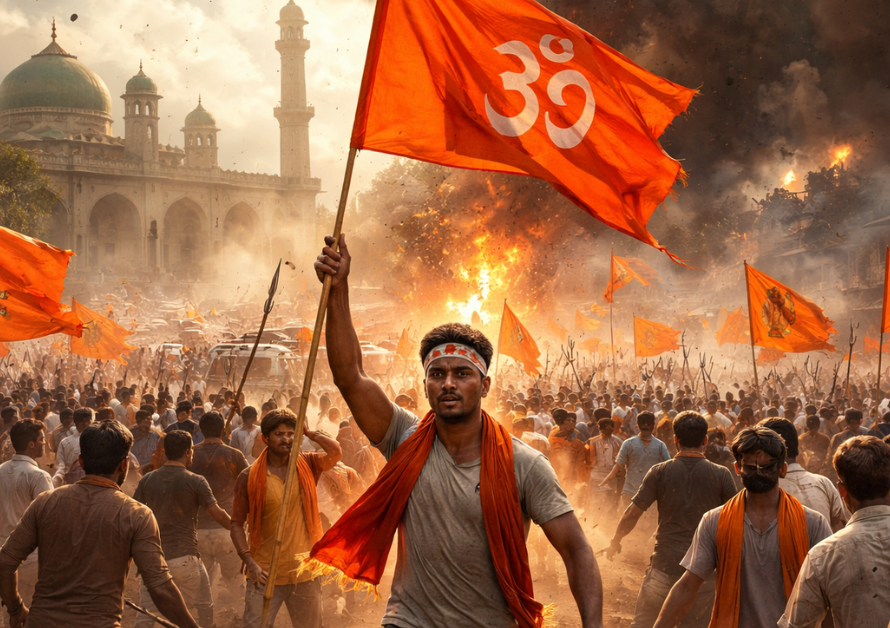
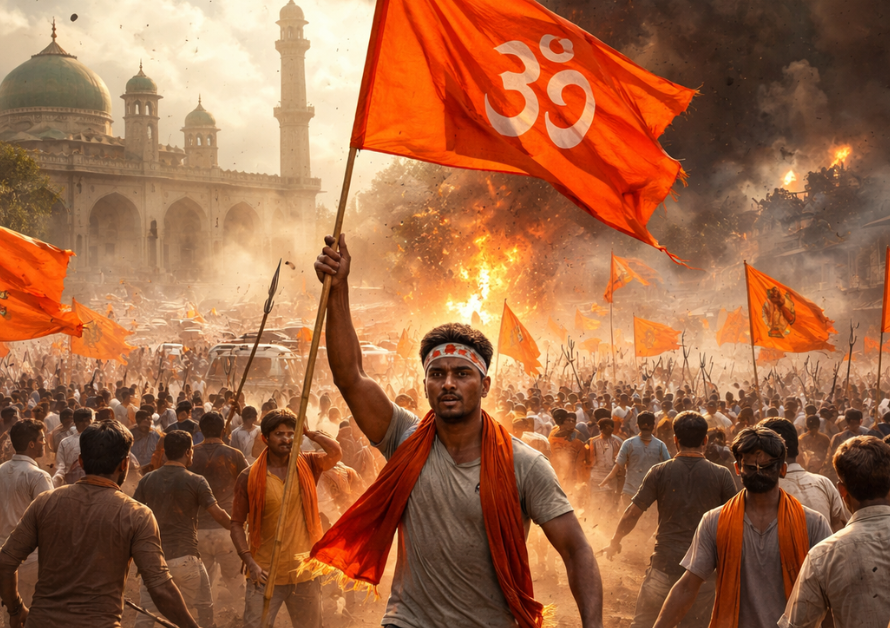
- The Return of Appeasement: The type of politics being employed to court vote banks could deepen the lines of division in society, ultimately leading toward anarchy.
3. Threats to the Journey of Development: Economic and Structural Challenges
The progress India has made in infrastructure and economic reforms over the last decade would not have been possible without a stable government holding a full majority. If this group of ‘lions’ comes to power, the following areas could be deeply impacted:
- National Infrastructure: Massive projects like Sagarmala and Bharatmala require consistent funding and firm willpower. In coalition governments, funds are often diverted to regional pet projects, halting works of national importance.
- Rise in Logistics Costs: Currently, the country is working to make its logistics costs competitive on a global scale. Administrative lethargy could derail this effort.
- Data Sovereignty and Indigenous Technology: India is currently promoting data security and its own indigenous technologies. Parties with a soft stance toward foreign entities could obstruct this progress, endangering the country’s digital sovereignty.
- Investor Confidence: Global investors are putting money into India because there is a stable government. Political instability would immediately affect the stock market and foreign investment, leading to unemployment and inflation.
4. National Security and Geo-political Stability
Today’s India is moving toward becoming the world’s third-largest economy and presents its views strongly on the global stage. A weak coalition government could reverse this status.
- Compromise on Border Security: Dealing with neighbors like China and Pakistan requires a strong Prime Minister. Delays in decision-making in a ‘khichdi government’ (mishmash government) could make the country vulnerable once again.
- Energy Security and Global Diplomacy: Securing India’s energy needs from West Asia and other crisis-hit regions is a complex task. Divided leadership would diminish India’s influence in global diplomacy.
- Internal Rebellion and Radicalism: If a soft stance is adopted toward extremist elements for the sake of vote-bank politics, unrest could flare up again in the internal parts of the country.
5. Public Awareness: The Ultimate Shield of Democracy
As stated, “The public must remain cautious”—this sentence is more relevant today than ever. Democracy is not just the right to vote; it is the responsibility to choose who will lead the nation.
- Protection from Misleading Propaganda: In the age of social media, various false promises and narratives are being crafted to lure the public. Citizens must make decisions based on data and past track records.
- The Power of the Vote: The public must realize that one wrong vote can push the country back by 20 years. The only way to stop the mindset of looting resources is a strong, development-oriented mandate.
- The Role of the Youth: India’s young population must understand that their future is tied to economic stability and job opportunities, which only a stable government can ensure.
- India stands on the threshold of a glorious future today. Our civilizational values and aspirations for modern development are leading us toward becoming a ‘Vishwa Guru’ (global leader).
- In such a scenario, any possibility of the return of ‘Jungle Raj’ would be suicidal for the country. The politics of ‘Thag-bandhan’ might just be a game of power equations, but nation-building requires dedication and continuity.
- The public must recognize the instability hidden behind the roar of these ‘lions’ and save this journey of development from coming to a halt.
🇮🇳 Jai Bharat, Vandematram 🇮🇳
Read our previous blogs 👉 Click here
Join us on Arattai 👉 Click here
👉Join Our Channels👈