Summary:
- This comprehensive analysis contrasts the stringent national security measures adopted by global powers against radicalism with the unique socio-political landscape of India.
- It examines the failure of the “Ummah” in Islamic nations, critiques the selective silence of Indian influencers, and advocates for a unified national identity rooted in mutual respect and “Nation First” principles.
Global Shift & National Consciousness
1. The Global Response: Prioritizing National Sovereignty
In the 21st century, nations across the globe—regardless of their political leanings—have begun to redefine their relationship with religious radicalism. These countries have realized that absolute tolerance toward extremist ideologies can lead to the erosion of national culture and security.
- China’s Secular Mandate: The Chinese state has implemented a rigorous policy of “Sinicization.” In regions like Xinjiang, the government has moved beyond mere observation to active intervention. Practices such as the wearing of the Burqa, growing long religious beards, and public displays of prayer (Namaz) are strictly regulated. Religious texts are scrutinized to ensure they do not conflict with state ideology. For China, the state is the ultimate authority, and no religious identity is permitted to supersede the national identity.
- Japan’s Cultural Fortress: Japan remains one of the most culturally homogeneous nations. Its immigration laws are among the strictest in the world. Japan rarely grants citizenship to practitioners of radical ideologies and maintains a high bar for religious proselytization. By refusing to accept large numbers of refugees from conflict zones in the Middle East, Japan has prioritized social cohesion over international pressure, maintaining a society with nearly zero instances of radicalized internal conflict.
- The Awakening of Europe: Nations like France, once the bastion of “liberty and fraternity,” are now shutting down mosques that preach separation from the state. The French “Charter of Principles” explicitly forbids using religion for political ends. In Britain and Australia, the narrative has shifted toward “Integration or Departure.” These nations are now vocal about the fact that those who enjoy the benefits of a secular, democratic society must adhere to its core values rather than attempting to replace them with Sharia-based parallels.
- African and Island Nations: Angola made global headlines by taking a stand against the expansion of radical religious structures. Sri Lanka, following the tragic Easter Sunday bombings, realized that unregulated Madrasas and face coverings were being used as shields for extremist coordination. They responded with swift legislative bans to protect their citizens.
2. The Failure of the Global “Ummah”: Internal Chaos
A common argument used to mobilize radical sentiment in India is the concept of a “Global Islamic Brotherhood.” However, a look at the “Islamic World” reveals a different, more tragic reality. These nations are often the primary victims of the very radicalism they fail to curb.
- Sectarian Bloodshed: In Pakistan, Iraq, and Yemen, the divide between Shia and Sunni sects leads to thousands of deaths annually. In Pakistan, minority groups like the Ahmadiyyas are not even legally recognized as Muslims and face state-sponsored persecution. This proves that radicalism, once unleashed, does not spare even its own “brothers.”
- The Refugee Crisis: It is a stinging irony that while radical leaders often criticize Western or Hindu civilizations, the refugees fleeing war-torn Syria, Libya, and Afghanistan almost always seek shelter in “Kafir” (non-believer) nations like Germany, Sweden, or India, rather than in wealthy neighboring Islamic states like Saudi Arabia or Qatar.
- The Self-Destruction of Statehood: Nations like Afghanistan have regressed centuries in terms of human rights, particularly for women and children. The constant cycle of IED blasts in marketplaces and mosques across these regions highlights that radicalism is an ideology of destruction, not governance.
3. The Indian Paradox: Democracy as a Shield for Dissent
India presents a unique case study where a majority population provides unprecedented constitutional protections to its minorities, only to be met with accusations of “intolerance.”
- Institutional Freedom: India is home to over 300,000 mosques—more than many Islamic nations. In cities like Delhi, the density of religious structures for minorities exceeds that of major Western capitals like Washington or London. Despite this, the global narrative often unfairly paints India as a “communal” state.
- The Exploitation of Rights: In India, individuals are free to burn the national flag, insult the Prime Minister, and even chant slogans calling for the “destruction of India” (Bharat tere tukde honge) under the guise of freedom of speech. In most Middle Eastern or Southeast Asian nations, such acts would result in immediate and severe punishment. The tolerance of the Indian state is often mistaken for weakness by those who harbor separatist sentiments.
- Political Provocation: Leaders like the Owaisi brothers often use inflammatory rhetoric, such as the infamous “15 minutes” threat, to polarize communities. This brand of “street-side” leadership relies on keeping the youth uneducated and angry, rather than integrating them into the national success story.
4. The Crisis of Narrative: Bollywood and Media Hypocrisy
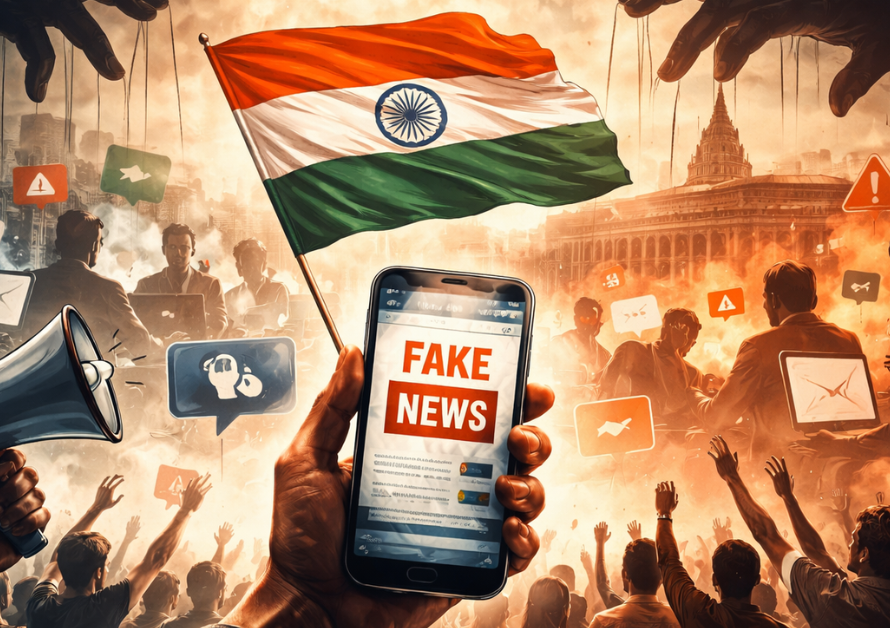
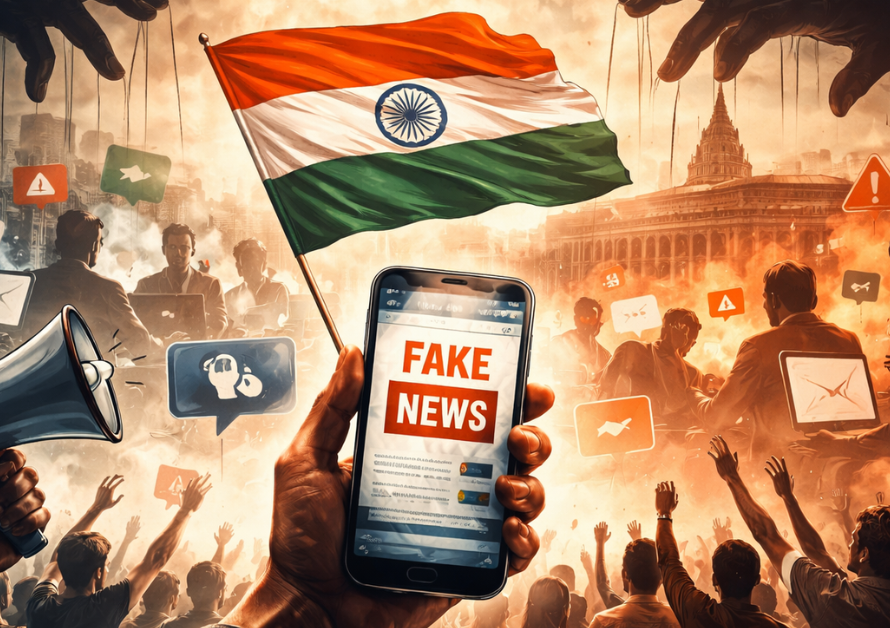
The “Insecurity Narrative” in India is largely a manufactured product of the elite media and film industry.
- Selective Social Reform: Influential figures like Aamir Khan used his platform “Satyamev Jayate” to highlight every possible flaw in Hindu tradition. While social reform is necessary, his silence on issues like
- Nikah Halala, Triple Talaq, Ghazwa-e-Hind, and the population explosion was deafening. This selective activism creates a lopsided view of social progress where one community is expected to modernize while the other is shielded in its medieval practices.
- The One-Sided “Ganga-Jamuni” Tehzeeb: The burden of “secularism” in India seems to fall solely on the shoulders of the majority. Hindus are encouraged to attend Iftar parties, visit Sufi shrines, and celebrate “secular” festivals. However, any attempt to assert a proud Hindu identity is immediately labeled as “fascism.”
- Silence on Extremism: There is a glaring lack of internal protest within the Indian radical community against global terror groups like ISIS or the Taliban. While thousands will gather for the funeral of a convicted terrorist, few voices are raised when Indian soldiers are martyred in Kashmir. This lack of emotional integration with the land of their birth is a core challenge for modern India.
5. The Path Toward National Integration
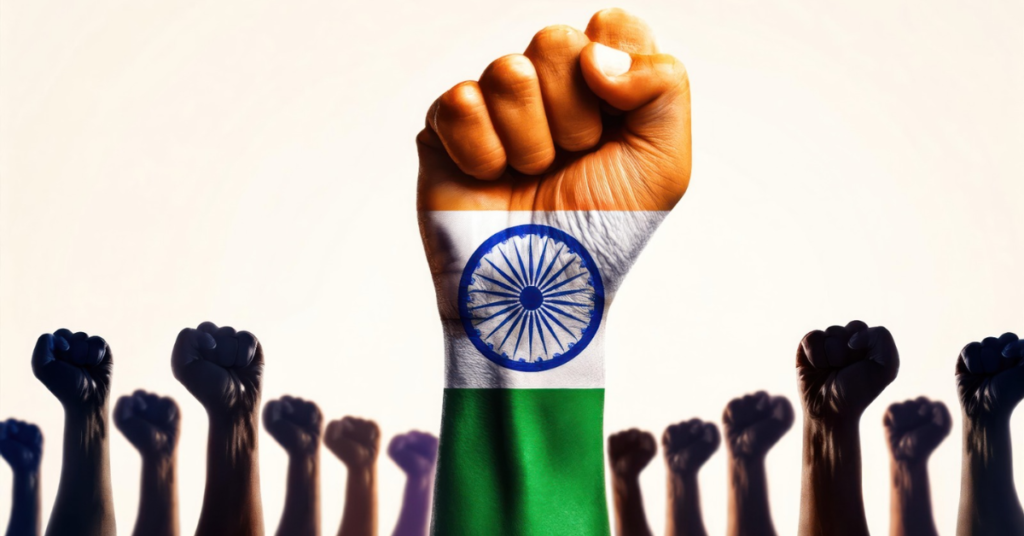
The time for “Pseudo-Secularism” is over. India cannot survive as a fragmented collection of religious ghettos. It must exist as a single, cohesive national entity.
Uniformity in Law: For India to progress, there must be a “One Nation, One Law” approach. No religious law can be allowed to supersede the Indian Constitution.
Reciprocal Respect: Harmony is a two-way street. If the majority community is expected to respect the sensitivities of the minority, the same must be returned. This includes respecting the national flag, the culture of the land, and the symbols of the majority faith.
Cultural Awakening: The citizens of India must realize that their primary identity is “Indian.” Our ancestors may have had different faiths, but our DNA and our history are rooted in this soil.
This narrative is a call to every Indian to wake up to the realities of the 21st century. Do not let the chains of manufactured “victimhood” destroy the fabric of the world’s largest democracy.
🇮🇳 Jai Bharat, Vandematram 🇮🇳
Read our previous blogs 👉 Click here
Join us on Arattai 👉 Click here
👉Join Our Channels👈