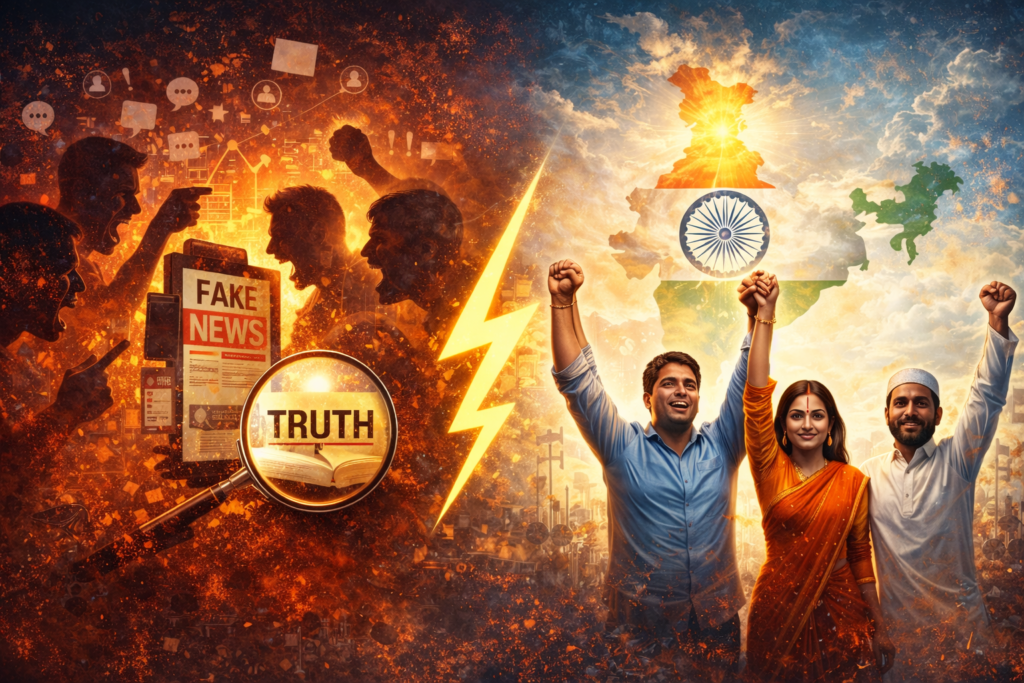
Summary
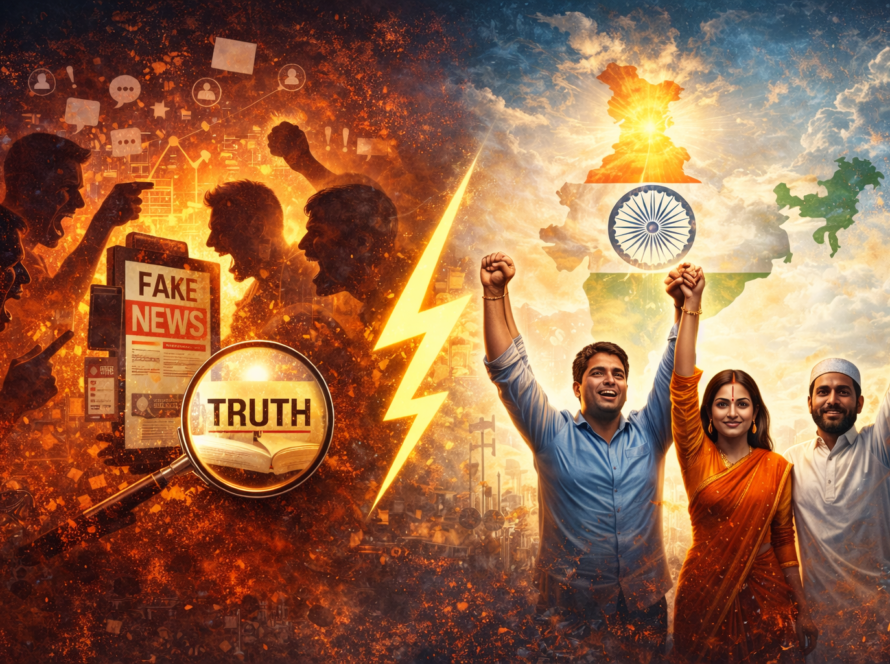
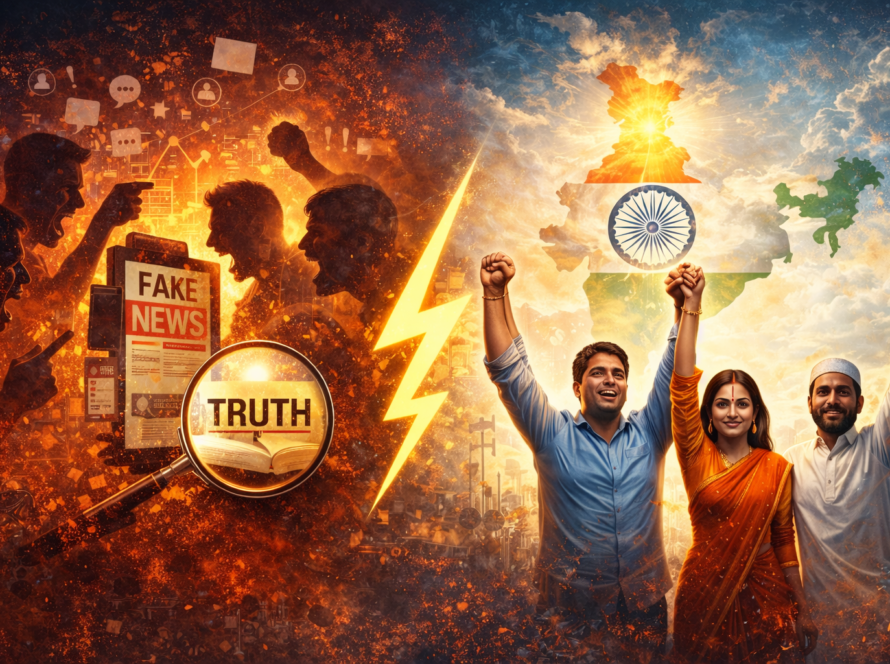
- The recent UGC controversy exposed a hard truth: how quickly misinformation can divide us, turn us against one another, and weaken our collective cause.
- Instead of pausing to verify facts, many of us reacted emotionally, amplified half-truths, and blamed leadership in every possible way—doing the opposition’s work for them.
- This episode should be a wake-up call. If we want our country and civilization to survive—and offer a stronger future to coming generations—we must unite, confront the hostile ecosystem, fight the narrative war seriously,
- And extend conscious, informed support to Narendra Modi.
Why Unity Is Now Non-Negotiable
1) What the UGC Episode Revealed
- The controversy did not escalate because of policy clarity; it escalated because of information chaos.
What happened in practice
- Selective clips, screenshots, and claims went viral without context
- Rumors spread faster than official clarifications
- Emotional identity triggers replaced patient fact-checking
- Social media rewarded outrage over accuracy
The result
- We fought among ourselves
- Trust eroded within our own community
- The real beneficiaries were those who thrive on division
2) How the Trap Was Set—and How We Walked Into It
Opposition ecosystems rarely rely on a single falsehood. They deploy a pattern:
- Seed ambiguity → provoke emotion → amplify outrage → force polarization
- Frame complex reforms as existential threats
- Push “us vs. them” narratives within the same community
Our mistake
- Reacting before verifying
- Treating speculation as settled fact
- Attacking leadership before exhausting institutional explanations
In doing so, we left no stone unturned to hurt ourselves.
3) Narrative Warfare Is Real—and It Targets Identity
- This was not merely a policy dispute; it was narrative warfare.
Core tactics
- Use identity language to bypass rational scrutiny
- Present temporary drafts or partial proposals as final decisions
- Blur the line between critique and character assassination
- Crowd out corrections with louder outrage
Lesson
- If we don’t control the narrative with facts and patience, the narrative will control us with emotion.
4) Division Is the Objective—Not Reform
- The goal was never constructive feedback; it was fragmentation.
Why division helps the opposition
- A divided society can’t defend reforms
- Internal infighting delegitimizes leadership
- Confusion weakens institutional confidence
- Momentum is lost without a single vote being cast
When we fracture, we hand victory to those who cannot win on merit.
5) The Cost of Misplaced Anger
Anger aimed inward has consequences:
- Reform fatigue replaces reform debate
- Credible voices get drowned out
- Trust in institutions collapses
- Long-term goals are sacrificed for short-term outrage
A civilization cannot build its future on perpetual internal suspicion.
6) What Unity Actually Means (and What It Doesn’t)
- Unity does not mean blind acceptance.
- Unity does mean disciplined disagreement.
Unity requires
- Waiting for official clarifications
- Distinguishing drafts from decisions
- Critiquing policies with evidence, not insinuations
- Refusing to amplify unverified claims
Unity rejects
- Rumor as truth
- Identity bait as analysis
- Personal attacks as politics
7) Supporting Leadership Is a Strategic Necessity
- This moment demands maturity. Supporting Narendra Modi is not about personality—it is about direction.
Why support matters
- Stability enables long-term reforms
- Policy continuity protects national interest
- External pressure thrives on internal discord
- Civilizational projects require time and trust
Constructive criticism strengthens governance; constant internal sabotage weakens the nation.
8) Fighting the Ecosystem—Seriously
- To avoid repeating the UGC episode, we must act deliberately.
What to do
- Verify before reacting
- Track patterns, not just posts
- Call out coordinated misinformation
- Reduce reach of bad-faith actors
- Share clarifications as actively as outrage
This is civic responsibility in the digital age.
9) A Responsibility to Future Generations
Our choices today decide what we pass on:
- A confident, united society—or a fractured one
- Institutions trusted—or institutions ridiculed
- Reforms sustained—or reforms derailed
If we keep falling into the same traps, we mortgage the future for momentary emotion.
The UGC controversy should be remembered not for what it claimed, but for what it revealed:
- How easily we can be misled, how quickly we can be divided, and how urgently we must grow wiser.
If we want our country and civilization to endure, the path is clear:
- Unite rather than fracture
- Fight the ecosystem, not each other
- Take narrative warfare seriously
- Reject dirty political games
- Support reformist leadership with vigilance and maturity
Unity is not optional. It is existential.
🇮🇳 Jai Bharat, Vandematram 🇮🇳
Read our previous blogs 👉 Click here
Join us on Arattai 👉 Click here
👉Join Our Channels 👈