Summary
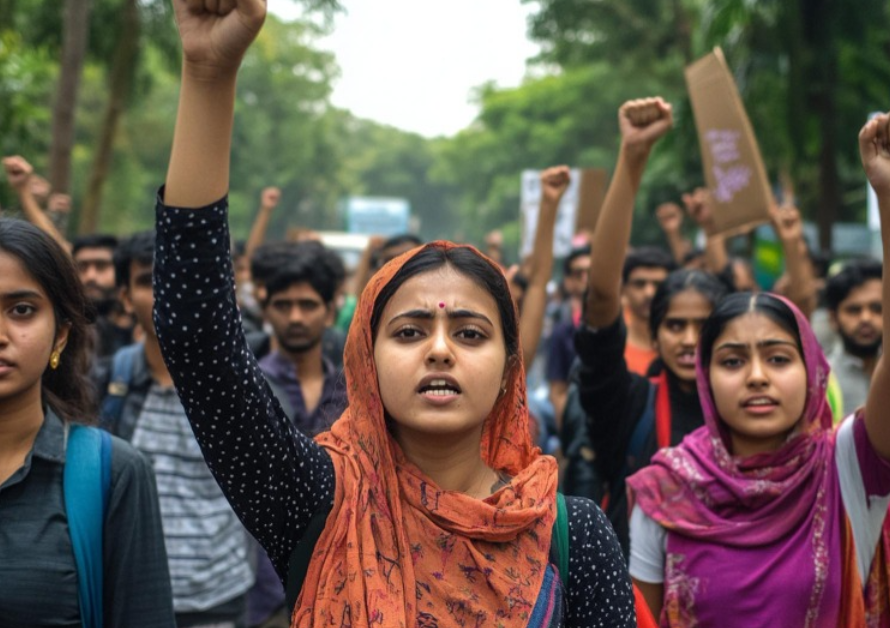
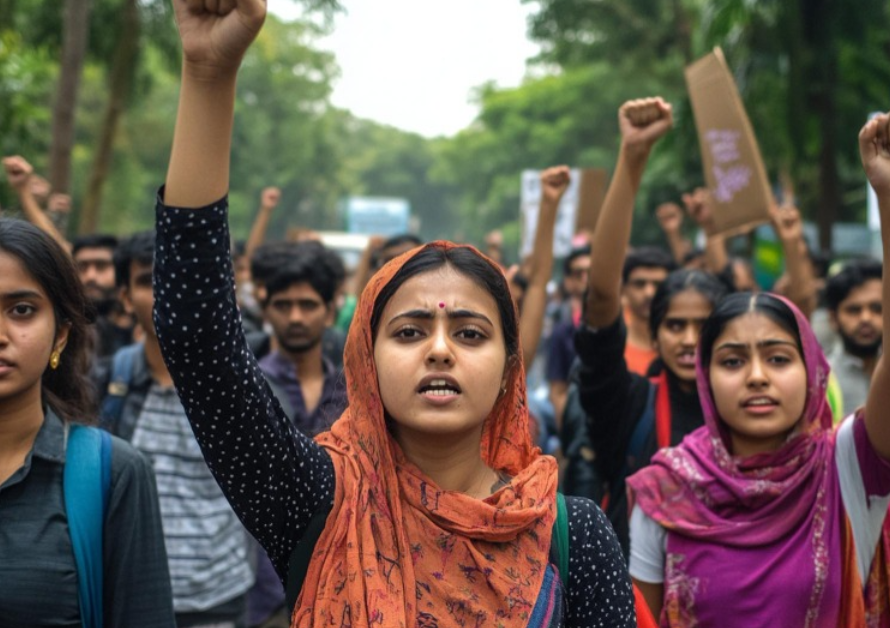
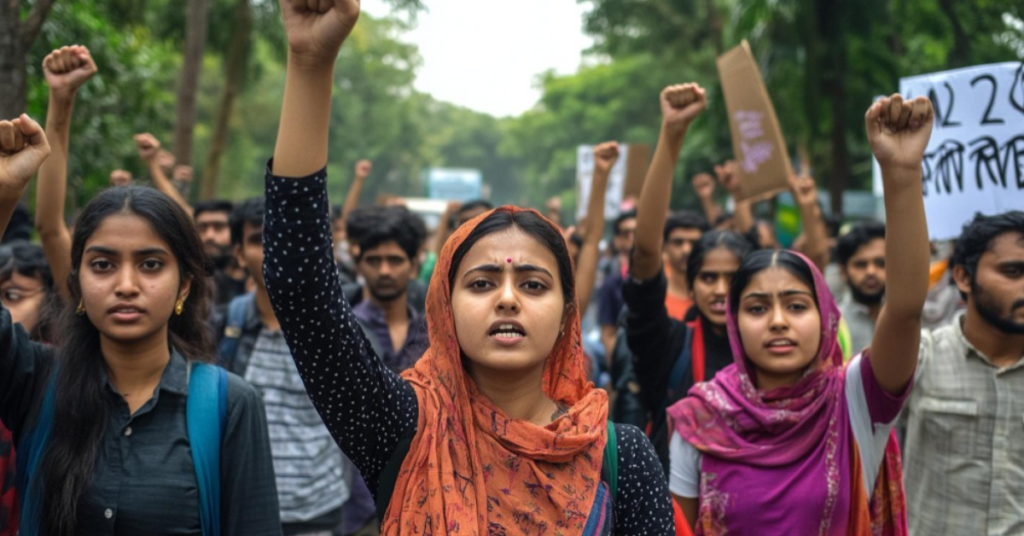
- The recent controversy surrounding UGC regulations began as an academic and administrative issue. However, despite judicial review and government reconsideration, the agitation did not subside. Instead, it evolved into sustained political mobilisation, eventually accompanied by signals of new political formation and electoral positioning.
- This development raises important democratic questions. Is the issue purely regulatory, or has it become a strategic instrument ahead of the Uttar Pradesh elections?
- Indian political history shows that movements often transform into political platforms. The anti-corruption movement led by Anna Hazare, which later resulted in the political rise of Arvind Kejriwal, offers a precedent.
- Governance debates in states such as West Bengal under Mamata Banerjee and the All India Trinamool Congress also illustrate how policy issues can intersect with electoral strategy.
- As Uttar Pradesh moves toward elections, voters must carefully distinguish between legitimate policy reform and politically engineered mobilisation.
1. The Origin: A Regulatory Dispute
The UGC issue initially followed a constitutional path:
- UGC introduced new regulatory provisions.
- Stakeholders expressed concerns.
- The matter reached the Supreme Court.
- The government revisited the regulation.
- Judicial review led to reconsideration and pause.
- At this stage, the formal institutional objective appeared fulfilled.
In a mature democracy:
- Policy disagreement is debated.
- Courts review legality.
- Government adjusts when necessary.
- The issue concludes institutionally.
However, in this case, agitation intensified rather than subsided.
- This shift marks the transition from policy dispute to political mobilisation.
2. When Agitation Continues After Resolution
Political history shows a recurring pattern:
- Movements may extend beyond their original grievance.
- Public mobilisation can evolve into political capital.
- Emotional legitimacy can transition into electoral ambition.
The emergence of discussions around a new political platform in the wake of the agitation reinforces the perception that the controversy may have functioned as a launchpad rather than merely a protest.
- This dynamic is not unprecedented in Indian politics.
3. The Anna Movement Precedent: A Structural Comparison
The 2011 anti-corruption movement mobilised nationwide sentiment under the leadership of Anna Hazare. It was framed as:
- A moral struggle against corruption.
- A call for institutional accountability.
- A citizen-led reform movement.
However:
- Internal leadership divergence occurred.
- A political party was formed.
- Activism transitioned into electoral competition.
Under Arvind Kejriwal, the movement reshaped Delhi politics. While entirely democratic, critics argue that:
- The anti-corruption identity faced governance controversies.
- Institutional conflicts intensified.
- Idealism encountered the complexities of administrative power.
- We all have seen ह्वट transpired in Delhi.
The lesson is structural:
- A movement rooted in moral narrative can evolve into a political vehicle.
This does not invalidate democracy — but it demands voter scrutiny.
4. Governance Debates: Immigration and Border Policy
Parallel debates in other states provide additional context.
- In Delhi, opposition parties have periodically alleged irregularities concerning undocumented migrant settlements, including Rohingya refugees. These debates often intersect with national security discussions.
In West Bengal, critics of the ruling establishment have long alleged that:
- Border management has been insufficiently strict.
- Illegal cross-border migration may influence electoral dynamics.
- Demographic shifts carry long-term political consequences.
>While these claims remain politically contested, the broader policy issue is genuine:
Unchecked illegal immigration can impact:
- Public resource allocation.
- Law enforcement pressure.
- Social cohesion.
- Demographic balance.
- National security frameworks.
These are policy concerns requiring institutional solutions — not rhetorical escalation.
5. Why Uttar Pradesh Is the Strategic Arena
- The concentration of UGC-linked mobilisation in Uttar Pradesh is politically significant.
Key observations:
- Electoral timing aligns closely with state elections.
- Rhetoric is heavily directed at state leadership.
- Organisational restructuring signals have emerged locally.
>The focus appears largely on Yogi Adityanath, while Narendra Modi remains oriented toward national elections.
This differentiation suggests a calibrated strategy:
- Immediate objective: reshape UP’s political landscape.
- Broader objective: influence future national arithmetic.
Uttar Pradesh, being electorally pivotal, often becomes the testing ground for new political experiments.
6. Electoral Engineering: Identity, Narrative, and Coalition Realignment
Modern political mobilisation operates through:
- Social media amplification.
- Influencer-driven messaging.
- Emotional framing.
- Coalition restructuring through identity politics.
Pre-election periods frequently witness attempts to:
- Fragment stable voter coalitions.
- Reignite caste-based anxieties.
- Introduce polarising narratives.
However, voter behaviour has evolved. Increasingly, electorates evaluate:
- Law and order stability.
- Infrastructure development.
- Welfare delivery efficiency.
- Administrative decisiveness.
- Governance continuity.
Performance metrics often outweigh agitation rhetoric.
7. Embedded Political Ecosystems and Reform Resistance
Over decades, political systems accumulate:
- Patronage networks.
- Institutional alignments.
- Ideological ecosystems.
- Administrative inertia.
When governance initiatives attempt reform:
- Resistance surfaces.
- Institutional debates become politicised.
- Movements expand strategically.
>This phenomenon is common in democracies undergoing structural change.
The critical democratic question is:
- Are debates being conducted to improve policy — or to destabilise governance before elections?
8. Lessons for Voters in Uttar Pradesh
Delhi’s political transformation demonstrates:
- Movements can birth parties.
- Moral narratives can become electoral machinery.
- Governance realities often differ from campaign promises.
West Bengal’s immigration debates illustrate:
- Border governance can become electorally sensitive.
- Demographic narratives can influence political positioning.
- National security discussions can intersect with state politics.
Uttar Pradesh voters must therefore assess:
- Whether the UGC mobilisation is primarily policy-driven.
- Whether electoral timing suggests strategic ambition.
- Whether governance continuity offers stability.
- Whether experimentation carries unpredictable consequences.
9. Democracy’s Final Authority
Ultimately:
- Social media does not decide elections.
- Protest stages do not substitute ballots.
- Narrative warfare cannot override voter judgment.
The electorate will evaluate:
- Governance record.
- Administrative stability.
- Development trajectory.
- Institutional integrity.
Democracy’s verdict lies with the voter — not with mobilisation optics.
The UGC controversy may have begun as a regulatory matter, but it has clearly intersected with electoral strategy in Uttar Pradesh.
History reminds us:
- Moral branding can evolve into political ambition.
- Agitations can become organisational platforms.
- Governance outcomes often redefine narratives.
As elections approach, the responsibility lies with citizens to:
- Separate policy debate from political engineering.
- Evaluate performance over provocation.
- Choose stability or experimentation with full awareness.
The future of Uttar Pradesh will not be determined by agitation intensity — but by informed, deliberate electoral choice.
🇮🇳 Jai Bharat, Vandematram 🇮🇳
Read our previous blogs 👉 Click here
Join us on Arattai 👉 Click here
👉Join Our Channels 👈