India’s Timeless Journey Toward a Developed and Prosperous Future
1. Vande Mataram — Not a Slogan, But a Living Mantra
Vande Mataram is not a phrase uttered only in moments of emotion.
It is a civilizational mantra—a force that unites history, sacrifice, courage, faith, and destiny into a single expression.
- It is worship, but also responsibility
- It is emotion, but also resolve
- It is memory, but also vision
- When millions of Indians chant Vande Mataram together, it stops being sound.
- It becomes energy—an awakening of collective consciousness that transcends caste, language, region, and ideology.
This is why Vande Mataram has survived centuries of attack, distortion, and suppression—because it lives not in books, but in the soul of Bharat.
2. Bharat — A Civilization That Refused to Die
India is not a nation created by accident or decree. It is a continuum of civilization, older than most recorded histories.
- Empires rose and fell
- Invaders came and vanished
- Borders shifted and maps changed
- Yet Bharat endured.
Why? Because India was never built only on power or conquest. It was built on balance:
- Strength with restraint
- Prosperity with purpose
- Knowledge with wisdom
- Power with morality
Our rishis, sages, saints, scholars, and warriors understood one timeless truth:
- A nation survives not by weapons alone, but by values rooted in self-awareness.
Vande Mataram was born from this soil.
3. A Song Born in Chains, Destined for Freedom
When Bankim Chandra Chattopadhyay composed Vande Mataram, India was at its lowest ebb:
- Looted by foreign rulers
- Crushed by exploitative policies
- Portrayed as backward and inferior
- Stripped of confidence and self-belief
Yet Bankim Babu dared to imagine an India that was:
- Sujalam (rich in water)
- Sufalam (abundant and fertile)
- Shasyashyamalam (green with prosperity)
This imagination itself was rebellion.
- Vande Mataram did not describe India as it was—it prophesied India as it would rise again.
That is why it frightened the British and inspired Indians.
4. From Poetry to People’s Power
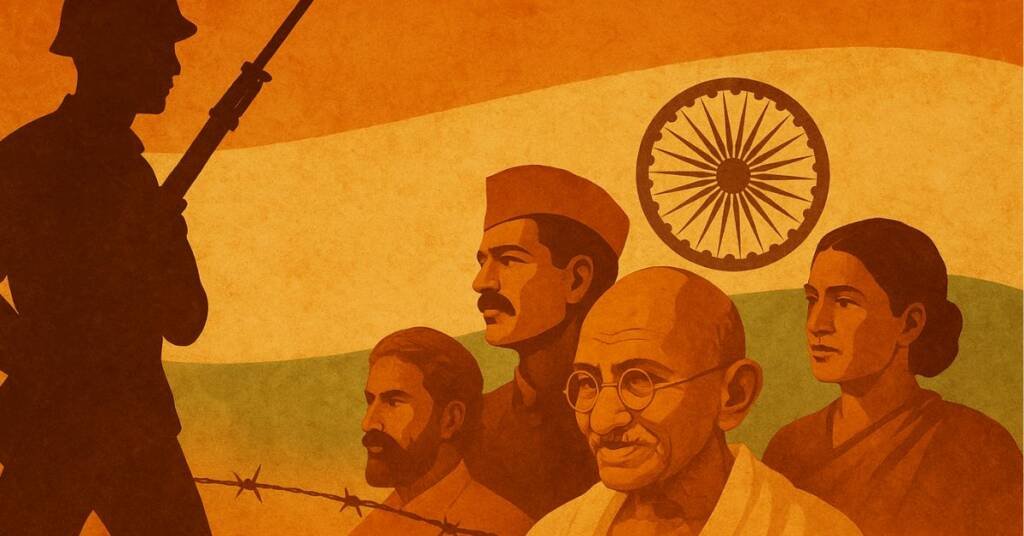
What began as a literary composition soon became the spine of India’s freedom struggle.
- It echoed in Congress sessions and revolutionary hideouts alike
- It united Bengalis, Punjabis, Tamils, Maharashtrians, and Assamese
- It rang through protests against the Partition of Bengal
- It was whispered in prisons and shouted on gallows
Many freedom fighters died with Vande Mataram on their lips.
Many more lived with it in their hearts.
- Mahatma Gandhi called it the image of an indivisible India
- Sri Aurobindo called it a mantra that awakens inner strength
- Rabindranath Tagore gave it musical soul
No other song in modern history fused culture, resistance, and nationhood so completely.
5. Why India Calls the Nation “Mother”
India’s worldview is unique.
- Where others see a nation as a political entity, India sees the nation as Maa Bharati.
A mother is not weak.
- She nurtures
- She educates
- She sacrifices
- And when needed, she protects and destroys evil
Vande Mataram reflects this complete vision:
- Saraswati – Knowledge and wisdom
- Lakshmi – Prosperity and well-being
- Durga – Power and defense against injustice
This is why India’s freedom struggle was never only about removing rulers—it was about restoring dignity and self-respect.
This vision also ensured:
- Women were not spectators but leaders
- Shakti was central to nation-building
- Courage and compassion coexisted
6. Freedom Is Not the End — It Is the Beginning
- Vande Mataram does not stop at liberation. It demands responsibility after freedom.
A truly free nation must:
Lead in education, science, and technology
- Build prosperity through innovation and enterprise
- Protect sovereignty through self-reliant defense
- Serve humanity while remaining firm against injustice
Under Modi ji’s leadership, today’s India is moving forward on this very path. What could not be achieved in the first 65 years is now being carried out steadily and consistently over the past eleven years during Modi ji’s tenure.
- Space missions and digital infrastructure
- Economic rise and manufacturing strength
- Indigenous defense systems
- Decisive responses against terrorism
The world is witnessing an India that is:
- Confident, not arrogant
- Peaceful, not weak
- Compassionate, yet resolute
7. Lessons from History, Warnings for the Present
- History also teaches us that symbols lose power when diluted.
- The fragmentation of Vande Mataram in the pre-independence era reflected a mindset that ultimately led to division.
- That same mindset—of selective nationalism, cultural hesitation, and ideological confusion—still challenges India today.
- Which is why remembering the complete meaning of Vande Mataram matters.
Because:
- Unity is not automatic
- Cultural confidence must be protected
- National consciousness must be nurtured
8. India Today — A Nation Ready to Rise
Today, Maa Bharati has:
- 140 crore children
- The world’s largest youth population
- A rapidly growing economy
- Technological confidence
- A civilizational awakening after centuries
- Every time India achieves the impossible:
- Reaching the Moon’s south pole
- Building indigenous defense capabilities
- Empowering daughters in science, sports, and security
- Standing firm against global pressure
The nation instinctively says:
- Vande Mataram.
9. The Eternal Guide
Vande Mataram is not confined to history books or ceremonies.
It lives in action.
- When India creates
- When India protects
- When India dares
- When India believes in itself
As Bharat moves toward Viksit Bharat 2047, this mantra will remain our compass—reminding us who we are, where we come from, and what we are destined to become.
- Because nations that remember their soul never lose their way.
🇮🇳 Jai Bharat, Vandematram 🇮🇳
For old Blogs please visit our website www.saveindia108.in
To join our whatsapp Community please click
https://chat.whatsapp.com/FMr2WNIgrUVG9xK78FW5Dl?mode=r_t
To join our Telegram group please Click https://t.me/+T2nsHyG7NA83Yzdl Old Blogs are available on the telegram group also.