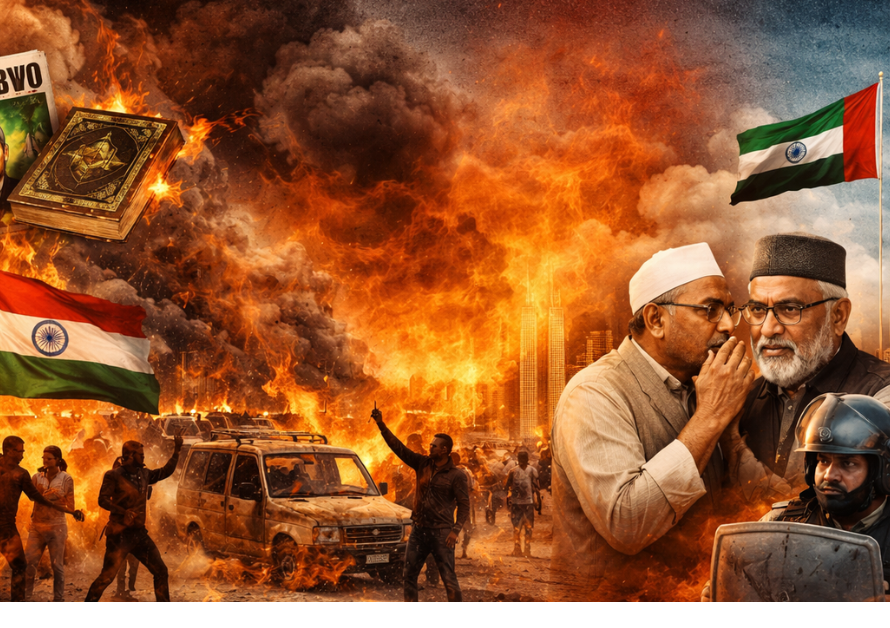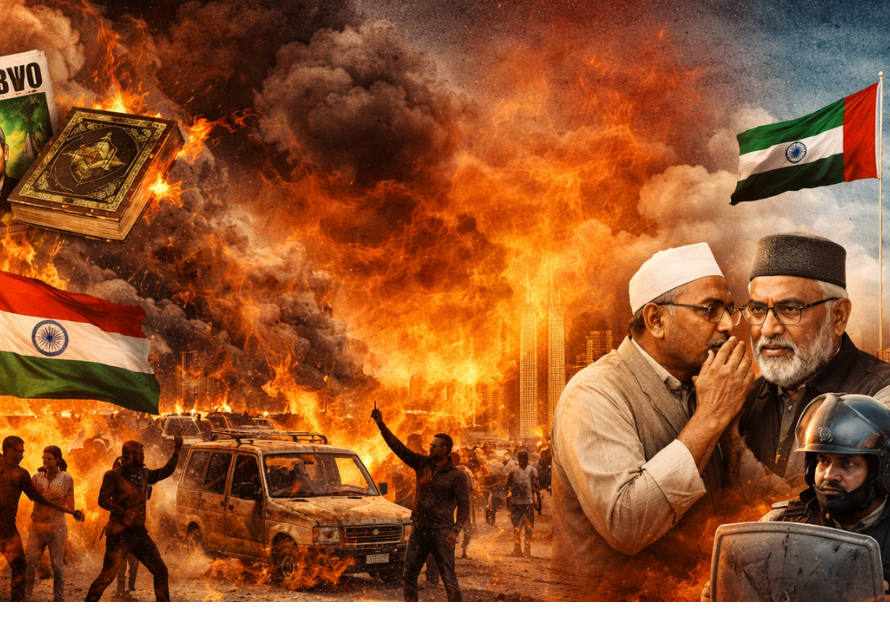
India’s judicial system is undergoing a decisive transformation. Cases long mired in delays, ambiguity, and influence are now seeing a focus on timeliness, accountability, and evidence-based decisions. This shift is not just procedural—it is a crucial step toward strengthening public trust, governance credibility, and the rule of law.
India’s Judicial Changes, Governance Momentum, and the Politics of Discomfort
- India is witnessing a rare moment when accountability is beginning to move faster than entitlement.
- Recent court decisions in serious public-order cases have triggered visible outrage from sections of the political class.
- That reaction itself tells a story. For decades, delay, ambiguity, and influence were treated as informal shields.
- Today, as institutions show signs of decisiveness and balance, the old ecosystem appears unsettled.
- This is not about politics—it’s about institutional correction, public confidence, and the rule of law finally catching up with expectations.
⚖️ 1) A Long Public Perception: Justice Delayed, Power Protected
For years, a widespread public belief—right or wrong—took root across society:
- Influence outlasted evidence in sensitive cases.
- Delay diluted accountability, especially where power was involved.
- Interim reliefs and stays often outlived the urgency of the subject.
Consequences felt by citizens:
- Loss of faith in timelines and outcomes.
- Reform fatigue and cynicism.
- The sense that delay itself had become a strategy.
This perception, repeated across conversations and media debates, weakened trust even when institutions acted correctly—because speed and clarity were missing.
🔄 2) 2014 Onwards: A Disruptive Governance Shift
The change of government marked a sharp break from the earlier equilibrium:
- National security and public order were prioritised.
- Digital systems reduced discretion and rent-seeking.
- Infrastructure and welfare delivery accelerated.
- Transparency-by-design replaced negotiated opacity.
This disruption unsettled entrenched interests that thrived in a delay-friendly governance model, where outcomes were often postponed until political cycles changed.
🧱 3) From Governance to Lawfare: Resistance by Delay
As reforms gained pace, another trend became visible in public discourse:
- Routine litigation against policy decisions.
- Immediate challenges to executive action.
- Extended stays that slowed implementation.
Judicial review is vital in a democracy. Yet the volume, timing, and pattern of challenges created a perception that law was increasingly used as a brake rather than a balance—benefiting those seeking paralysis over progress.
⚖️ 4) A New Judicial Moment: Signals of Course Correction
- With the assumption of office by Chief Justice Suryakant, many observers across legal and civic spaces note a change in tone and tempo.
Early signals widely discussed:
- Greater seriousness in public-order and national-security matters.
- Reduced indulgence for narrative-heavy pleas without evidentiary depth.
- Emphasis on proportionality, timelines, and closure.
- Willingness to unclog long-pending matters.
This is not alignment with any government. It is institutional independence from pressure—ideological or political.
🏛️ 5) Why a Fair and Decisive Judiciary Matters
No nation can rise sustainably if:
- Justice is endlessly deferred.
- Security cases become opinion debates.
- Accountability depends on identity, not evidence.
India’s transformation—from a fiscally strained economy to one of the fastest-growing major economies—has unfolded in just over a decade. To sustain this path, the country needs:
- Clean governance,
- Decisive administration, and
- A judiciary that protects rights without paralysing the state.
😠 6) Why Sections of the Old Order Are Uncomfortable
The visible frustration among entrenched actors is understandable:
- Delay as insulation is shrinking.
- Influence no longer guarantees insulation.
- Institutions appear less hesitant and more time-bound.
When accountability expands, those accustomed to ambiguity often feel targeted—even when processes are constitutional and lawful.
🧭 7) This Is Not Capture—It’s Correction
India is not witnessing institutional capture. It is witnessing institutional correction:
- Courts reclaiming decisiveness,
- Governance reclaiming momentum,
- Citizens reclaiming confidence.
The balance—rights with responsibility, liberty with law, speed with scrutiny—is essential for a mature democracy.
🌍 8) The Global Context: Why Speed and Certainty Matter
Globally, nations that progressed fastest paired rule of law with predictability:
- Clear timelines,
- Evidence-first adjudication,
- No tolerance for procedural abuse.
India’s aspiration to be among the top global powers requires exactly this mix.
🧩 9) What Citizens Expect Now
Public expectations are straightforward:
- Timely justice in serious cases.
- Equal standards, irrespective of ideology.
- Less noise, more outcomes.
- Independence with accountability across institutions.
Meeting these expectations will restore long-term trust in judiciary which has eroded for decades.
🔚 10) Momentum Must Be Protected
- A judiciary that is fair, firm, and nationally conscious strengthens democracy.
- A governance system that moves decisively yet constitutionally accelerates growth.
If this trajectory continues, India may finally secure what eluded it for decades:
- Closure of cases instead of endless process,
- Clarity instead of confusion,
- Institutions that serve the nation, not networks.
This moment matters—because correction, once begun, must not stall.
🇮🇳 Jai Bharat, Vandematram 🇮🇳
- Website:https://www.saveindia108.in
- Old Blogs: https://saveindia108.in/our-blog/
- Arattai: https://tinyurl.com/mrhvj9vs