From Appeasement-Era Storytelling to National Assertion
- Indian cinema has historically enjoyed a vast and loyal audience across the Gulf region, driven by a large Indian and South Asian diaspora and decades of cultural familiarity.
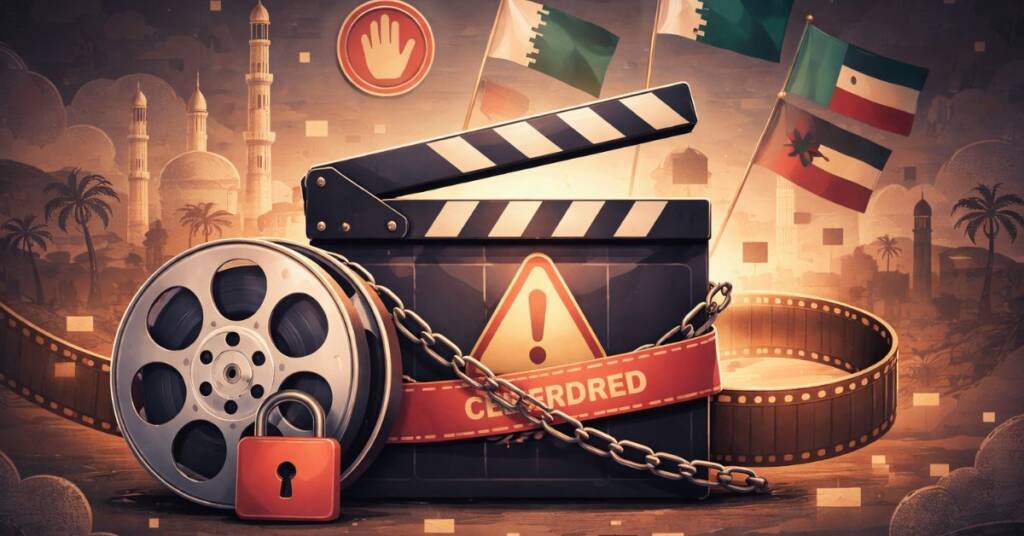
- However, a noticeable shift has emerged in recent years: films engaging with India’s national security, historical memory, and political realities are increasingly facing bans or forced edits in several Gulf countries.
This is not a coincidence. It reflects a deeper transformation—within India’s own narrative ecosystem and in how that narrative is received abroad.
I. The Pre-2014 Comfort Zone: Why Indian Films Faced Little Resistance
For decades after independence, India’s political establishment largely followed a framework of minority appeasement and narrative restraint, especially where history, religion, and national security were concerned. This framework directly influenced cinema.
>Key Traits of Pre-2014 Mainstream Storytelling
Medieval and colonial history often:
- Softened invasions and conflicts
- Romanticised aggressors
- Avoided civilizational trauma
Hindu rulers, reformers, and resistance figures were frequently:
- Marginalised
- Shown as regressive or flawed
Terrorism and extremism were:
- Detached from ideology
- Presented as isolated law-and-order issues
India’s cultural identity was often:
- Apologetic
- Self-critical beyond balance
This narrative posture suited domestic vote-bank politics and also aligned comfortably with sensitivities in Muslim-majority regions, including the Gulf. As long as Indian cinema avoided assertive civilizational self-expression, all stakeholders were at ease.
II. The Post-2014 Shift: National Confidence Enters Storytelling
After 2014, India underwent a visible political and psychological transition. This was not merely electoral—it was civilizational.
What Changed? Open discussion of:
- National security threats
- Cross-border terrorism
- Historical injustices
Reclaiming:
- Indigenous heroes
- Suppressed histories
- Cultural pride
Normalisation of:
- Strategic clarity
- Sovereignty-first policymaking
Cinema, as a mirror of society, began reflecting this shift.
III. A New Wave of Indian Films: What They Do Differently
A growing segment of filmmakers began telling stories that:
- Portray India–Pakistan conflicts from India’s standpoint
- Address terrorism without euphemisms
- Depict Kashmir and constitutional decisions as sovereign matters
- Re-examine medieval history without romantic filters
- Portray Indian armed forces with dignity and realism
These films did not invent new realities. They brought long-suppressed perspectives into the mainstream.
IV. Why This Creates Discomfort in the Gulf
Gulf regulators often cite:
- Cultural sensitivity
- Social harmony
- Geopolitical neutrality
Yet the pattern of bans suggests selective discomfort.
>Common Characteristics of Films Facing Restrictions for Themes involving:
- Pakistan-linked terrorism
- Jihadist violence
- Indian military operations
- Article 370 and Kashmir
- Historical conflicts involving Islamic rulers
At the same time:
- Films critical of Hindu society or Indian institutions rarely face similar scrutiny
- Self-critical or apologetic narratives pass smoothly
This indicates the issue is not violence or politics per se, but who controls the narrative and which perspectives are considered acceptable.
V. The Demographic and Stability Factor
Another unspoken factor is demographics.
- Large expatriate populations from Pakistan and South Asia
- Governments prioritising internal stability
- Low tolerance for narratives that may provoke ideological friction
From a regulatory viewpoint, silencing uncomfortable narratives becomes easier than managing debate.
VI. Domestic Resistance: The Unease of the Old Ecosystem
Resistance is not only external. Within India, a long-established ecosystem across:
- Sections of media
- Academia
- Some Film criticics
- Activist networks
has grown uncomfortable with this transition.
Why This Ecosystem Is Uneasy
- Loss of monopoly over moral interpretation
- Audiences questioning past narratives
- National pride no longer automatically labelled “extremism”
- Historical revision no longer taboo
For decades, this ecosystem framed:
- Hindu assertion as dangerous
- National security concerns as paranoia
- Cultural confidence as majoritarianism
The new cinematic trend directly challenges this framework.
VII. Cinema as Soft Power: Why the Stakes Are Higher
Indian cinema is no longer just entertainment—it is soft power. Soft power inevitably attracts resistance when it:
- Challenges dominant regional narratives
- Refuses to self-censor for approval
- Reflects a confident, sovereign national voice
Nations comfortable with an India that:
- Minimized itself
- Apologised endlessly
- Avoided uncomfortable truths
are naturally unsettled by an India that:
- Speaks clearly
- Owns its history
- Defends its interests
VIII. Facing Truth Without Fear
Every nation that matures faces this phase:
- Japan faced it
- Israel faces it continually
- China embraces it unapologetically
India is no exception.
The Choice Before Indian Cinema
- Dilute truth for external comfort or
- Accept resistance as the cost of self-respect
Artistic freedom does not guarantee universal acceptance—it guarantees the right to tell one’s story without ideological permission.
IX. Resistance Signals Transition, Not Decline
The growing censorship of Indian films in the Gulf is not a sign of irrelevance. It is evidence that India’s narrative has changed—and is being noticed.
- Truth unsettles.
- Truth disrupts,
- Truth resists containment.
Indian cinema today reflects a nation that has stopped asking for approval. That transition may be uncomfortable for some, but it is inevitable, necessary, and long overdue.
🇮🇳 Jai Bharat, Vandematram 🇮🇳
Website: https://www.saveindia108.in
Email: info@saveindia108.com
Old Blogs: https://saveindia108.in/our-blog/
WhatsApp: https://tinyurl.com/4brywess
Arattai: https://tinyurl.com/mrhvj9vs
Telegram: https://t.me/+T2nsHyG7NA83Yzdl