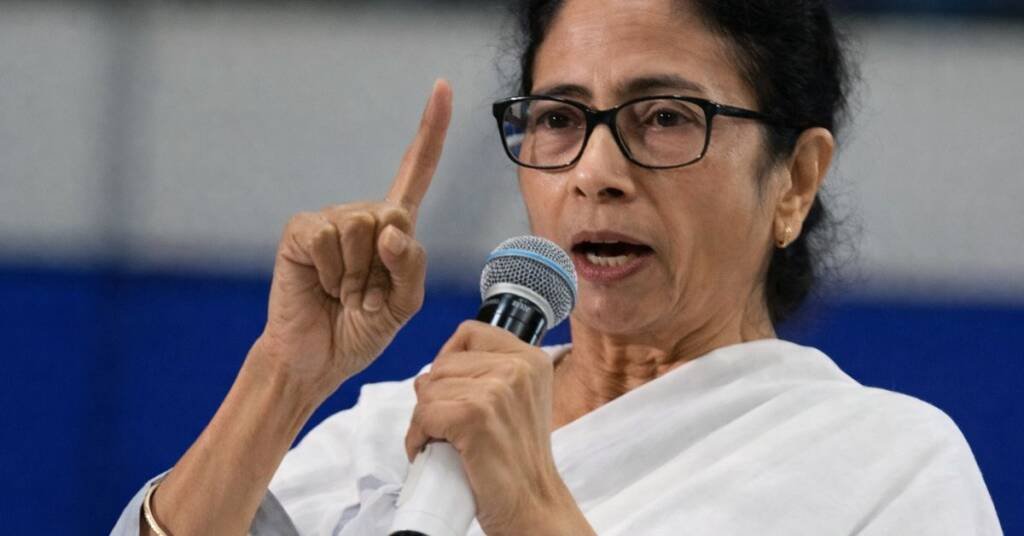
The Enforcement Directorate’s (ED) raids in West Bengal—followed by allegations of interference involving Chief Minister Mamata Banerjee—have turned a routine money-laundering probe into a national test of the rule of law.
At stake are three fundamentals of Indian democracy:
- Whether investigative agencies can function without obstruction
- Whether elected executives are subject to the same legal standards as citizens
- How Centre–State federal balance operates when central statutes are enforced
The legal outcome will be decided by courts, but the institutional and political consequences are already reshaping public discourse ahead of the 2026 West Bengal elections.
SECTION 1 | Background: What Triggered the ED Action
The ED initiated searches in West Bengal as part of an ongoing money-laundering investigation, reportedly connected to:
- Alleged illegal coal pilferage networks
- Suspected laundering of proceeds of crime
- Financial and digital trails under scrutiny
- Links involving political consultancy operations working with the ruling party
Key points to note:
- These were not sudden or isolated raids
- The probe is based on central statutes enforced nationwide
- ED actions are legally subject to judicial oversight
SECTION 2 | The Central Allegation: Interference During a Raid
The controversy escalated when the ED alleged that:
- The Chief Minister reached the raid location
- Documents and electronic devices were removed or interfered with
- Officers faced obstruction or intimidation
- The lawful conduct of the search was compromised
Why this is serious:
- Obstruction of an investigation is a grave offence if proven
- The allegation involves executive interference, not mere political criticism
- It raises questions about equality before law
This is why the ED approached:
- The Calcutta High Court, and later
- The Supreme Court of India, seeking protection of its investigation
SECTION 3 | Mamata Banerjee’s Response and Political Narrative
The Chief Minister has:
- Denied all allegations
- Claimed the raids were politically motivated
- Accused the Centre of misusing agencies before elections
- Alleged the intent was to access TMC’s political and election data
Political counter-moves included:
- Street protests and rallies
- Framing the issue as Centre vs State
- Portraying the ED as a tool against regional parties
This transformed a legal probe into a high-stakes political confrontation.
SECTION 4 | Why This Case Is Not a Routine ED–Opposition Clash
ED actions against political leaders are not new. What makes this case distinct is:
- Allegations of direct, on-site interference
- Involvement of a sitting Chief Minister
- Escalation to the Supreme Court
- Timing ahead of state elections
The core constitutional question becomes unavoidable:
- Can political authority interrupt an investigation and then claim immunity on political grounds?
SECTION 5 | Rule of Law vs Executive Power
This episode sharpens a long-standing institutional debate.
⚖️ Rule of Law
- No constitutional office grants immunity from investigation
- Agencies operate under law and judicial supervision
- Obstruction, if established, is punishable regardless of rank
🏛️ Federalism
- States have autonomy, but central laws apply uniformly
- Federalism does not imply veto power over investigations
- Accountability is not optional under cooperative federalism
🧑⚖️ Judiciary’s Role
- Courts act as the final arbiter
- The outcome may set precedents for future Centre–State disputes
SECTION 6 | Political Impact in West Bengal
🔥 Polarisation
- TMC frames the issue as political vendetta
- BJP frames it as proof of corruption and lawlessness
Voters are forced to weigh:
- “Political targeting” vs
- “No one above the law”
🗳️ Electoral Consequences
- The issue will dominate the run-up to 2026 Assembly elections
- It may consolidate Mamata Banerjee’s core supporters
It may also concern undecided voters about:
- Governance standards
- Respect for institutions
- Transparency
SECTION 7 | National Implications Beyond Bengal
This is not just a state issue. Nationally, it affects:
- Credibility and autonomy of investigative agencies
- Boundaries of executive authority
- Public trust in institutional neutrality
- Future conduct of state governments under investigation
A critical principle is at stake:
- If investigations can be obstructed today for one leader, they can be obstructed tomorrow for anyone.
SECTION 8 | The Broader Democratic Question
The controversy forces India to confront a fundamental issue:
- Is accountability universal, or
- Is it selective based on political power?
How this question is answered will shape:
- Institutional behaviour
- Political culture
- Citizen confidence in democracy
SECTION 9 | What to Watch Going Forward
Key developments to monitor:
- Judicial findings and directions
- Clarity on interference vs lawful protest
- Impact on ED’s future operational independence
- Political messaging as elections approach
The legal process will decide guilt or innocence. The democratic process will judge conduct and credibility.
The ED raids involving Mamata Banerjee are not merely about one leader or one party.
They represent a defining moment for:
Rule of law
- Institutional independence
- Constitutional balance
- Democratic accountability
Courts will deliver the verdict. But the principle remains non-negotiable:
👉 Democracy survives not when power is unchecked, but when law applies equally to all.
🇮🇳 Jai Bharat, Vandematram 🇮🇳
Website: https://www.saveindia108.in
Email: info@saveindia108.com
Old Blogs: https://saveindia108.in/our-blog/
WhatsApp: https://tinyurl.com/4brywess
Arattai: https://tinyurl.com/mrhvj9vs
Telegram: https://t.me/+T2nsHyG7NA83Yzdl