Summary:
- This comprehensive analysis traces the socio-political trajectory of India from 1947 to the visionary milestone of Amrit Kaal 2047.
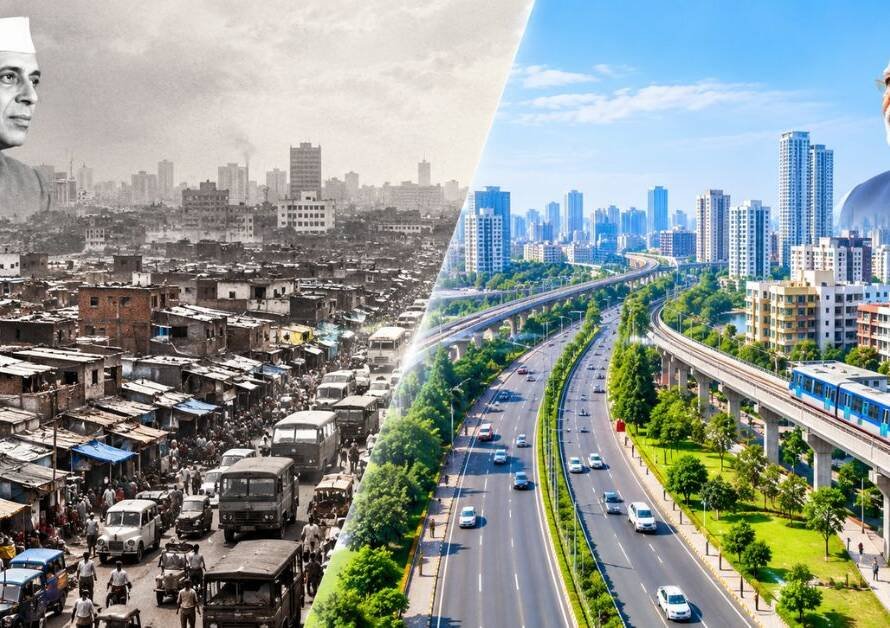
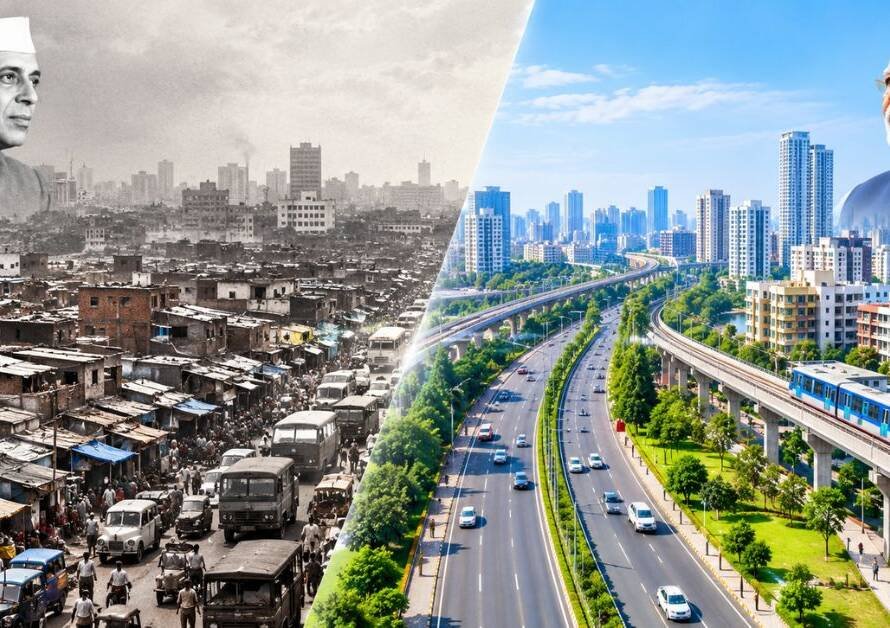
- It contrasts a “Legacy of Betrayal”—defined by three generations of Nehru-Gandhi dynasticism, institutional capture, and the prioritization of radical ideologies—against the “Era of Purification” initiated in 2014 under Prime Minister Narendra Modi.
- The narrative highlights how the current leadership is utilizing the eternal principles of Sanatana Dharma to dismantle the “Lutyens Ecosystem” and build a resilient, connected, and morally grounded India through mega-projects like Sagarmala and Vande Bharat.
- Ultimately, it presents a roadmap for India to lead a war-torn world as a Vishvaguru by shunning the religious, geopolitical, and economic greed that threatens global annihilation.
Resurgence of Bharat in the Shadow of Betrayal
I. The Foundation of Betrayal: The Nehru-Azad Axis (1947–1964)
The initial decades of independent India were marked by a systematic attempt to disconnect the nation from its civilizational roots.
- The Educational Subversion: By appointing Maulana Abul Kalam Azad—a man born in Mecca and educated in traditional Islamic theology—as India’s first Education Minister, Jawaharlal Nehru initiated a “Grand Whitewashing.” Critics argue that Indian history was rewritten to glorify invaders while relegating the valor of Hindu kings to the footnotes.
- The Lutyens Aristocracy: This era saw the birth of the “loyalist bureaucracy.” Positions were awarded based on ideological alignment rather than merit. Figures like K.G. Saiyidain were elevated to ensure that the “Idea of India” remained a secular construct divorced from Sanatana values.
- Territorial Compromise: The foundational “betrayal” included the mishandling of Kashmir in 1948 and the 1962 border failures, where vast tracts of sacred Indian land were lost due to a lack of strategic foresight and a naive reliance on “Panchsheel” with expansionist neighbors.
II. Consolidation and Institutional Capture (1966–1989)
Under Indira and Rajiv Gandhi, the Congress party shifted from ideological subversion to absolute institutional control and blatant appeasement.
- The “Committed” State: Indira Gandhi established a judiciary and bureaucracy committed not to the Constitution, but to the “Family.” This period saw the normalization of corruption as a tool for political survival.
- The Genesis of Vote-Bank Politics: To maintain power, the dynasty institutionalized minority appeasement. This reached its zenith under Rajiv Gandhi with the Shah Bano case (1986), where the Supreme Court’s judgment was overturned to satisfy radical religious orthodoxy, signaling that the vote-bank outweighed the law of the land.
- Defense Scandals: The Bofors scam proved that even national security was not exempt from the “dynastic loot,” creating a culture where middlemen thrived at the expense of the Indian soldier.
III. The Decade of Decay: The UPA and the “Fragile Five” (2004–2014)
The fourth generation of dynastic control, led by Sonia and Rahul Gandhi, pushed India to the brink of economic and social collapse.
- The Shadow Government: The National Advisory Council (NAC) became a parallel, unconstitutional power center. It promoted “Breaking India” forces, often siding with Naxals and left-wing extremists under the guise of activism.
- The “Fragile Five” Economy: Rampant corruption (2G, Coal-gate, CWG) led to policy paralysis. By 2013, India was globally mocked as one of the “Fragile Five” economies, characterized by double-digit inflation and a massive fiscal deficit.
- Demographic Invasion: High-ranking officials like Syeda Hameed allegedly facilitated a “theology of open borders,” viewing illegal immigration not as a security threat, but as a demographic tool for permanent power.
IV. The Great Purification: The Modi Era (2014–Present)
Since 2014, Prime Minister Narendra Modi has undertaken a mission of “Shuddhikaran” (purification) to restore the nation’s pride and potential.
- Dismantling the Loot: Through the JAM Trinity (Jan Dhan-Aadhaar-Mobile) and Direct Benefit Transfer (DBT), the government has eliminated the middlemen who bled the country for 70 years. Over ₹34 lakh crore has been sent directly to the poor, ending the dynastic “leakage” of funds.
- National Security First: The abrogation of Article 370 and the conduct of Surgical Strikes signaled an end to the era of defensive hesitation. India now pursues a “Zero Tolerance” policy toward cross-border terror and jihadi ideologies.
- Sanatana as Governance: The administration operates on the principle of Antyodaya (serving the last person). The construction of the Ram Mandir in Ayodhya and the rejuvenation of the Kashi Vishwanath Corridor are not just religious acts but symbols of a nation reclaiming its soul.
V. Building the Infrastructure of a Superpower
To become a global player, India is replacing the “Architecture of Betrayal” with a physical and economic network that is indigenous and efficient.
- Sagarmala Project: This is the garland of maritime prosperity. By modernizing ports and linking them to industrial clusters, India is reducing logistics costs and reclaiming its historical status as a global trading hub.
- Parvatmala: For the first time, the “ignored” mountain regions are being integrated via advanced ropeways and all-weather tunnels, ensuring that the geography of the Himalayas is a strategic asset, not a liability.
- Vande Bharat & Mega-Bridges: The indigenous Vande Bharat trains represent the velocity of a new India. Combined with engineering marvels like the Chenab Bridge and the Atal Setu, the nation is now physically unified in a way that facilitates the rapid movement of goods and ideas.
- Waterways: Reviving ancient river routes as National Waterways has provided a sustainable and cheap alternative for cargo, connecting the heartland to the coast and the global economy.
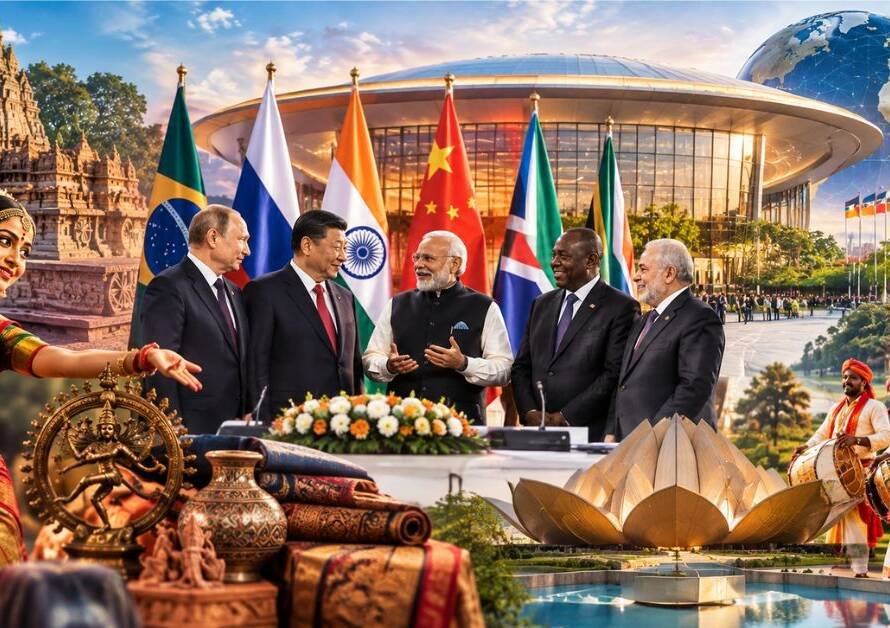
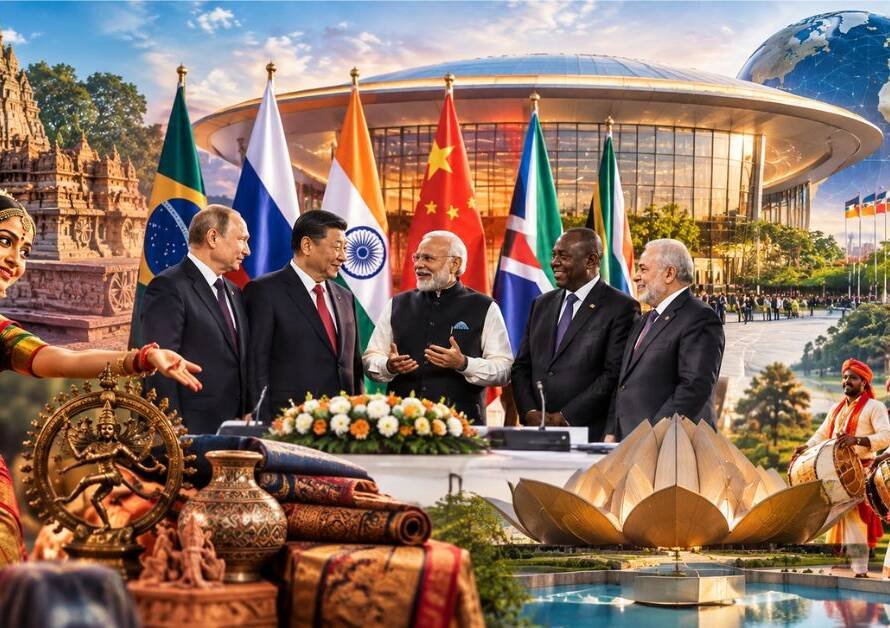
VI. The Global Vishvaguru: Leading a War-Torn World
The world today is infested by radicalism, extremism, and the “Khilafat” mindset that seeks to destroy civilizational diversity. India’s role as a Vishvaguru is to lead the world away from the edge of nuclear annihilation.
- Shunning Religious Expansionism: India’s message is clear: global peace cannot be achieved until the world shuns the “expansive” problems of religious and ideological greed. The theology of conquest must be replaced by the philosophy of Vasudhaiva Kutumbakam (The World is One Family).
- Rejecting Geopolitical Greed: In a world where selfish economic interests often protect radical state sponsors, India demands a moral realignment. National welfare must not override global stability.
- The Middle Path: By maintaining Strategic Autonomy, India acts as the moral anchor of the globe. It refuses to join military blocs that fuel conflict, instead promoting “Dharmic Diplomacy” where dialogue replaces destruction.
VII. The Road to Amrit Kaal 2047
The next 25 years are the “Auspicious Time” to complete the transformation into a fully developed nation (Viksit Bharat).
- Pancha Pran (Five Resolves): The roadmap includes a total decolonization of the mind, taking pride in our roots, and a commitment to duty (Kartavya).
- Global Harmony: By 2047, India aims to be a nation that not only provides the world with digital and physical solutions but also spiritual guidance.
- Purified Politics: The mission continues to ensure that dynasticism and “loot” never again compromise India’s sovereignty. The era of the “Family First” is over; the era of “Nation First” is the eternal path forward.
🇮🇳Jai Bharat, Vandematram 🇮🇳
Read our previous blogs 👉 Click here
Join us on Arattai 👉 Click here
👉Join Our Channels👈