Summary
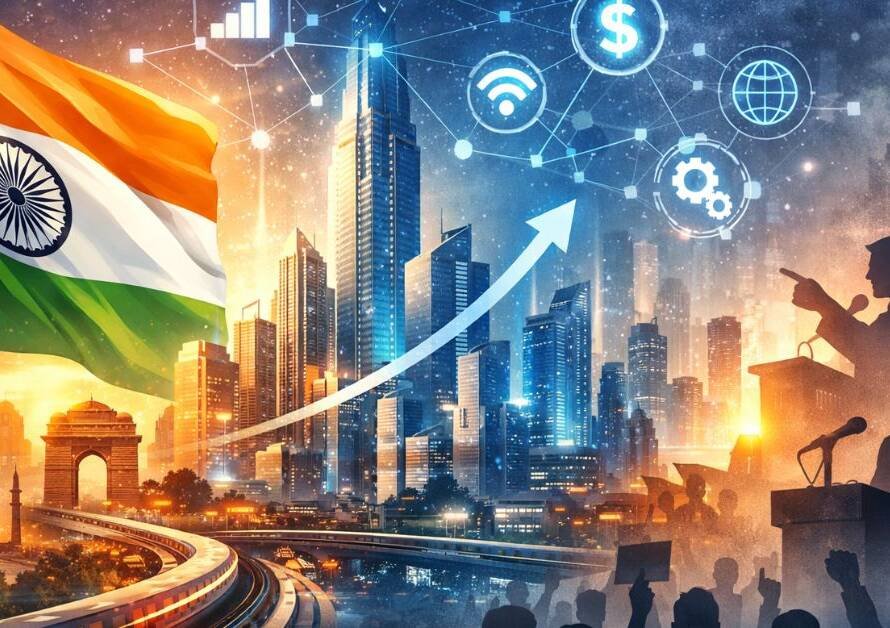
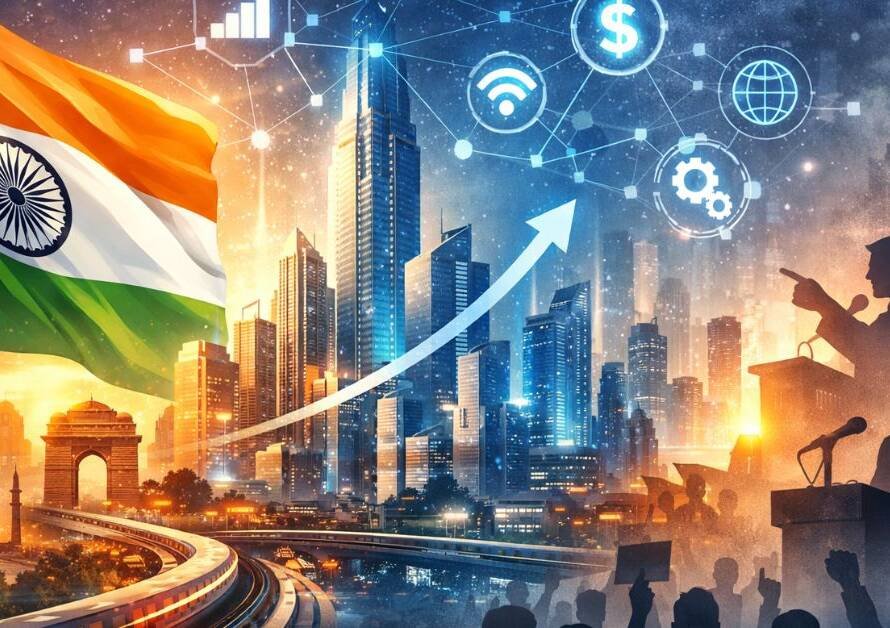
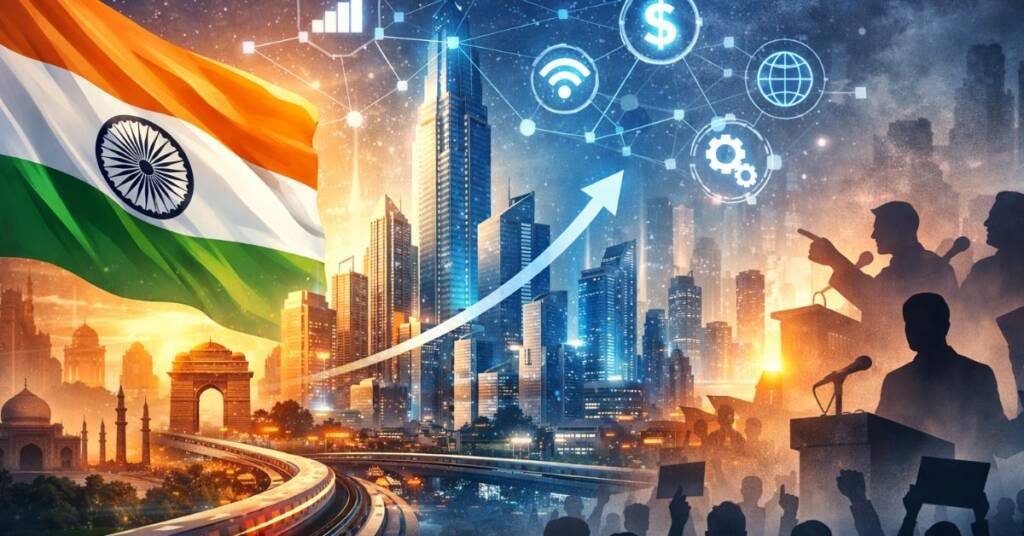
- India today stands at a historic turning point where it is emerging as a rapidly rising economic, strategic, and global power. In recent years, the country has witnessed remarkable progress in areas such as infrastructure development, digital transformation, social welfare delivery, and global diplomacy.
- However, every major transformation also brings resistance. Many observers argue that a network of political and ideological actors is attempting to spread misleading narratives through various platforms in order to confuse the public.
- The objective, according to critics, is not merely to oppose the government but also to undermine national institutions and slow down the country’s progress.
- At such a time, it becomes important for citizens to evaluate developments based on facts, historical context, and measurable outcomes rather than narratives driven by political interests.
The Direction of New India and the Challenge to National Interest
1️⃣ The Role of Criticism and Accountability in Democracy
- Criticism is an essential element of democracy.
Key features of a healthy democratic system include:
- Debate over government policies
- Opposition parties raising questions and scrutiny
- Media and civil society ensuring transparency
- Citizens making informed electoral choices
However, when criticism moves away from factual debate and becomes dominated by misinformation or exaggerated claims, it weakens the quality of democratic dialogue.
- It is therefore important to distinguish between constructive criticism and deliberate disinformation.
2️⃣ India’s Development and Transformation
- In recent years, India has witnessed significant progress across multiple sectors.
Economic Transformation
- India is emerging as one of the world’s fastest-growing major economies
- The digital payments ecosystem has achieved global recognition
- Startups and innovation ecosystems are expanding rapidly
Infrastructure Development
- Expansion of highways, expressways, and railway networks
- Improved electricity and road connectivity in rural regions
- Modernization of airports, logistics systems, and ports
Social Welfare
- Direct Benefit Transfer systems increasing transparency
- Expansion of healthcare, housing, and sanitation programs
- Greater opportunities for women and youth
These developments form part of India’s long-term strategy for inclusive growth.
3️⃣ India’s Rising Global Standing
Today India:
- Plays an increasingly active role in global diplomacy
- Advocates for the interests of developing nations
- Maintains balanced strategic partnerships in a multipolar world
India’s rising global reputation reflects both economic growth and strategic confidence.
4️⃣ Political Narratives and Information Campaigns
Some political and ideological groups continue to project narratives that:
- Downplay national achievements
- Question the credibility of institutions
- Attempt to generate dissatisfaction among citizens
>Critics argue that such narratives may sometimes be aimed at creating conditions that help restore older political structures that dominated governance for decades.
According to this perspective:
- Certain entrenched political networks may feel threatened by structural reforms
- Established influence systems may weaken when governance models change
- As a result, political confrontation becomes more intense
5️⃣ Foreign Interests and Global Competition
- India’s growing economic and geopolitical influence has also changed global dynamics.
Some analysts point out that:
- Rising powers often face increased international competition
- Foreign interest groups may attempt to influence internal political narratives
- Information warfare has become a feature of modern geopolitics
For this reason, maintaining balanced and fact-based public discourse becomes even more important.
6️⃣ The Political Maturity of Indian Voters
- India’s greatest strength is its citizens.
Today’s voters:
- Access information from multiple sources
- Compare governance performance across governments
- Distinguish between propaganda and actual policy outcomes
This growing political awareness has strengthened the maturity of India’s democratic system.
7️⃣ Nation Building as a Collective Responsibility
- Nation building cannot be achieved by any single government or leader alone.
It requires participation from:
- Government institutions
- Responsible opposition parties
- Independent institutions
- Civil society organizations
- Informed and engaged citizens
When society prioritizes development and national interest, democracy becomes stronger and more stable.
India is currently undergoing a transformative phase. Progress in development, global diplomacy, and self-reliance is shaping a new national trajectory.
- At the same time, political competition and narrative conflicts are natural in any democracy.
What matters most is:
- fact-based debate,
- respect for democratic institutions, and
- prioritizing national interest above political rivalry.
Ultimately, India’s direction will be determined by its citizens—an increasingly informed and confident population committed to building a stronger and more prosperous nation.
🇮🇳 Jai Bharat, Vandematram 🇮🇳
Read our previous blogs 👉 Click here
Join us on Arattai 👉 Click here
👉Join Our Channels 👈