Summary
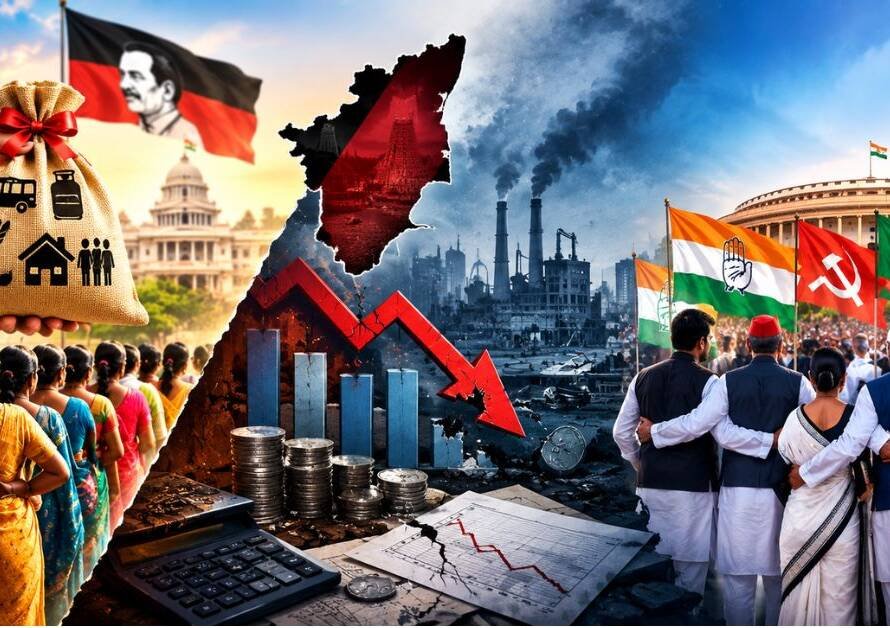
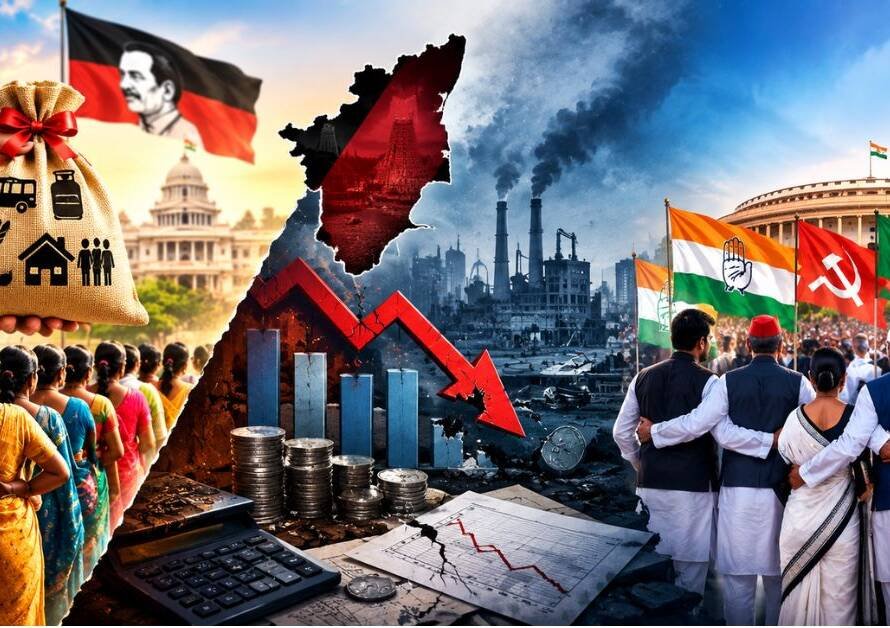
- This extensive political narrative provides a detailed critique of the shifting political landscape in Uttar Pradesh as the state approaches the 2027 Assembly elections. It analyzes recent controversial statements by Akhilesh Yadav and other key leaders of the Thugbandhan (opposition alliance), reframing their warnings of an “electoral doomsday” as defensive confessions of psychological defeat.
- The piece explores how the foundational brand of regional “Samajwad” (Socialism), along with its structural partner, the Congress, faces a crisis of political irrelevance due to a legacy of governance failures.
- By exploring historical problems like state-sanctioned lawlessness, entrenched institutional corruption, and unfulfilled financial schemes like the Khata-Khat model, this commentary highlights a fundamental shift in voter behavior across the state.
- Moving away from caste manipulation and transactional fear-mongering, the electorate is now demanding a transparent report card from sitting legislators, emphasizing performance, law and order, and long-term economic growth over temporary alliances.
Demanding Accountability Over Deceptive Alliances
1. The Continuous Cycle of Democracy and the Terminal Decline of Regional Socialism
Elections are the lifeblood of Indian democracy, operating as an ongoing, cyclical process of public accountability. Local body polls, panchayat contests, state assembly face-offs, and national general elections will continue to take place across the political calendar. However, the upcoming 2027 Uttar Pradesh Assembly elections represent a distinct ideological crossroad.
- The Rejection of Repetitive Structural Failure: No aspirational society runs indefinitely behind a political model defined by continuous failure. The traditional brand of socialism practiced in Uttar Pradesh has increasingly detached itself from the realities of modern governance, infrastructure development, and human capital development, alienating the base.
- The Final Blow to an Outdated Ideology: The 2027 elections are positioned to act as a definitive historical endpoint for this legacy framework. Beyond this point, the organizational and ideological strength of the Samajwadi Party may no longer be viable enough to anchor a credible opposition space in state politics.
- The Crisis of Mass Democratic Acceptance: Today, the top leadership faces a difficult question from its own cadre: why has the democratic electorate consistently refused to accept its governance model as a stable alternative for the state’s progress despite multiple rebrandings and new masks?
2. Preemptive Surrender: Deciphering the Psychology of “Electoral Doomsdaying”
Recent public statements from the opposition leadership reveal a deep-seated panic and desperation, exposing an awareness that grassroots realities have shifted entirely toward an institutional development model and solid security framework.
Psychological Analysis: Conceding the battlefield before polling begins has become the destiny of the opposition. Deflective rhetoric claiming that upcoming polls could be the “last free elections” functions less like a strategic challenge and more like an early, psychological admission of an impending defeat. By pre-emptively blaming the democratic system, the leadership attempts to build a shield against personal accountability for a crushing loss.
- Injecting Panic and Anxiety into the Cadre: Instead of building confidence, this defensive and negative narrative fills the party’s rank-and-file workers with anxiety and deep despair. Rather than leading from the front with a constructive blueprint, the leadership is using fear to prepare its support base for an inevitable electoral decline.
- Dropping Political Weapons Prematurely: Laying down intellectual and strategic weapons so far ahead of the actual campaign points to severe organizational weakness. It signals to the voter that the opposition lacks the long-term vision and popular support needed to mount a sustainable challenge.
3. The Evasion of Legislative Performance: The Missing Report Cards
Before asking for a fresh mandate in 2027, the regional leadership and its alliance partners must answer for the significant legislative representation they currently command following the 2024 national elections.
- The Mandate of 37 MPs and 122 MLAs: The people of Uttar Pradesh are waiting to evaluate the performance of the opposition’s sitting representatives. The electorate is demanding a clear, data-driven report card outlining what these 37 Members of Parliament and 122 Members of the Legislative Assembly have actually delivered for the development of their respective constituencies.
- Aggressive Rhetoric as a Diversionary Tactic: The recent shift toward polarizing attacks on social and religious institutions appears to be a calculated attempt to divert public attention. By creating artificial controversies, the party hopes to avoid hard questions about the performance, local attendance, and development fund spending of its elected legislators.
4. The Shared Crisis of the Alliance: Unmasking the Congress and the “Thugbandhan”
The structural rot facing the opposition is not restricted to a single regional entity; it runs through the entire architecture of the Congress and the broader opposition front (Thugbandhan).
- A History of Institutional Abuse: The Congress and its regional partners share an identical legacy of treating state machinery as an instrument for dynastic preservation and selective patronage. During their previous periods of influence, public institutions were routinely compromised, sidelining administrative transparency to serve partisan survival.
- The Erosion of Political Relevance: The current state of political irrelevance and existential crisis facing the alliance is a direct consequence of this historical behavior. Voters are increasingly unwilling to return to an era where central and state policies were dictated by institutional manipulation, nepotism, and systemic governance deficits.
5. The Historical Memory of Lawlessness and Economic Malfeasance
The electorate’s rejection of the alliance model is anchored in a vivid and terrifying historical memory of the severe law and order breakdowns and massive financial corruption that marked their previous governance terms.
- The Surrender to Criminal Syndicates: Past regimes are remembered for a complete breakdown of the state’s security apparatus. Law enforcement was systematically constrained to protect politically aligned criminal networks, extortion syndicates, and local mafias.
- The Ransom Economy vs. Safe Infrastructure: Under those administrations, an unstable security environment paralyzed local commerce and discouraged external industrial investment. The state’s transition to a strict, rule-based security model that actively neutralizes these mafias has made the historical chaos of the alliance a primary vulnerability.
- Embedded Institutional Corruption: From local land-grabbing scandals and illegal occupations under regional rule to massive national infrastructure leaks during Congress-led eras, corruption functioned as an embedded feature of the administration. Because public funds were systematically diverted by middlemen, these parties lack a track record of transparent, direct welfare delivery (Direct Benefit Transfer) to present to modern voters.
6. Populism Over Fiscal Reality: The Failure of Transactional Lures
The political strategy of the alliance continues to rely on short-term populist lures and manufactured identity anxieties that the modern, aspirational voter has increasingly decoded.
- The Credibility Deficit of the “Khata-Khat” Model: The deployment of unrealistic financial promises, such as the Khata-Khat cash-transfer scheme, was designed to buy immediate support through unsustainable fiscal shortcuts. Aspirational voters realize that massive, unbudgeted cash promises without a clear economic framework threaten long-term state development, employment generation, and fiscal stability.
- The Expiration of Fear-Based Campaigns: Relying on fear-based narratives—such as claims that constitutional safeguards or reservation systems would be dismantled—works for only a single election cycle. Once those deadlines pass and those claims prove completely false, the strategy backfires, exposing the alliance’s lack of a substantive development agenda.
The Transition Toward Institutional Politics
- The political ecosystem of Uttar Pradesh has evolved past the era of emotional exploitation, caste fragmentation, and transactional populist alliances. The upcoming 2027 Assembly elections will judge political entities not on their capacity to craft clever slogans or generate institutional panic, but on their verifiable contributions to industrial growth, robust infrastructure, civic security, and transparent administration.
- For the Samajwadi Party-Congress alliance, evading accountability for past governance failures and the poor performance of their sitting legislators is no longer an option.
- The electorate is prepared to deliver a clear and historic verdict, signaling that the era of relying on structural deceit instead of grassroots performance has reached its natural end.
🇮🇳 Jai Bharat, Vandematram 🇮🇳
Read our previous blogs 👉 Click here
Join us on Arattai 👉 Click here
👉Join Our Channels👈