Summary
- This extensive analysis evaluates a historic turning point in the flow of global capital and talent, triggered by recent geopolitical instability, missile strikes, and rising insecurity in the Middle East (Gulf countries).
- The article illustrates how the Gulf’s half-century-old development model—built on the promise of ‘tax-free prosperity and impenetrable security’—has fractured in just a few months.
- Consequently, nearly one million highly skilled Indian professionals and business owners are returning home. This ‘Reverse Brain Drain’ is not merely a displacement of people, but a massive influx of intellect and capital.
- Moving away from congested tier-1 metropolitan hubs, this movement is becoming the new engine for the economic transformation of Tier-2 and Tier-3 cities, driving long-term nation-building.
Impact of Gulf Crisis and Global Instability
1. The Shattering of Secure Horizons and a New Geography
- History bears witness that whenever geopolitical equations shift in one part of the world, global capital and human talent invariably seek a new, secure, and stable haven.
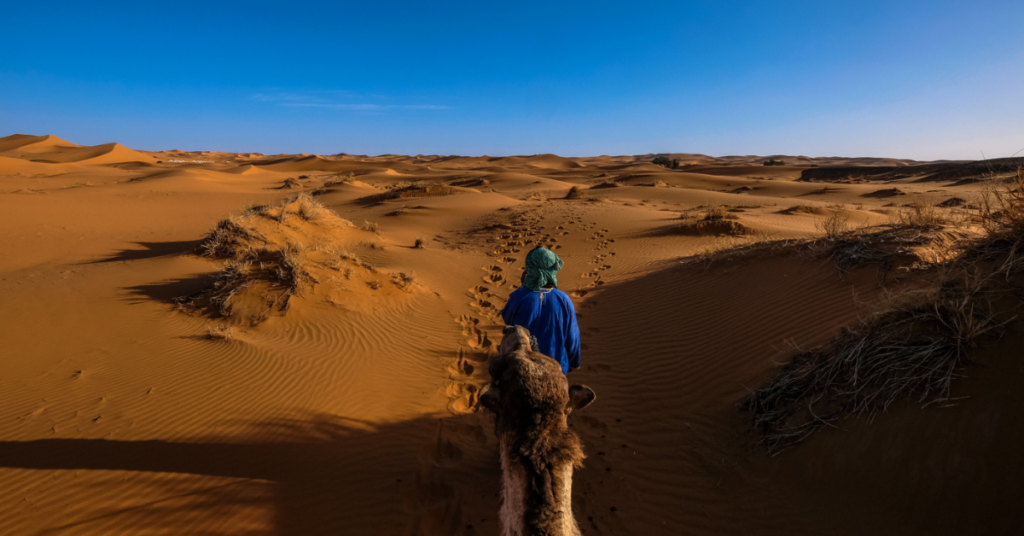
- For the past fifty years, the Middle East—particularly the Gulf nations—served as the premier destination for professionals worldwide, offering wealth, modernity, and an upscale standard of living. The gleaming cities of concrete and glass erected upon the desert floor were marketed globally with the assurance that their security shield was absolute.
- However, recent regional and global conflicts have completely dismantled this half-century-old delusion. This analysis goes beyond documenting an immediate conflict; it records a massive economic and demographic shift moving from the Gulf straight into the heart of India’s emerging cities.
- When the guarantee of basic safety falls into jeopardy, oil barrels and sovereign financial funds can no longer sustain an economy over the long haul.
2. The Crisis of Trust: Infrastructure vs. Psychological Insecurity
The entire economic and social framework of the Gulf nations relied on a very simple yet powerful consensus: millions of foreign expatriates would continuously arrive, offer their skills in a tax-free ecosystem, invest heavily in local real estate and businesses, and materialize the grand visions of the region’s leadership. This arrangement operated seamlessly for decades, but modern missile and drone technologies have collapsed geographical distances, shaking the foundations of this entire model.
- The Insecurity of ‘Safest’ Cities: When escalating regional tensions brought missile threats directly into the airspace of premier financial hubs like Abu Dhabi, Riyadh, Manama, Kuwait City, and Doha, the global community and resident expats realized that no corner remains truly insulated in modern warfare.
- Physical vs. Psychological Reconstruction: It is a fundamental rule of economics and engineering that a damaged refinery can be rebuilt in three years, and ruptured pipelines can be relaid through a few weeks of intensive labor. However, once missiles begin flashing across the sky and people evacuate out of fear for their lives, rebuilding psychological trust becomes one of the hardest challenges in the world.
- The Damage to Global Brand Value: A recent report by a prominent research council funded out of Qatar openly admits that the Middle East’s international image and strategic brand value have suffered a severe blow that will take decades to repair. The Gulf’s true deficit is not measured in the financial cost of burning oil wells, but in the permanent erosion of human trust.
3. The Historic Dawn of ‘Reverse Brain Drain’: A 12-Year Transformation
For generations, India wrestled with the challenge of ‘Brain Drain,’ watching its brightest minds migrate overseas for higher education and lucrative paychecks. Today, the global paradigm has reversed this historical current into a powerful ‘Reverse Brain Drain.’
- The Manufacturing and Industrial Revolution: This reverse migration is not a sudden anomaly triggered purely by conflict. Over the past 12 years, systematic and revolutionary upgrades to India’s manufacturing, industrial, and policy infrastructure have opened boundless avenues of growth right within the country.
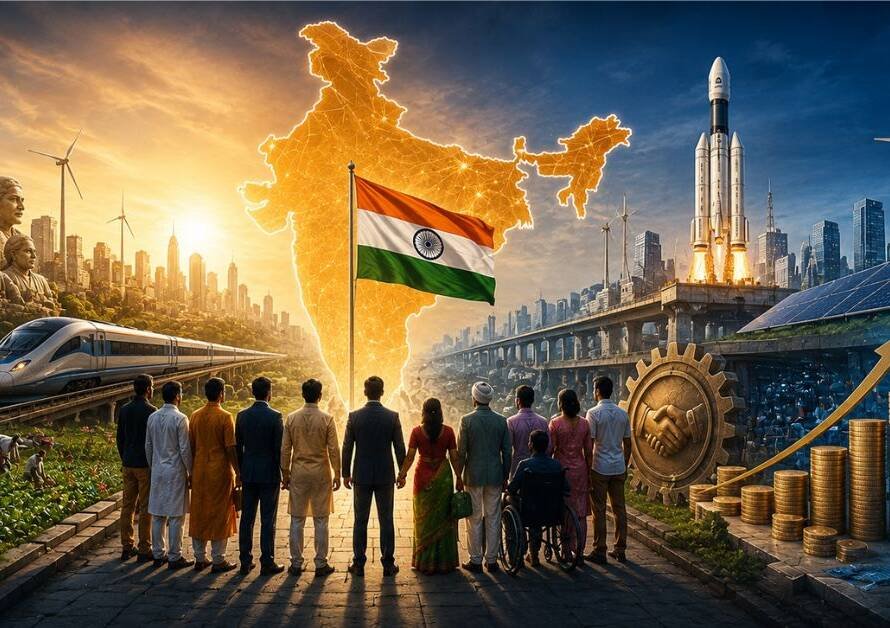
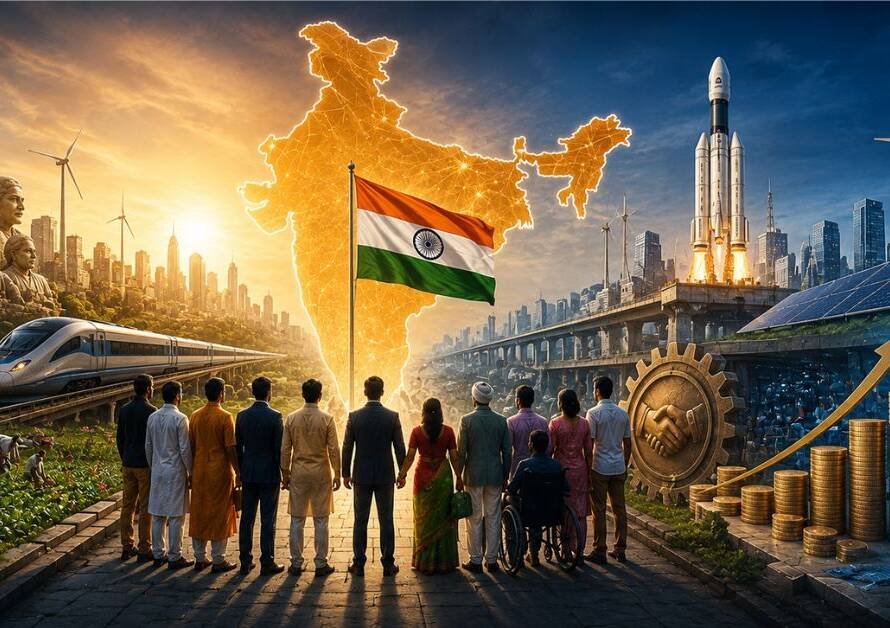
- Strong Political Will and Future Confidence: The global Indian diaspora is looking closely at the nation’s strong political will and consistent policy framework with immense confidence. They see a future where India stands out as an economically secure and progressive powerhouse.
- An Impending Exodus from Developed Nations: The repatriation of talent from the Gulf is merely the opening chapter. Given the accelerating momentum of the Indian economy, it will not be long before a massive Reverse Brain Drain begins from the United States (US) and other developed Western countries. High-caliber global Indian talent is now fully prepared to bring its international expertise and accumulated wealth back home, investing directly into the soil to secure India’s position as a global superpower.
4. Transforming the Indian Landscape: The Rise of Tier-2 and Tier-3 Cities
This reverse migration has sparked a highly innovative and fascinating transformation in India’s urbanization patterns, shifting away from conventional economic trajectories.
- The Evolution of Emerging Cities: The affluent and experienced professionals returning to India are bypassing congested tier-1 metros like Delhi, Mumbai, Bengaluru, or Kolkata, which are already saturated with infrastructure bottlenecks. Instead, they are setting up their bases in rapidly growing tier-2 and tier-3 cities such as Lucknow, Jaipur, Kochi, Chandigarh, Indore, Surat, and Coimbatore.
- An Unprecedented Real Estate Boom: Driven by this new demographic trend, the demand for premium residential and commercial properties in these emerging cities has skyrocketed, charting an impressive 14% spike in property valuations.
- Igniting Local Entrepreneurship: Rather than simply parking their capital in real estate, these returnees are pioneering cutting-edge startups, setting up world-class healthcare facilities, establishing modern educational institutions, and building local manufacturing units. This deployment is generating premium, high-value employment opportunities right across rural and semi-urban landscapes.
- The Changing Equation of Remittances: Simultaneously, the Indian banking and financial sectors are strategically recalibrating for a potential dip in recurring foreign remittances that historically sustained India’s foreign exchange reserves from the Gulf. However, economists project that this short-term gap will be effortlessly eclipsed by long-term domestic investments and direct asset creation, as both the capital and the minds that generate it are now staying within India.
5. A Secure and Sovereign Renaissance
- Global oil supply chains and drilling infrastructure can be technically revived within weeks or months, but the strategic, mental, and social trust that vanishes into the smoke of conflict cannot be easily recovered.
- The highly skilled expatriates and Indian professionals who spent half a century pouring their sweat and blood into developing an unstable foreign landscape are now nourishing their own homeland’s economic and technological soil.
- Amidst the geopolitical risks hovering over the Gulf skies, the definitive destination for global talent, intellect, and wealth has shifted away from the desert heat and the shadow of war.
- It has found its anchor in a fast-emerging, stable, resilient, and secure India. This shift is poised to write the golden chapter of a rising global power.
🇮🇳 Jai Bharat, Vandematram 🇮🇳
Read our previous blogs 👉 Click here
Join us on Arattai 👉 Click here
👉Join Our Channels👈