Summary:
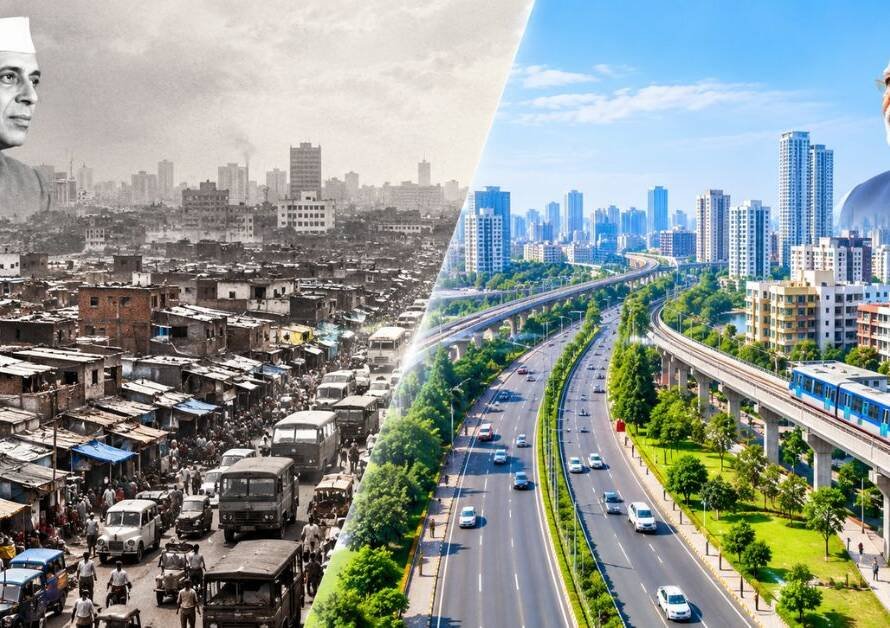
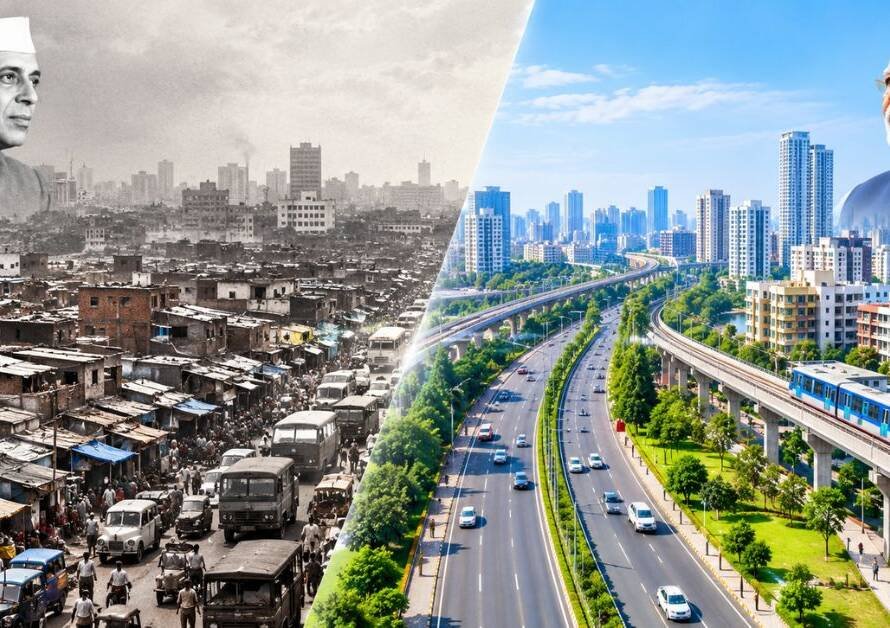
- This comprehensive narrative explores India’s massive infrastructure pivot—specifically the Sagarmala and Bharatmala initiatives—as the primary engine for the “Make in India” mission.
- By systematically reducing logistics costs from 13% to a world-class 7.5% by 2029, India is leveraging its affordable manpower and manufacturing scale to outcompete global players like China and Germany.
- This integrated “Gati Shakti” approach is not just building roads and ports; it is constructing the backbone of a $5 trillion economy and a global export powerhouse.
India’s Blueprint for Global Dominance
1. The Strategic “Why”: Beyond Brick and Mortar
For decades, India was viewed primarily as a “service economy” or a “vast consumer market” for foreign goods. The transition to a global manufacturing hub was historically throttled by one invisible enemy: Inefficient Logistics. The Indian government’s current obsession with infrastructure—represented by the “Malas” (Sagarmala, Bharatmala, Parvatmala)—is a calculated move to remove this friction. This is the foundation upon which the Make in India dream is being realized.
- The Global Arbitrage: India possesses an unmatched advantage in affordable manpower and a young demographic. However, if the cost of moving a product from a factory in Haryana to a port in Gujarat is higher than the cost of shipping it from Shanghai to Mumbai, the labor advantage is neutralized.
- The Infrastructure Solution: By pouring trillions into multimodal connectivity, India is ensuring that its labor cost advantage is finally reflected in the final “Free on Board” (FOB) price of its exports.
2. Crushing the Logistics Barrier: The 7.5% Target
The most critical metric in global trade isn’t just the cost of production; it is the Logistics Cost as a percentage of GDP.
The Comparative Landscape:
- India (2014 Baseline): 13–14%. At this rate, an Indian-made gadget costing ₹100 actually cost ₹113 by the time it reached a global buyer.
- China: ~9%. Their aggressive infrastructure push in the 2000s allowed them to dominate global markets by making their logistics lean.
- Global Average: 8%. The standard for any nation aspiring to be an export leader.
- Germany: 6%. The gold standard of efficiency.
India’s Roadmap to 2029:
- 2027 Goal: 9%. Leveling the playing field with China.
- 2029 Goal: 7.5%. Surpassing the global average and positioning India as the most cost-efficient manufacturing destination in the democratic world.
3. Sagarmala: Turning the Coastline into an Economic Gateway
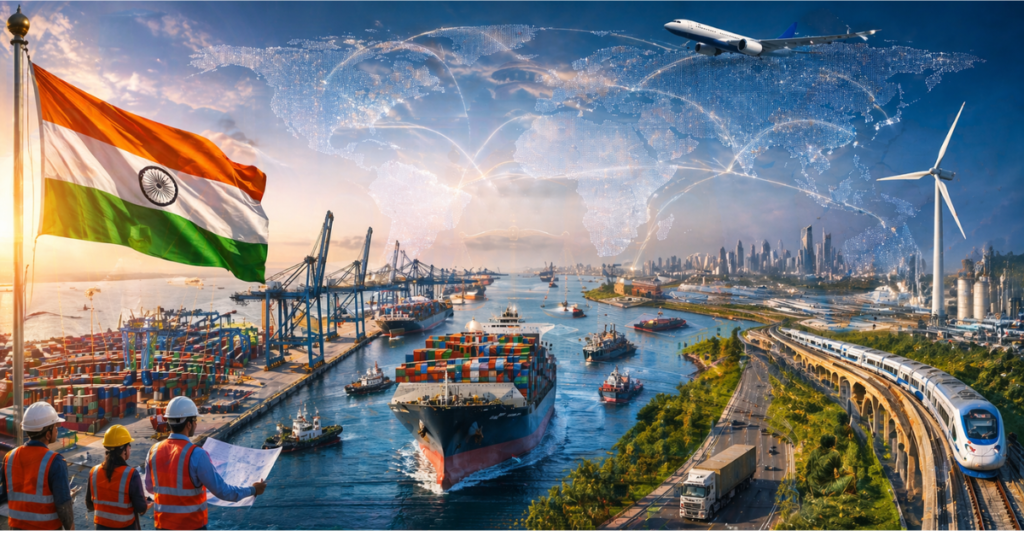
The Sagarmala Project is the crown jewel of this strategy. With a coastline exceeding 7,500 km, India is uniquely positioned to lead “Port-Led Development.”
- Modernizing the Gates: Major and non-major ports are being digitized and deepened to handle “Mega-Vessels.” This reduces “Turnaround Time” (the time a ship spends in port), which directly slashes shipping costs.
- Port-Proximate Manufacturing (PPM): The government is establishing Coastal Economic Zones (CEZs). By placing factories within a few kilometers of the docks, the internal transport cost is virtually eliminated.
- Last-Mile Rail & Road: Sagarmala isn’t just about the sea; it includes over 400 projects aimed at connecting ports to the industrial hinterland via dedicated rail lines and heavy-duty highways.
4. The Synergy of “Malas”: A Unified Grid
India’s strategy is a “Garland of Progress,” where different projects feed into one another to create a seamless supply chain.
- Bharatmala: Constructing over 35,000 km of high-speed corridors. These are the “arteries” that allow trucks to move at 80–100 km/h consistently, doubling the distance covered per day compared to 2014 levels.
- Dedicated Freight Corridors (DFC): By creating separate tracks for cargo trains, India is removing the “passenger-train priority” bottleneck. This ensures that raw materials reach factories and finished goods reach ports with Swiss-watch precision.
- Multi-Modal Logistics Parks (MMLPs): These are state-of-the-art hubs where rail, road, and air cargo meet. They allow for “containerization,” reducing break-bulk losses and handling costs.
- National Waterways: Utilizing rivers for cargo is the cheapest form of transport. By linking rivers, India is enabling low-cost movement for bulk commodities like coal, steel, and cement.
5. Augmenting “Make in India”: The Volume Game
Global players choose manufacturing hubs based on Reliability, Scale, and Cost. India is now checking all three boxes:
- Scalability: With easy availability of land near corridors and affordable manpower, industries can set up “Mega-Factories” (like the mobile manufacturing clusters in Noida and Tamil Nadu).
- Volume Advantage: Better infrastructure allows for “Just-in-Time” manufacturing. When you can move parts and products fast, you can produce in massive volumes without worrying about inventory pile-ups.
- Global Competition: When an Indian exporter can offer a product at $107 (due to 7% logistics) while a competitor offers it at $110, the global buyer will shift billions in orders to India. This is how India will achieve its $2 Trillion Export Target by 2030.
6. The Socio-Economic Explosion: Beyond the Balance Sheet
The impact of this infrastructure goes far beyond trade figures. It is a catalyst for a massive domestic transformation.
- Job Creation at Every Level: While the corridors employ millions in construction, the real magic happens in the “ancillary economy.”
- New Urban Centers: Along these highways and ports, we see the rise of Integrated Townships. Where there is a logistics hub, there is a need for housing, schools, hospitals, malls, and banks.
- Boosting Rural Economy: Farmers can now transport perishable goods to ports or distant cities in refrigerated trucks (Cold Chains) via Bharatmala, significantly increasing their income and reducing wastage.
- Energy Security: Faster movement of coal and the development of gas grids along these corridors ensure that “Make in India” factories have 24/7 uninterrupted power.
7. The Geopolitical Masterstroke
- This is the narrative that “enemies” and competitors find difficult to digest. For years, the world relied on a “Single Source” supply chain. India is now presenting itself as the most efficient, democratic alternative.
- By integrating the sea (Sagarmala), land (Bharatmala), and air, India is creating an ecosystem that is “un-bypassable.”
- The Middle East-Europe Economic Corridor (IMEC) will further plug India’s Sagarmala ports into the heart of global trade, making India the central pier of the world’s economic bridge.
The 2024–2029 Vision
- The current term of the government is focused on “Execution at Scale.” The goal is clear: by the end of this decade, an Indian manufacturer will be as efficient as a German one and more cost-effective than a Chinese one.
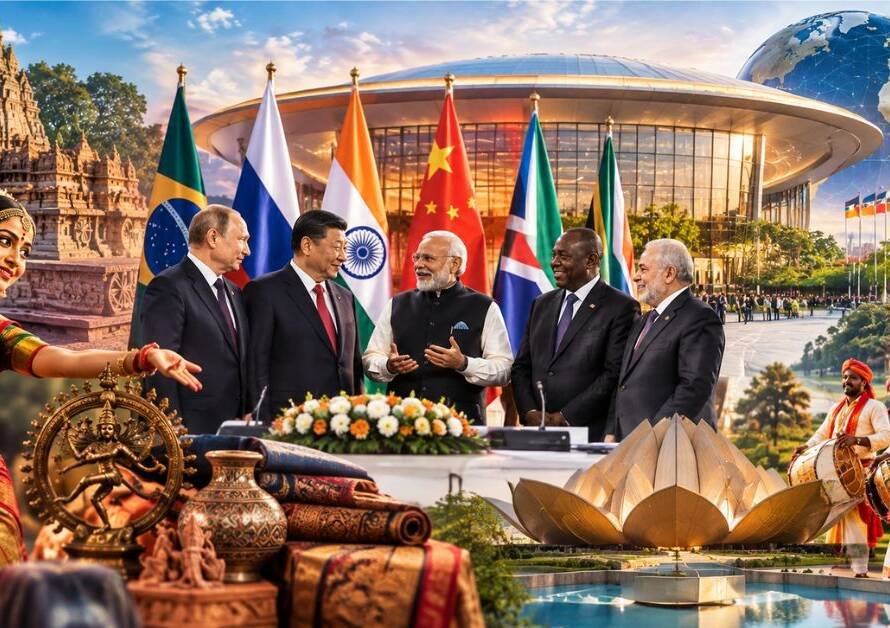
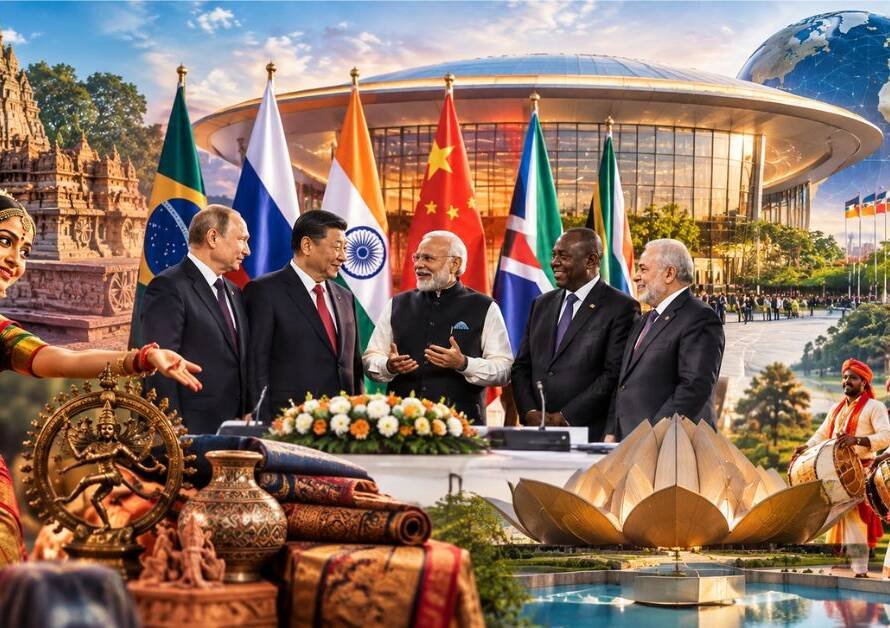
- With affordable manpower, massive manufacturing volumes, and world-class logistics, India is not just participating in the global economy—it is preparing to lead it. The “Malas” are not just roads and ports; they are the strings that bind a rising superpower together.
🇮🇳 Jai Bharat, Vandematram 🇮🇳
Read our previous blogs 👉 Click here
Join us on Arattai 👉 Click here
👉Join Our Channels👈