Summary
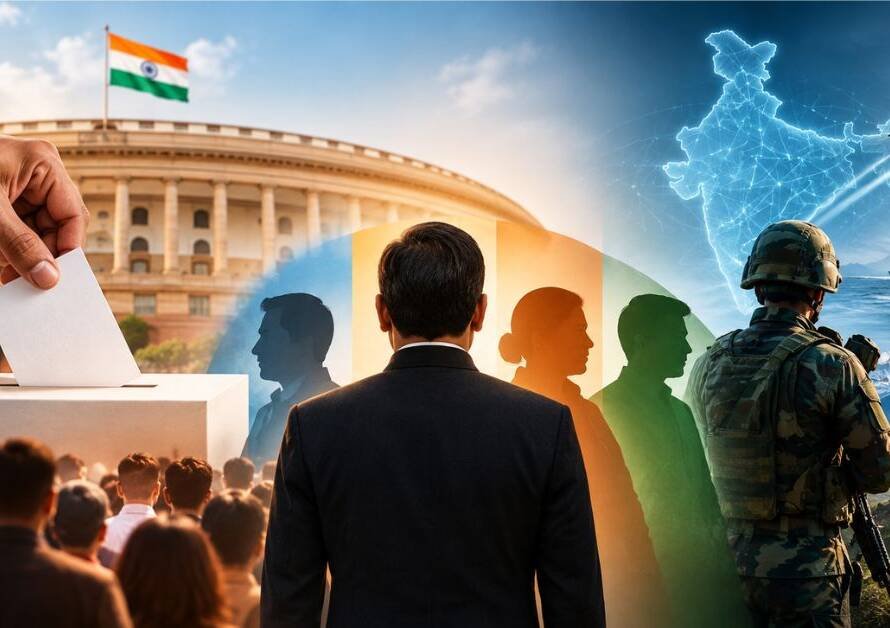
- This analytical narrative evaluates the contemporary structural paradigm of Indian politics, focusing on why the opposition repeatedly fails to challenge the incumbent leadership despite multi-party alliances.
- It contrasts a reactionary, negative platform with a robust governance framework built on Chanakya Niti (strategic organization) and Vidur Niti (leak-proof welfare delivery).
- The piece concludes that to present a viable democratic alternative, political strategies must transition from personal animosity to a superior, credible blueprint for national interest and civilizational growth.
Chanakya Neeti and Modern Political Management
1. The Fundamental Principle of Opposition and Alternative
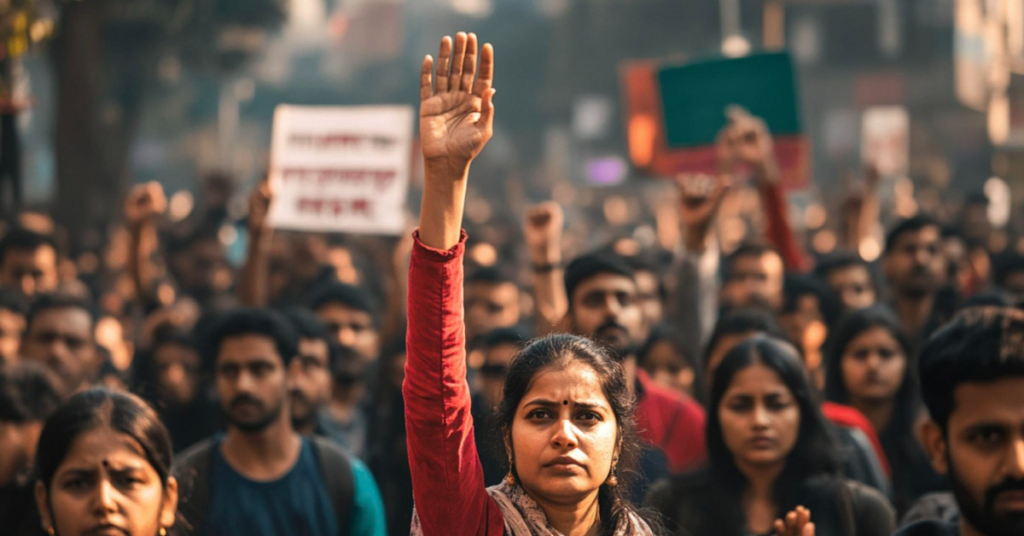
The most beautiful and essential component of a vibrant democracy is a strong opposition. However, when the existence of the opposition shrinks into mere ‘individual-centric animosity,’ the standard of politics deteriorates from being ideological to deeply personal.
- At the epicenter of contemporary Indian politics stands one name—Narendra Modi. Today, both nationally and globally, a critical discourse has intensified:
- why does the opposition consistently fail to defeat him despite all permutations, combinations, alliances, and aggressive campaigns?
- This discourse begins with a timeless truism: “If you wish to defeat a leader, you must perform better than them in terms of both policy and intent.”
- It is a foundational law of political science that the electorate never votes for a vacuum; it always votes for a better alternative.
- As long as the opposition relies primarily on deception, manufactured negative narratives, and short-term conspiracies, it cannot even scratch the political aura of a leadership whose roots are deeply embedded in the psyche of the common masses.
2. The Chanakya and Vidur Combo: The Modern Political Labyrinth
To comprehend the current power structure, looking at electoral mathematics alone is grossly inadequate. Beneath the surface lies a profound ideological and strategic architecture that can be best understood through the lens of ancient Indian political philosophy. The reigning dispensation operates on a modern synthesis of ‘Chanakya Niti’ (statecraft) and ‘Vidur Niti’ (righteous diplomacy).
- Chanakya Niti (Strategic Flawlessness): Chanakya signifies impeccable organizational capacity, micro-management, and the ability to anticipate an adversary’s move to neutralize it beforehand. The political labyrinth that the opposition tries to engineer in every election cycle inevitably becomes a trap where they get entangled themselves due to their own strategic myopia.
- Vidur Niti (Ethical and Policy Clarity): Vidur represents welfare-oriented policies, visionary long-term schemes, and an unyielding commitment to national interest. Ground-level initiatives like Jan Dhan bank accounts, Ujjwala gas connections, PM Awas housing, and digital governance have forged a dedicated ‘Beneficiary Class’ (Labharthi Varg) that is practically impossible to fragment through traditional caste-based or regional configurations.
- The Ideological Vacuum of the Opposition: The opposition lacks a logical antidote to this impenetrable defense. Whenever they introduce a counter-narrative (such as caste censuses or promises of populist freebies), the ruling setup masterfully maneuvers its chess pieces to reframe the debate around nationalism, development, and transparent governance.
3. The Labyrinth of Negativity: Why Tactical Ploys Continually Fail
An evaluation of the past decade reveals that the opposition has deployed every conceivable tactic—ranging from trying to tarnish the nation’s image in the international press to fueling domestic narratives aimed at widening fault lines within the social fabric. Yet, all these arrows fall blunt. There are three principal reasons for this systemic failure:
- The Deficit of Trust: When you demand that the public “remove Modi” without presenting a concrete alternative blueprint, the collective mind of the nation asks a fundamental question: “Who after Modi, and why?” The opposition fails to provide an answer that can guarantee stability and continuity to the country.
- Repeatedly Walking into Strategic Traps: The current leadership consists of masters in the art of narrative building. They skillfully compel the opposition to debate on a pitch where the opposition’s defeat is mathematically and rhetorically pre-determined—whether the theme is cultural revival, internal security, or India’s rising geopolitical stature. The opposition routinely commits the error of playing on their opponent’s terms.
- A Severe Crisis of Credibility: Leveling unsubstantiated allegations that eventually collapse under judicial scrutiny or logical cross-examination strips the opposition of its residual political capital. From Rafale to Pegasus, every manufactured crisis lost its relevance over time, eventually reducing the opposition to a mere ‘grievance mechanism’ in the eyes of the electorate.
4. The Core of Public Sentiment: Ruling the Hearts of the Masses
In realpolitik, the road to state power does not pass through parliament; it passes through the hearts of the people. The single greatest asset of Narendra Modi is his ability to establish a direct, unmediated emotional resonance with the ordinary citizen.
- Cultural and National Pride: By systematically rejuvenating long-repressed cultural consciousness (exemplified by the grand transformations of Kashi Vishwanath Dham, Ayodhya Dham, and Mahakal Lok), he has gifted a sense of ideological self-esteem to the civilizational majority.
- The Reality of Antyodaya: The direct transfer of welfare benefits into bank accounts without intermediaries represents an administrative transparency that has systematically dismantled old, entrenched networks of institutional corruption. The underprivileged citizen, who once ran from pillar to post in government offices, now receives his rightful dues at his doorstep.
- The Crisis Manager Image: Whether navigating a global pandemic or executing complex geopolitical evacuations (such as in Ukraine or the Middle East), bringing Indian citizens home safely while keeping the nation’s sovereignty uncompromised has instilled deep faith in the average citizen that the country is in safe, steady, and strong hands.
5. The Opposition’s Self-Defeating Path: The Declining Trust Graph
Conversely, the opposition’s political graph continues its downward trajectory. This is caused not merely by the strength of the ruling party, but by the opposition’s own counter-productive approach.
- Appeasement vs. Nationalism: Whenever matters of national interest or internal security (such as surgical strikes or counter-terrorism operations) arise, certain factions within the opposition begin demanding proof or issuing statements that dent the morale of the armed forces. This stance directly alienates a highly conscious, nationalist electorate.
- Leadership Vacuum and Ideological Fragmentation: The opposition possesses neither a single universally accepted leader nor a cohesive, unifying ideology. Their coalitions appear to the public as opportunistic mathematical exercises aimed solely at capturing power, devoid of a shared vision. The electorate understands very well that such fragile arrangements can only plunge the nation into instability and policy paralysis.
- The Elite Mindset: A significant section of the opposition has failed to unshackle itself from an outdated, feudal mindset. Instead of sweating it out on the ground, they attempt to run politics from air-conditioned rooms and social media handles. Meanwhile, the incumbent leadership remains perpetually active on the ground, engaging directly with the masses 24/7.
6. A Message for the Democratic Fabric
This analysis is not merely a piece of adulation for an individual; it is a clinical post-mortem of raw political reality. If the opposition truly intends to challenge this seemingly invincible political machine, it must overhaul its strategy from scratch.
- An End to Subversion: Deception, relying on foreign echo chambers to ferment domestic instability, or manufacturing artificial crises will no longer yield electoral dividends. The Indian voter has matured significantly and can filter noise from actual signals.
- The Necessity of a Positive Narrative: The opposition must demonstrate that it possesses a superior, more viable, and highly optimized execution model for economic growth, infrastructure development, national security, and foreign policy.
- Demonstrating Pure Intent: Unless national interest and grass-roots public welfare become the absolute core of your political intent, winning back the sacred trust of the electorate will remain a distant dream.
The Ultimate Truth:
- No one is truly immortal or invincible in a democracy, but to shorten an opponent’s line, you must draw a significantly longer line of your own.
- As long as the opposition spends its energy trying to erase, deface, or cut down the line drawn by the current leadership, it will only succeed in minimizing its own stature.
- It must construct its own grand, positive, and credible roadmap. Until that structural shift happens, this masterclass of organizational genius and popular mandate—the Chanakya-Vidur model—will remain firmly entrenched at the center of Indian politics.
🇮🇳 Jai Bharat, Vandematram 🇮🇳
Read our previous blogs 👉 Click here
Join us on Arattai 👉 Click here
👉Join Our Channels👈