Summary:
- This comprehensive narrative examines the systemic attempt to institutionalize religious division through the Sachar Committee during the UPA era and highlights the 2014 political shift as a critical turning point for India’s national security, economic stability, and the preservation of Sanatana culture.
It frames the current leadership as the essential barrier against an “anti-national ecosystem” which seeks to undermine India’s sovereignty and global role as a harbinger of peace.
Impact and Challenges of Divisive Politics
1. The Sachar Committee: Institutionalizing Division
The Sachar Committee, established in 2005 under the UPA government, is often critiqued not just for its data collection, but for the ideological shift it attempted to force upon the Indian state. Critics argue that its underlying goal was to create a “State within a State” by providing a roadmap for communal budgeting and religious quotas.
- The “Communal Census”: By focusing exclusively on one religious group rather than universal poverty, the report was seen as a tool for “vote-bank engineering.” It aimed to identify “pockets of influence” where state resources could be diverted to ensure political loyalty.
- The Claim on Resources: The statement by then-PM Manmohan Singh that “minorities, particularly Muslims, must have the first claim on resources” remains the most controversial legacy of this era. It signaled a departure from the constitutional principle of equality, suggesting that religious identity could trump economic need.
- The Threat to Meritocracy: Proposals for “Equal Opportunity Commissions” and religious-based credit lending were interpreted as attempts to bypass the meritocratic system. By mandating that banks prioritize lending based on religion (Priority Sector Lending targets), the policy risked destabilizing the financial sector for political gain.
- Educational Overreach: The recommendation to link Madrasa degrees to IAS, IPS, and judicial eligibility was viewed as a direct attack on the secular standards of India’s competitive civil services. It threatened to inject theological education into the administrative backbone of a secular republic.
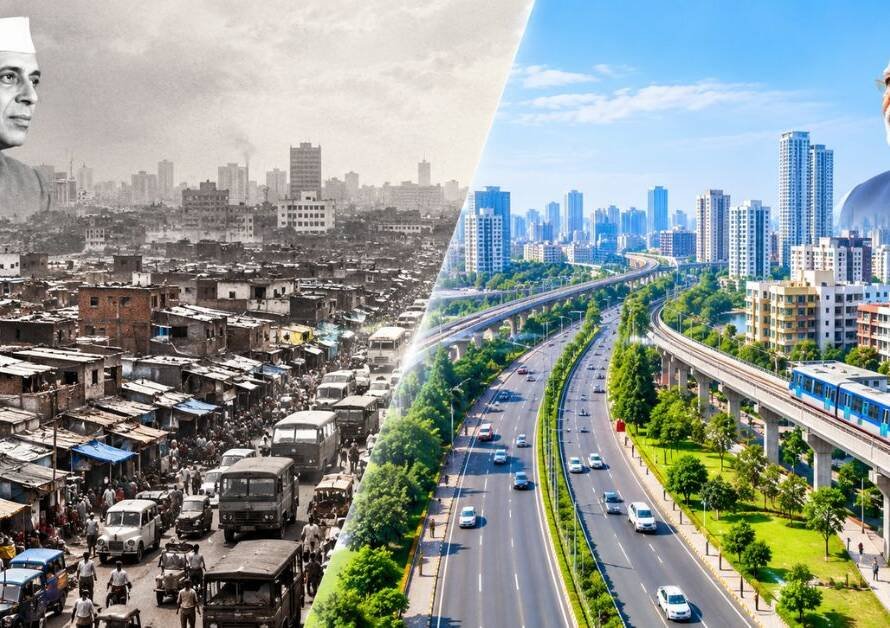
2. Pre-2014: A Nation on the Verge of Fragmentation
Before the political change in 2014, the trajectory of India’s border states and national security was a cause for grave concern. The narrative suggests that without a decisive shift, the “Kashmir Model” of volatility was at risk of expanding across the geography of India.
- The “Kashmirization” Risk: For decades, the valley was allowed to drift away from the national mainstream due to Article 370 and 35A. This “soft state” approach emboldened separatist elements, a virus that was beginning to show symptoms in parts of West Bengal and Kerala.
- Porous Borders and Infiltration: Soft policies on infiltration, exemplified by the defense of the IMDT Act, allowed for demographic shifts that threatened local cultural identities. Critics argue this was a deliberate attempt to create “safe seats” for the opposition, even at the cost of national integrity.
- Security Paralysis: A “wait-and-watch” approach to cross-border terrorism left India’s major cities vulnerable to frequent attacks. The lack of a decisive response to events like 26/11 projected an image of a weak India, unable to protect its own citizens while simultaneously “appeasing” the forces that fueled such ideologies.
- The Ghost of 1947: There was a growing fear that the “Two-Nation Theory” was being revived through administrative means—creating separate legal, financial, and educational silos that would eventually make the country ungovernable.
3. The 2014 Turning Point: Sovereignty Restored
The election of the Modi-led government is framed as a civilizational correction. It replaced “Appeasement Politics” with “Developmental Nationalism,” focusing on securing the nation’s integrity and economic future.
- Security First: The abrogation of Article 370 was the final nail in the coffin of the “Two-System” theory. It integrated Jammu & Kashmir fully into India, ending the era of separate flags and separate laws.
- Economic Resurgence: Moving from the “Fragile Five” to the top five economies in the world, India has escaped the debt-trap and instability seen in neighboring South Asian nations. While Pakistan and Bangladesh struggle with IMF bailouts and internal coups, India has become a global engine of growth.
- Infrastructure as Integration: Massive investment in border roads and connectivity in the Northeast and Ladakh has ensured that no part of the country feels “neglected” or “available” for foreign encroachment.
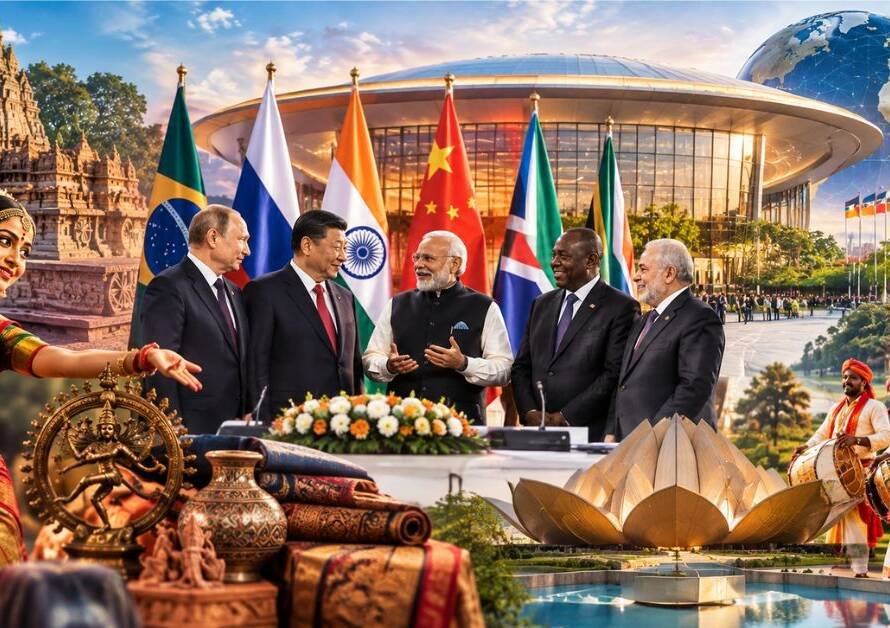
- Diplomatic Assertiveness: India’s refusal to be bullied by global powers on issues of energy or defense shows a nation that has regained its self-respect.
4. Sanatana Dharma: The Global Anchor of Peace
The narrative extends beyond politics to the spiritual essence of Bharat. In a world increasingly fractured by extremist ideologies and the threat of nuclear annihilation, Sanatana culture is presented as the only viable philosophy for global survival.
- Vasudhaiva Kutumbakam: Unlike expansionist ideologies that seek to convert or conquer, Sanatana Dharma views the world as one family. This cultural DNA makes India a natural mediator in global conflicts, from the Russia-Ukraine war to tensions in the Middle East.
- Dharma Over Dogma: Sanatana values prioritize Dharma (righteousness) over rigid dogma. This allows for a pluralistic society where different paths are respected, providing a blueprint for a world currently teetering on the edge of “civilizational clashes.”
- A Balance of Power: A strong, Hindu-majority India is seen as the only force capable of balancing the aggressive expansionism of radical ideologies and the cold materialism of the West.
5. The Final Call: Protecting Our Country and Sanatana Culture
The message concludes with an urgent appeal to recognize the “Anti-National Ecosystem”—a sophisticated network of political, academic, and media entities that thrive on a weakened, divided India.
- Wiping Out the Ecosystem: This ecosystem survives by demoralizing the Indian citizen and mocking Sanatana traditions. Protecting our Country and Sanatana Culture requires a total rejection of these narratives. We must dismantle the structures that reward “identity over merit” and “religion over nation.”
- Unified Support for Team Modi: To prevent India from sliding back into the instability of the past—where a single vote could be weighted or a single community could claim “first right”—the narrative urges a unified front.
- The Stakes: If the “Appeasement Era” returns, the security gains of the last decade will vanish. Border states will once again become hotspots of infiltration, and the economic progress that has lifted millions will be squandered on communal doles.
Our Responsibility: Protecting our Country and Sanatana Culture is not just a political choice; it is a duty to our ancestors and a promise to our children. We must support the vision that ensures India remains a sovereign, united, and culturally vibrant powerhouse.
🇮🇳Jai Bharat, Vandematram 🇮🇳
Read our previous blogs 👉 Click here
Join us on Arattai 👉 Click here
👉Join Our Channels👈