Summary
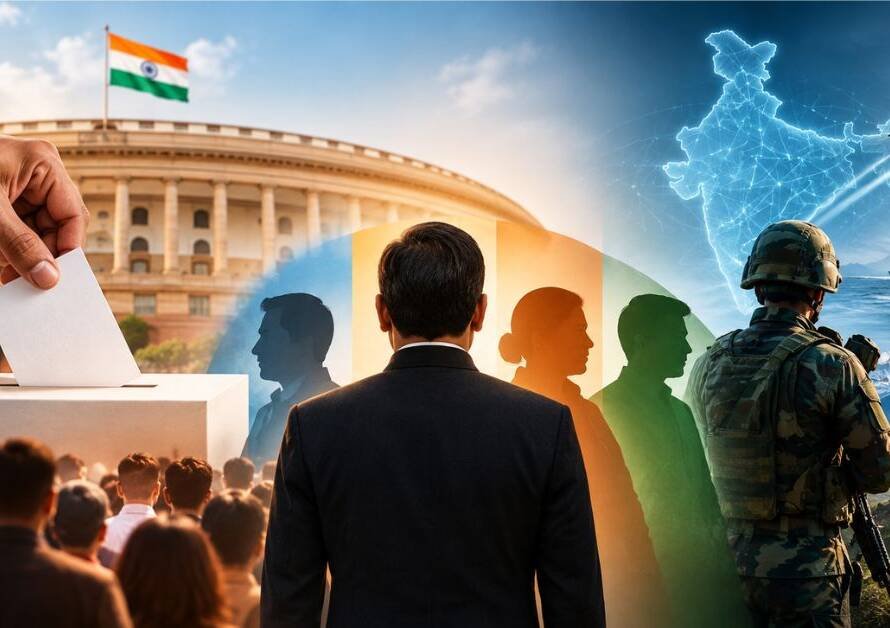
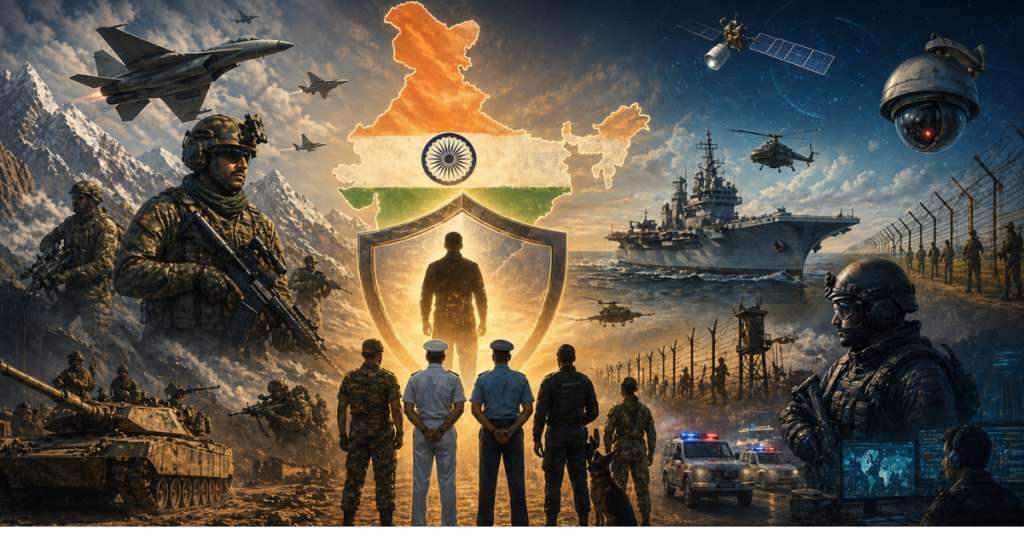
- This narrative serves as a comprehensive tribute to the guardians of India—the Armed Forces, Police, and Intelligence Services.
- It centers on a poignant first-hand account from the Kargil War (Operation Vijay) involving an IAF casualty evacuation, where the spirit of national pride (symbolized by Sachin Tendulkar’s iconic 1999 century) momentarily eclipsed the physical agony of wounded soldiers.
- The tribute expands into a broader call for national conscience, condemning the politicization of military valor and emphasizing the “Invisible Debt” every citizen owes to those who protect India’s sovereignty and integrity.
India’s Defense: Invisible Strength and Unbreakable Resolve
I. The Prologue: The Price of a Peaceful Sleep
- In the vast expanse of India, from the bustling metros to the quietest villages, millions of citizens retire to bed each night in the comfort of safety. We work, we dream, and we argue in the halls of democracy, often forgetting that this “normalcy” is a fragile bubble.
- This bubble is maintained by a thin line of men and women who stand in the gap. They exist in the freezing altitudes of the Siachen Glacier, the dense jungles of the Northeast, the scorching sands of Rajasthan, and the high-pressure shadows of intelligence hubs.
- To understand the cost of our freedom, we must look past the statistics and into the heart of the battlefield.
II. The Ground Reality: A Micro-India in the Belly of an An-32
The following account, based on the experiences of Maj Gen B N Rao and an anonymous IAF flight officer, captures the chilling and heart-touching reality of the Kargil War (1999).
The Scene at Awantipur
- Date: 23 May 1999.
- The Mission: CASEVAC (Casualty Evacuation) of 24 soldiers.
- The Demographics: Young men aged 19 to 27—the very prime of their lives.
- The Atmosphere: The interior of the An-32 aircraft didn’t smell of “glory”; it reeked of antiseptic, iron-scented blood, and the heavy silence of trauma.
The “Walking Wounded” and the Stoic Bond
- Empathy in Agony: Soldiers with “through-and-through” bullet wounds refused stretchers to leave space for those worse off.
- Unity in Olive Green: In those cramped quarters, a wounded Gurkha helped a limping Kumaoni. A Naga soldier sat beside a Jat; a Maratha next to a Rajput.
- The Erasure of Barriers: Regional, linguistic, and caste identities vanished. They were bound by a singular thread of pain and a shared mission to protect the soil beneath our feet.
The “Tendulkar Tsunami”: A Moment of Transcendence
In the ambulance sat a young Sikh Light Infantry soldier, both legs lost to a landmine. To distract him from the horrific reality of his missing limbs, the pilot shared a piece of news from the “outside world”:
- The News: Sachin Tendulkar had just scored 140* against Kenya in the World Cup, playing just a day after his father’s funeral.
- The Reaction: A roar of “YES, SIR!” erupted from the mangled and the wounded.
- The Escape: For a brief window of time, the pain was gone. The “phantom limbs” didn’t ache. The soldiers weren’t patients; they were fans. They were Indians. This is the spirit that no landmine can blow away.
III. The Guardians Beyond the Border: Police and Secret Services
While the military guards our borders, the safety we feel in our homes is the result of a multi-layered shield that often goes unthanked.
The Silent Sentinels of Internal Security
- The Police Forces: From the local constable to the specialized anti-terror units, the police deal with the “war within.” They face civil unrest, crime, and domestic threats every single day, often working 24-hour shifts during festivals so that we can celebrate in peace.
- The Secret Services (RAW, IB, NTRO): These are the warriors without uniforms. Their victories are never celebrated in the news, and their failures are whispered in shadows. They sacrifice their identities and their lives to stop threats before they even cross the border.
- The Sacrifice of Anonymity: When an intelligence officer falls, there is no public parade. Their sacrifice is the ultimate act of selflessness—protecting a country that will never know their name.
IV. Condemning the Politics of Humiliation
In recent years, a disturbing trend has emerged where the valor of our forces is used as a pawn in political chess matches.
The Injury of “Proof”
- Questioning the Brave: When politicians or elements of society demand “proof” of surgical strikes or military operations for personal or political gains, they do more damage than any enemy bullet.
- Hurting Morale: A soldier fights for the honor of his unit and the pride of his nation. To have that bravery questioned by the very people he is protecting is a deep, psychological wound.
- The Sanctity of the Mission: Military actions are driven by national security strategy, not PR. Demanding evidence for the sake of an election cycle humiliates the soldiers and risks compromising sensitive intelligence.
The Dishonesty of Criticism
- Armchair Critics: Those who sit in air-conditioned rooms and criticize the “tactics” of a soldier facing a terrorist in a dark alley have no moral standing.
- Ingratitude: To utilize the freedom of speech provided by the soldier’s sacrifice to then insult the soldier is the height of ethical bankruptcy.
V. The “Invisible Debt”: A Call to the Citizens of India
As citizens, we are not just “residents” of India; we are shareholders in a peace that is paid for daily.
How We Can Repay the Debt
- Gratitude as a Default: We must move beyond “thank you” on Independence Day. Respect for the uniform should be a year-round culture.
- Supporting the Families: The true cost of freedom is often paid by the wives, children, and parents who wait for a phone call that might never come. Supporting martyr families is a collective national duty.
- Rejecting Divisive Rhetoric: When we see our forces being used for political point-scoring, as a society, we must reject it. The forces belong to India, not to any one party or ideology.
- Civic Responsibility: The best way to honor a soldier who died for India’s integrity is to be a citizen who contributes to that integrity. Be honest, stay united, and work for the nation’s progress.
VI. The Epilogue: The Invoice of Freedom
- The officer in the An-32 story recalled the darkness of the Delhi tarmac, grateful the wounded Sikh soldier couldn’t see his tears. As the ambulances drove away, carrying the broken bodies of our youth, the reality remained:
- Freedom is not a one-time purchase made in 1947. It is a subscription that is renewed every single day with the blood of an airman, the sweat of a policeman, and the silence of a secret agent.
- We sleep because they wake. We work because they watch. We live because they were willing to stand in the line of fire. Let us never be a nation that forgets the face of its protectors or the price of its peace.
🇮🇳Jai Bharat, Vandematram 🇮🇳
🇮🇳 Jai Bharat, Vandematram 🇮🇳
Read our previous blogs 👉 Click here
Join us on Arattai 👉 Click here
👉Join Our Channels👈