Summary
- The landscape of the Middle East has been permanently altered following the failure of Western defense systems against Iranian missile and drone swarms.
- This narrative explores the systemic collapse of the “US Security Umbrella” and the subsequent vacuum being filled by India.
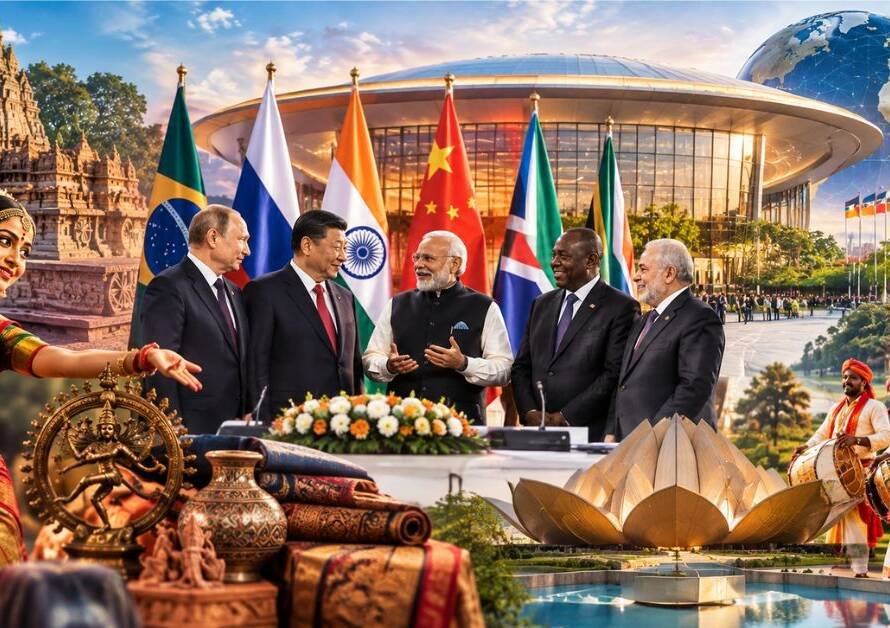
- Through a combination of DRDO’s advanced weaponry (BrahMos, Akash), the engineering prowess of India Inc. (Adani, Ambani, L&T), and a sophisticated diplomatic “de-hyphenation” strategy, India is transitioning from a labor provider to a strategic guarantor and reconstruction powerhouse.
- While the US faces a trust deficit and Pakistan sinks into geopolitical irrelevance, “Atmanirbhar Bharat” emerges as the most reliable, cost-effective, and powerful partner for the new Gulf order.
How the Iran Conflict Is Reshaping Global Power Dynamics
1. The Shattering of the ‘Titanium’ Illusion
For over half a century, the Petro-monarchies of the Gulf—Saudi Arabia, the UAE, Kuwait, Qatar, and Bahrain—invested trillions of dollars into a singular promise: American Protection. This was the “Titanium Illusion.”
- The Failure of THAAD and Patriot: Recent escalations proved that while American systems are masterpieces of engineering, they are optimized for 20th-century conventional wars. They struggled against low-cost, high-volume “swarm” tactics involving loitering munitions and hypersonic trajectories.
- The “Marketing vs. Reality” Gap: Gulf leaders watched as billions of dollars in interceptors failed to protect critical oil infrastructure (Aramco-style targets) and urban centers. The “impenetrable shield” was revealed to be a sieve.
- The Cost-Asymmetry Trap: The realization hit home—using a $3 million US interceptor to stop a $20,000 drone is an economic suicide pact. The Gulf needs a new, sustainable defense philosophy.
2. The American Exodus: A Crisis of Trust
The relationship between the US and the Gulf has hit a terminal point. The “Security for Oil” deal is dead, and the blame is being placed squarely on shifting US priorities.
- The “Trump Factor” and Isolationism: Whether through erratic policy shifts or a “pivot to Asia,” the Middle East feels abandoned. The perception is that the US uses the Gulf as a “cash cow” for its defense industry without standing by them in the heat of battle.
- The Fees-for-Failure Model: Gulf states are tired of paying exorbitant “maintenance fees” for systems that require US “keys” or approval to operate. They are demanding Sovereign Defense Capability.
- Zero Trust: The diplomatic capital of the US in the region has plummeted to an all-time low. The “Old Guard” of the Gulf is now looking for partners who don’t treat them as subordinates.
3. The Rise of ‘Atmanirbhar’ Defense: India’s Entry
As the Gulf looks for “Sovereign Defense,” India’s DRDO (Defence Research and Development Organisation) stands ready. This is no longer about buying off-the-shelf; it’s about strategic partnership.
- The BrahMos Dominance: The world’s fastest supersonic cruise missile is exactly what the Gulf needs to deter maritime and land-based threats. Its “fire and forget” capability and lethal precision are legendary.
- Akash & Akash-NG (New Generation): These systems provide a cost-effective, rugged, and highly successful solution for short-to-medium range aerial threats, specifically designed to handle the saturated drone environments seen in modern conflicts.
- Tejas and Indian Drones: The potential export of the Light Combat Aircraft (LCA) Tejas and indigenous drone platforms offers the Gulf an alternative to the “over-complicated” Western jets that come with too many political strings attached.
- Joint Ventures over Purchases: India is offering “Make in the Gulf” initiatives—transferring technology (ToT) so these nations can build their own defense ecosystems using Indian blueprints.
4. The Reconstruction Goldmine: India Inc. Takes Center Stage
War brings destruction, but the aftermath brings the world’s largest construction tenders. The damaged oil fields, desalinated water plants, and “Vision 2030” cities will be rebuilt not by the West, but by India.
The Engineering Titans:
- Adani Group: Experts in port management, logistics, and rapid infrastructure deployment.
- Reliance Industries: World-class expertise in refining and petrochemical recovery.
- L&T and UTL: Proven track records in building “smart cities” and complex electrical grids in record time.
The “Skill” Advantage:
- India possesses the largest pool of engineers and technicians who are already familiar with the Gulf’s geography and work culture.
The Supply Chain Proximity:
- Being just across the Arabian Sea, India is the most logical and fastest logistics partner for bulk materials—cement, steel, and technology.
5. Geopolitical Checkmate: The Neutralization of Pakistan
The most profound side effect of this “India-Gulf” marriage is the total strategic isolation of Pakistan.
- End of the ‘Ummah’ Card: Pakistan long used its military and religious ties to extract “bailout packages” from the Gulf. Now, with the Gulf depending on India for its very survival (defense and food security), that leverage is gone.
- The Doval Doctrine at Work: While the world watches the sky, India’s strategic planners have secured the “ground.” By integrating with Gulf security, India ensures that these nations no longer provide a “safe haven” or financial oxygen to anti-India elements.
- The Baloch-Afghan Connection: As the narrative mentions, internal regional pressures and savvy diplomacy mean Pakistan is too distracted by its own borders to interfere in the new India-Middle East corridor.
6. Why the World is Looking East
The shift is not just tactical; it is cultural and civilizational. The Gulf countries see India as:
- Reliable: A partner that doesn’t change its foreign policy every election cycle.
- Respectful: A civilizational ally that respects the sovereignty of the Monarchies.
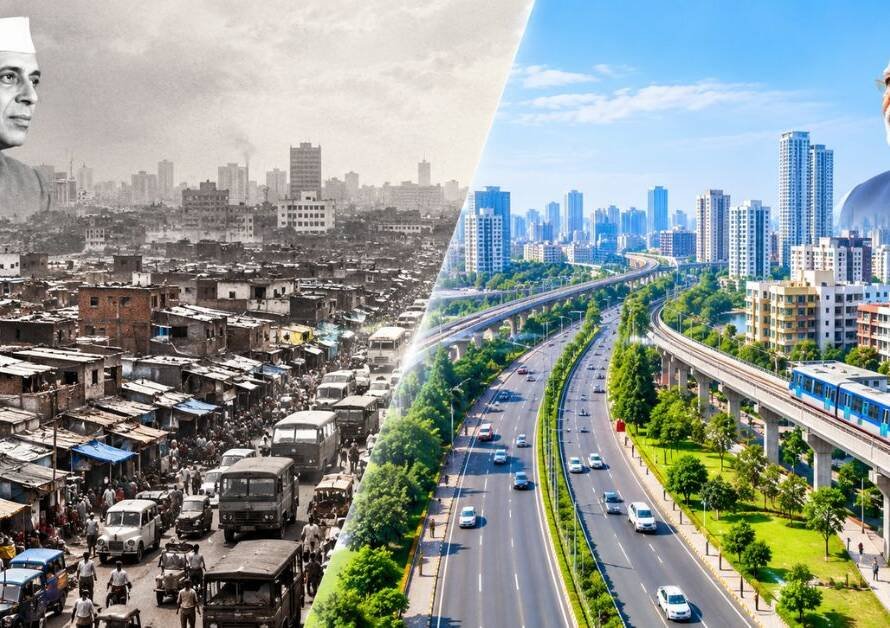
- Resilient: A nation that transformed from the “world’s largest importer” to a “nascent export powerhouse” in a single decade.
7. Conclusion: The Dawn of the Indian Era
The smoke from the Iranian missiles has cleared a path for New Delhi. The “Double-Ladoo” (Two-Sided Advantage) strategy is in full effect:
- Defense Boom: Billions in exports for Indian weapon systems.
- Economic Boom: Trillions in reconstruction and service contracts for Indian firms.
The Middle East is no longer a Western playground. It is becoming the western flank of the Indo-Pacific growth engine. Under the leadership of the current Indian administration, diplomacy has moved from “appeasement” to “assertion.”
- The message to the world is clear: If you want security, if you want growth, if you want a partner who stands the test of fire—Look to India.
🇮🇳Jai Bharat, Vandematram 🇮🇳
Read our previous blogs 👉 Click here
Join us on Arattai 👉 Click here
👉Join Our Channels👈